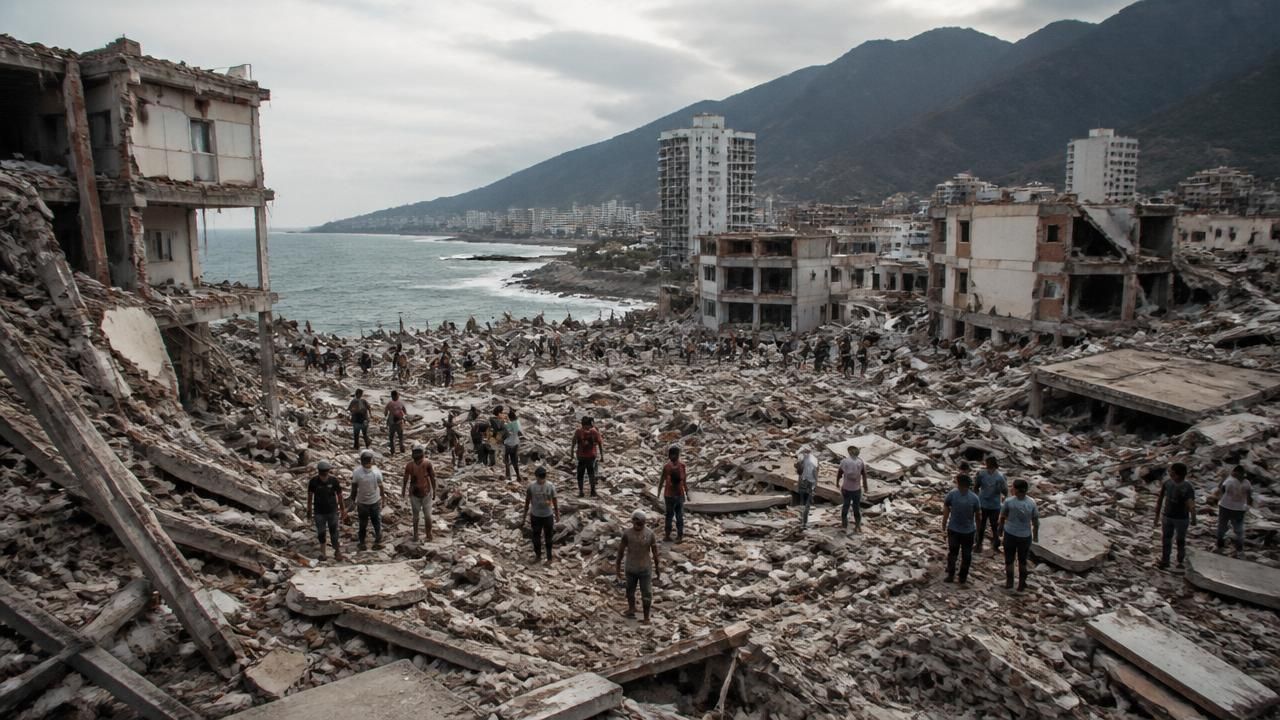
On June 24, 2026, northern Venezuela was struck by two powerful earthquakes—a magnitude 7.2 foreshock followed within a minute by a magnitude 7.5 mainshock—that killed more than 3,300 people, injured thousands, and caused widespread destruction along the coast. Satellite data from NASA and the Indian Space Research Organisation (ISRO) revealed that the ground shifted by up to 30 centimeters in some areas, particularly near Caracas and the port city of La Guaira. The disaster has exposed the severe shortcomings of Venezuela's government response, even as international aid begins to arrive.
Ground Displacement Mapped by NISAR
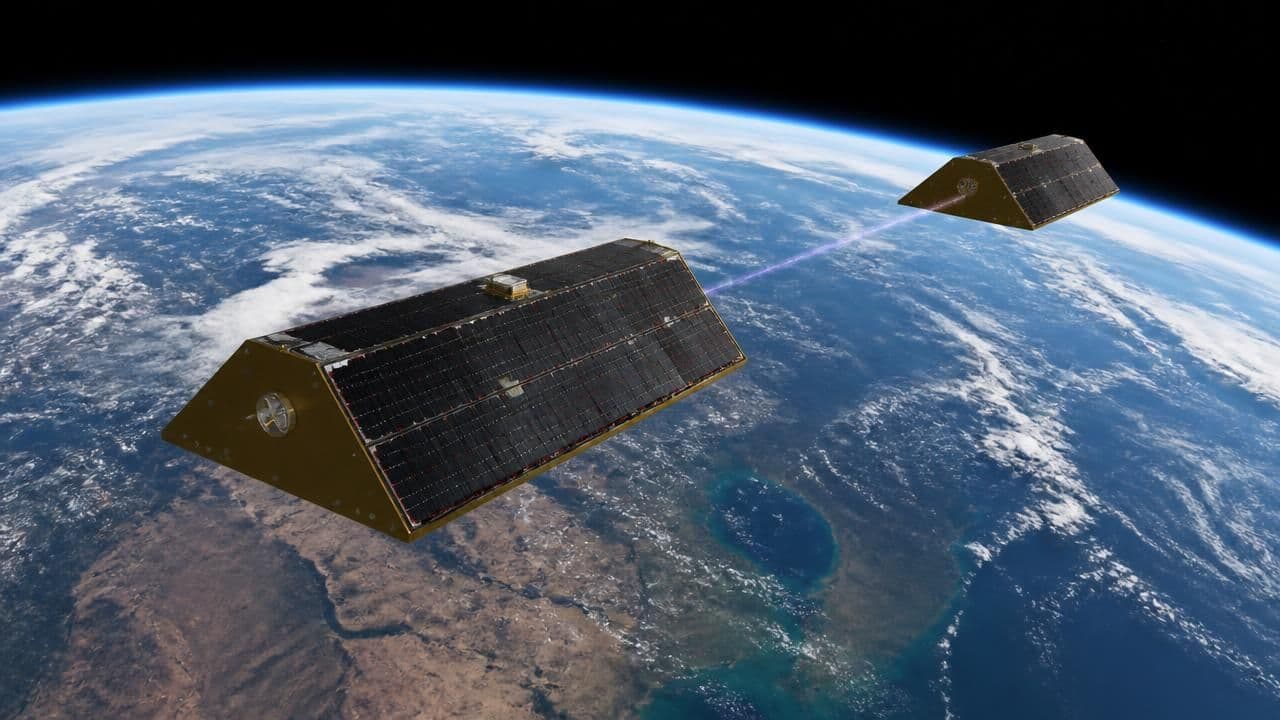
NASA's Earth Observatory released a map derived from the NISAR (NASA-ISRO Synthetic Aperture Radar) satellite, showing how the land surface deformed after the quakes. The map compares data acquired on June 13 and 18 (before the earthquakes) with data from June 25 and 30 (after). The most intense displacement occurred along the coastal fault system near La Guaira and Caracas, consistent with the severe damage reported in those areas. According to Wired, the space lasers on NISAR allowed scientists to measure crustal movement with centimeter precision, confirming that the earthquakes reshaped the Earth's crust over a wide region.
Death Toll and Destruction
The death toll has risen to at least 3,342, according to reports from The Earth Times and IBTimes Singapore, making it one of the deadliest seismic events in Venezuela's history. Thousands remain missing, and recovery efforts have shifted from rescue to recovery as families mourn. The New York Times reported that search teams from California, Virginia, and Florida have deployed to assist, while the US military has sent over 900 personnel to support relief operations, as noted by MSN. However, logistical challenges and a lack of coordination have hampered efforts. In a chaotic rush to help, some rescues were delayed, according to The New York Times.
Government Response Criticized
Experts quoted by PBS News described the Venezuelan government's response as 'completely ineffective,' citing a lack of preparedness, insufficient equipment, and a crumbling healthcare system. The acting president has faced sharp criticism as rescue teams struggle with limited resources. Meanwhile, a viral video on social media, viewed over 16.8 million times and reported by TotalProSports, showed a rarely seen phenomenon: the ground rippling like waves during the quake, capturing the world's attention and highlighting the sheer power of the temblors.
International Aid and Local Resilience
Despite political tensions, international aid has begun flowing in. US rescue teams from multiple states are on the ground, and organizations like Give to Cure are providing aid to affected families, as reported by the Baltimore Sun. In coastal areas like La Guaira, the destruction has been described as equalizing—yacht owners and public housing residents alike now share the ruin, according to the Orlando Sentinel. USC graduates living in the area joined rescue and relief efforts, demonstrating local resilience. Yet, the scale of the disaster is overwhelming. Lori Dengler, a seismologist, noted in an MSN article that the 2026 earthquakes will be remembered as a defining moment for seismic hazard in the region.
Historical and Scientific Context
Venezuela sits along the boundary between the Caribbean and South American tectonic plates, making it prone to large earthquakes. The June 24 event is the largest to hit the country since the 1967 Caracas earthquake, which killed about 300 people. The NISAR data provides an unprecedented look at how the crust deforms during such events, offering insights that could improve future building codes and disaster planning. The 30-centimeter shift measured by satellites underscores the immense energy released—equivalent to hundreds of nuclear bombs.
Looking Ahead
As recovery continues, the focus is shifting to rebuilding and accountability. The disaster has laid bare the consequences of years of political and economic crisis in Venezuela. With more than 3,000 dead and infrastructure in ruins, the path to recovery will be long. Meanwhile, scientists will continue analyzing NISAR data to better understand the fault system, hoping to mitigate the impact of future quakes. The world watches as Venezuela struggles to cope with a catastrophe that has reshaped not only its land but also its society.