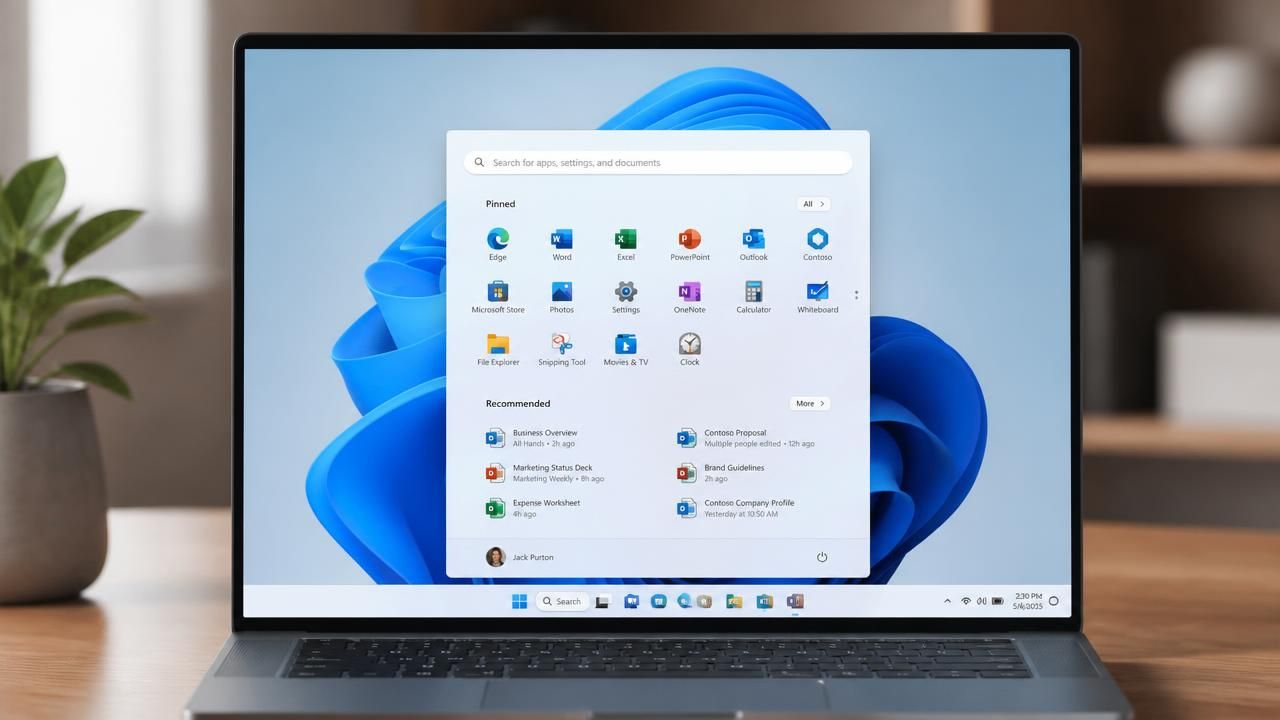
Microsoft is testing a ground-up redesign of Windows Search, the long-maligned search box at the heart of Windows 11, in what the company is framing as a broad modernization of core Windows experiences. The new experience has begun appearing in Windows Insider "Experimental" 26H1 builds, where testers are also getting new Actions capabilities and upgrades to Narrator, the built-in screen reader.
The overhaul touches one of the most consistently criticized parts of Windows 11. Users have long complained that the Start menu and taskbar search are slow to surface results, unreliable at finding local files, and cluttered with web suggestions and Bing results they never asked for. Microsoft now says it has rebuilt the underlying stack, moving Search onto WinUI 3.
A search box that finally keeps up
"This new Windows Search experience is built for speed," Anshul Rawat, corporate vice president of the Windows product team at Microsoft, said in a statement. "It's built on WinUI 3 and is part of our broader investment in modernizing our core Windows experiences."
"This new Windows Search experience is built for speed. It's built on WinUI 3 and is part of our broader investment in modernizing our core Windows experiences." — Anshul Rawat, Microsoft
According to Microsoft, early internal and Insider testing has shown "substantial improvements in performance and memory usage" — a notable claim given that the previous search implementation relied on legacy components that dated back to earlier Windows generations. The Verge described the redesign as "exactly what Windows 11 needs," reflecting how central the search experience is to everyday navigation on the platform.
Crucially, Microsoft is not simply swapping in a new interface. The redesign appears to be a deeper architectural change, rebuilding the search surface rather than layering modern visuals over the existing engine. That distinction matters: past attempts to polish Search often left its indexing and responsiveness problems intact.
From finding things to doing things
The more consequential shift may be what the new Search can do beyond returning results. Coverage of the Insider builds indicates the experience gains new Actions, allowing users to control PC settings directly from the search box — for example, jumping straight to a setting or toggling a system behavior instead of hunting through the Settings app.
That positions Windows Search less as a lookup tool and more as a lightweight command layer for the operating system — a direction that echoes how both Apple's Spotlight and various third-party launchers have evolved. If it works reliably, it could reduce the number of clicks needed for routine configuration tasks.
Alongside Search, the same Experimental 26H1 builds bring upgrades to Narrator. While accessibility improvements rarely generate headlines, they are frequently among the most meaningful changes for users who depend on them, and Microsoft has invested steadily in Narrator's responsiveness and natural-voice output in recent releases.
How the tech press is framing it
The story has been covered from noticeably different angles, and the divergence says something about how the industry views Microsoft's platform work.
- The Verge frames the change as a direct remedy for a flagship frustration — a competitive necessity for Windows 11, whose fit and finish has been a recurring critique since its 2021 launch.
- WindowsReport treats it as a feature-roundup story, emphasizing that Search and Narrator arrive together in the Experimental 26H1 Insider channel and positioning the build as a package of user-facing improvements.
- VideoCardz leads on capability rather than speed, highlighting that the new Search can also control PC settings — the most concrete functional expansion in the release.
- Digital Trends frames the news as Microsoft "finally addressing key annoyances" with a universal Search system, underlining just how long users have waited.
Taken together, the coverage converges on a single narrative: this is less a feature launch than a repair job on a component users interact with dozens of times a day.
A long and difficult history
Windows Search has been a source of friction for years. Microsoft severed Search from Cortana as the assistant was retired, folding chat and web answers into the same box — a move that improved coherence on paper but often slowed the experience and muddied results. The company also experimented with AI-assisted search powered by Bing and, later, Copilot, though those additions raised their own questions about latency, relevance and how much of a query should be handled locally versus in the cloud.
That history explains the emphasis on performance and memory in Microsoft's messaging. A search box that leans on cloud services can feel slow on modest hardware; a WinUI 3 rebuild that improves local responsiveness addresses the complaint users actually voice.
What to watch
Several open questions remain. Microsoft has not detailed a timeline for general availability, nor how the rollout will be staged across the Insider rings. It is also unclear how deeply the new Actions will integrate with Settings, how third-party apps might hook into the system, and whether the redesign will alter how web results are surfaced — a persistent source of user irritation.
What is clear is the direction of travel: Microsoft is treating the core Windows shell as a product worth investing in again, rather than a static foundation beneath its AI and cloud ambitions. For an operating system installed on hundreds of millions of machines, a search box that is fast, predictable and genuinely useful may matter more than any single headline feature. The Insider builds are the first real test of whether Microsoft can deliver it.