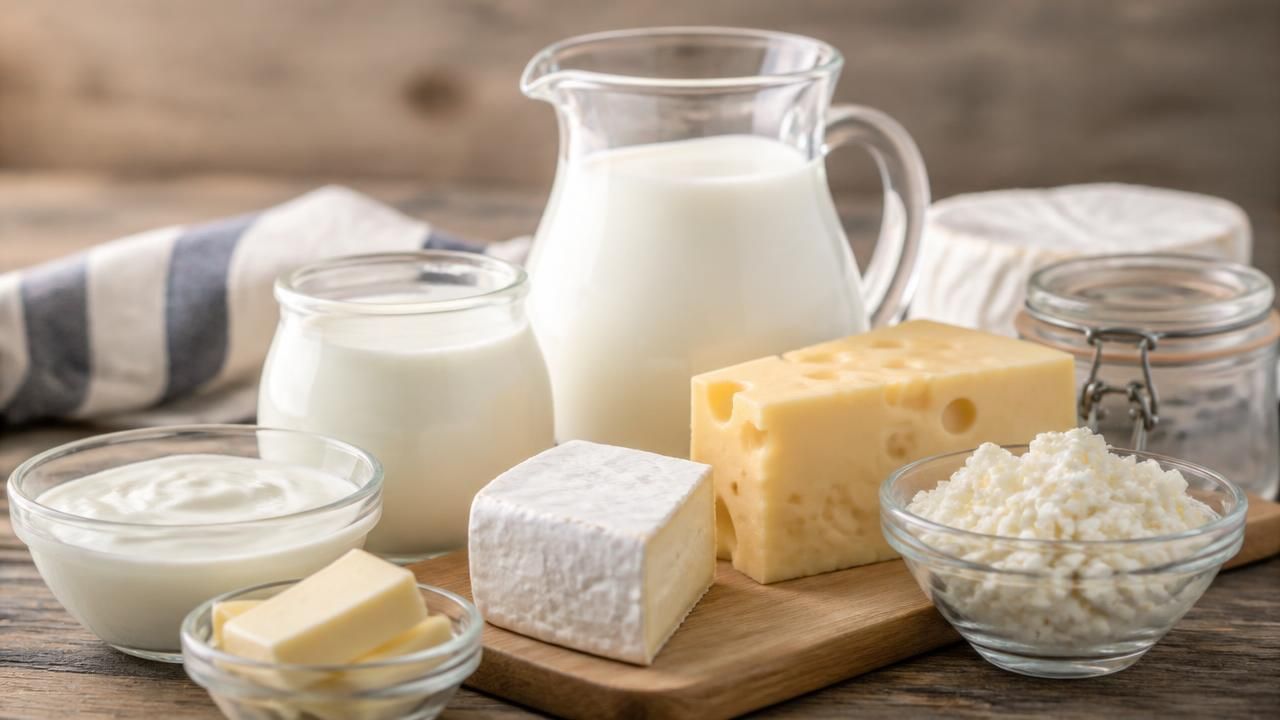
For decades, the phrase “trans fat” has served as shorthand for dietary danger. A sweeping new review suggests that shorthand was always too broad: the trans fats that occur naturally in milk, butter, yogurt and cheese do not appear to raise the risk of heart disease or type 2 diabetes, and they behave nothing like the industrially produced trans fats that regulators have spent a decade pushing out of the food supply.
The analysis, which pooled 22 studies — including controlled feeding trials and long-term population cohorts — found no meaningful harmful effects of ruminant trans fats on blood lipids. In the long-term studies, higher intake was not linked to higher rates of heart disease, stroke, cardiovascular death or diabetes.
Not all trans fats are built the same
Chemically, both types are unsaturated fatty acids with at least one double bond in the “trans” configuration, which keeps the molecule straighter than its cis cousins. Biologically, they are different animals. Ruminant trans fats — principally vaccenic acid and conjugated linoleic acid — are produced by bacteria in the rumen of cows, sheep and goats and reach the table in dairy fat and, to a lesser degree, red meat. Industrial trans fats, most notably elaidic acid, are created when liquid vegetable oils are partially hydrogenated to make them solid and shelf-stable: the technology behind margarine, shortening and the frying oils that dominated processed food for half a century.
That distinction was largely lost in the public conversation that followed the discovery, in the 1990s, that trans fats from partially hydrogenated oils raised LDL cholesterol and lowered HDL cholesterol — the worst of both worlds for cardiovascular risk. The findings triggered a regulatory cascade: the FDA required trans fat to be declared on nutrition labels in 2006, and in 2015 determined that partially hydrogenated oils were no longer “generally recognized as safe.” Manufacturers were given until 2018, and in some cases 2021, to remove them. The World Health Organization, meanwhile, launched its REPLACE initiative in 2018 with the goal of eliminating industrial trans fats from the global food supply — a target many countries have met, though not all.
How different outlets framed the story
The news has been told several ways. Health-focused coverage leaned into the explainer format, answering basic questions about what trans fats are and why they are unhealthy — a framing that risks flattening the new nuance into a familiar warning. Consumer and lifestyle coverage centered on the personal question the research raises: what does this mean for your heart? Food and beverage publications approached it through the kitchen, asking whether butter and cheese deserve a partial reprieve. Each framing captures part of the story; none captures all of it.
Unlike industrial trans fats from partially hydrogenated oils, dairy trans fats showed no meaningful harmful effects — and were not linked to higher rates of heart disease, stroke, cardiovascular death or diabetes, the analysis concluded.
The caveats matter
It would be a mistake to read the finding as a license for butter. Dairy foods remain rich in saturated fat, which does raise LDL cholesterol, and most dairy products — cheese, ice cream, whole milk — carry substantial calories. The population-level evidence is also observational, which means it can show association but not prove cause; people who eat more dairy may differ from those who do not in ways that are difficult to adjust for statistically.
- The review examined ruminant trans fats specifically, not industrial ones — the case against partially hydrogenated oils is unchanged.
- Controlled trials found no meaningful effect on blood fats, but such trials tend to be short and small.
- Cardiovascular outcomes came from long-term cohorts, which are vulnerable to confounding by overall diet and lifestyle.
- The findings say nothing about how much dairy is optimal, only that its naturally occurring trans fats are not the culprit.
What it means for labels and policy
Current U.S. labeling rules already hint at the distinction the science is now confirming: manufacturers must declare trans fat on the Nutrition Facts panel, but naturally occurring ruminant trans fats are exempt from that declaration. That carve-out, once a technicality, now looks like a reflection of genuinely different biology. For regulators still pressing to eliminate industrial trans fats — a campaign public health officials credit with saving thousands of lives — the new review is unlikely to change anything. What it may change is consumer perception.
The bottom line
The practical takeaway is less a green light than a correction. The trans fat conversation has long treated an entire category as a single substance; the evidence increasingly says otherwise. Dairy’s trans fats appear benign at the levels people actually eat, while their industrial counterparts remain the one fat that nutrition scientists of nearly every stripe agree is best avoided altogether. For shoppers, the more consequential question may not be what is in the butter, but what is in everything else on the shelf beside it.