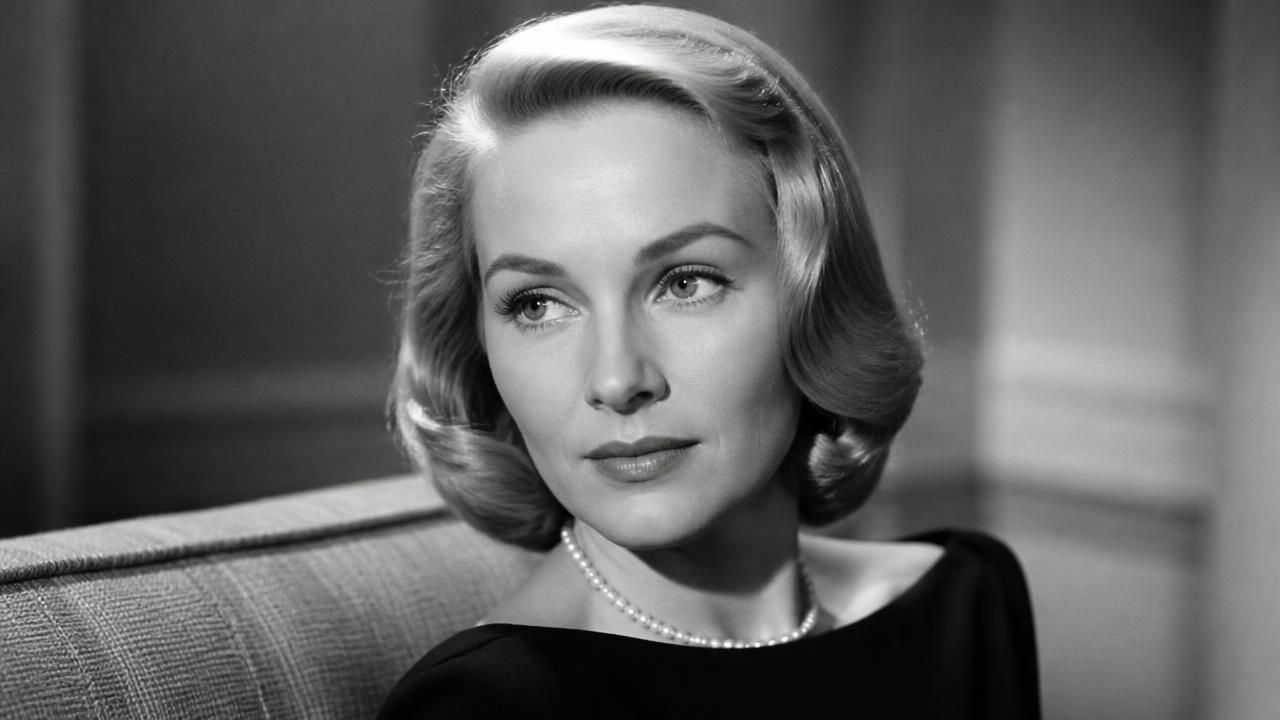
Eva Marie Saint, the Oscar-winning actress whose cool intelligence and unforced grace made her one of the defining screen presences of Hollywood's Golden Age, has died. She was 102.
News of her death was reported by The New York Times, The Hollywood Reporter, Rolling Stone, Deadline, Forbes, NPR and a wave of international outlets, nearly all of which led with the two films that bookend her legend: Elia Kazan's On the Waterfront (1954), which brought her an Academy Award for Best Supporting Actress, and Alfred Hitchcock's North by Northwest (1959), in which she matched Cary Grant line for line as the impossibly poised Eve Kendall.
A debut that made Oscar history
Saint was 30 years old when she played Edie Doyle, a Catholic schoolgirl whose longshoreman brother is murdered, in what was her first feature film job after years on the stage and in the live-television anthologies of the early 1950s. It was Kazan who cast her, and the performance — equal parts moral conscience and raw grief — earned her the Academy Award in a film that took home eight Oscars, including Best Picture.
Her inexperience on a movie set produced one of the most famous unscripted moments in American cinema. In a scene with Marlon Brando, Saint dropped her glove; Brando, staying in character, picked it up and absentmindedly pulled it onto his own hand while the two continued talking. Kazan kept the take, and the gesture became a permanent piece of acting lore.
Hitchcock's most elegant collaborator
Five years later, Hitchcock handed her the role that would introduce her to generations of viewers: Eve Kendall, the chic, ambiguous blonde who lures Roger Thornhill onto a train bound for Chicago and into a plot involving spies, an auction house and a chase across Mount Rushmore. Written by Ernest Lehman and co-starring James Mason and Martin Landau, the film is now routinely ranked among Hitchcock's finest — and Saint's performance, wry and unflappable, is central to its enduring appeal.
"Eva Marie Saint, Graceful Star of the Silver Screen." — The Hollywood Reporter
The Hitchcock role shaped her public image as the epitome of mid-century sophistication, a reputation she carried for the rest of her life, even as tabloid coverage of her death gravitated toward a different question entirely.
A career that never stopped
Born on July 4, 1924, in Newark, New Jersey, and raised in upstate New York, Saint trained at the Actors Studio and worked steadily in New York television before Hollywood came calling. Her filmography across six decades included:
- A Hatful of Rain (1957) and Raintree County (1957), the latter opposite Elizabeth Taylor and Montgomery Clift
- Exodus (1960), Otto Preminger's epic, with Paul Newman
- 36 Hours (1965), The Russians Are Coming, The Russians Are Coming (1966) and The Stalking Moon (1968)
- Nothing in Common (1986) with Tom Hanks and Jackie Gleason
- Superman Returns (2006), in which she played Martha Kent
She was also an Emmy Award winner, a fixture of prestige television, and — to a younger generation entirely unaware of her Oscar — the voice of Katara in the animated series The Legend of Korra. She received a star on the Hollywood Walk of Fame in 1960.
A private life in a public business
Saint married television director Jeffrey Hayden in 1951, and their union lasted 65 years until his death in 2016 — a rarity in an industry that rarely rewards longevity. The couple had two children, and Saint was widely described as deliberately choosing family over the Hollywood treadmill, taking roles on her own terms rather than chasing stardom.
How the story was framed
The coverage split along familiar lines. The New York Times, The Hollywood Reporter and Rolling Stone treated her death as a stately cultural appraisal, foregrounding the Oscar and the Hitchcock partnership. Forbes and Deadline emphasized the two-title resume — On the Waterfront and North by Northwest — that made her name durable; Deadline additionally published a photo retrospective of her film and television career. NPR placed her Academy Award in the context of a stage-and-television apprenticeship.
Tabler outlets, including TMZ, the Daily Mail, The Sun and Men's Journal, pushed a different angle, pairing her age with questions about her cause of death and framing her as a "Hollywood icon" and "golden age" survivor — a reminder of how obituary coverage now oscillates between considered appreciation and search-driven immediacy.
Legacy
With Saint's death, the ranks of surviving leads from Hollywood's studio era thin further still; she was believed to be among the oldest living Academy Award winners. Her two signature films remain in constant circulation, taught in film schools and revived in theaters, and her career stands as a case study in a kind of stardom that no longer quite exists: technically trained, publicly reserved, and built on a handful of performances that refuse to date.