Officials in North Richland Hills, a Fort Worth suburb of roughly 70,000 people, told a privacy advocacy group it would have to pay $2.3 million before the city would hand over records about its use of Flock Safety cameras — a demand the group says is designed to bury scrutiny of a fast-spreading network of AI-assisted license plate readers.
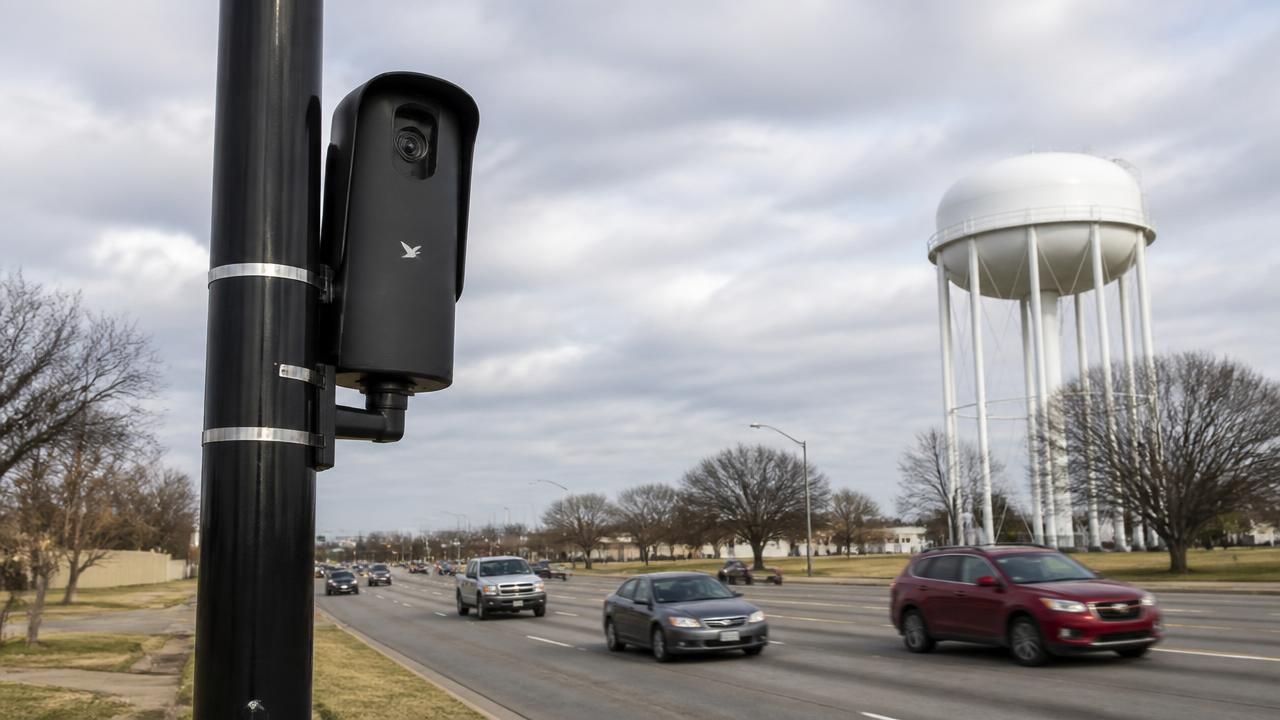
The figure, first reported Monday by the Texas Tribune, is the latest flashpoint in a widening, bipartisan backlash against Flock Safety, an Atlanta-based company whose solar-powered cameras photograph and log the license plates of virtually every vehicle that passes them, then let police search that data across a national network of participating agencies.
A fee built on 14 years of labor
To arrive at the $2.3 million price tag, North Richland Hills officials said they would need to comb through “about a terabyte worth of communications about errors, misuse, and effectiveness of the Flock system,” according to the Tribune. The city estimated that work would consume approximately 14 years of staff labor, billed at $15 per hour.
The Texas Public Information Act permits governments to recover the cost of personnel time spent locating, compiling, and redacting records — a provision meant to prevent agencies from being bankrupted by frivolous requests. In practice, transparency advocates argue, that same provision has become the most effective tool for denying access, because an invoice can stop a request without any formal rejection that could be appealed.
“Ludicrous” — or a legitimate cost estimate?
Phil Mynona, who filed the request under a pseudonym on behalf of his group, the Texas Privacy Coalition, told the Tribune that the fee seemed “ludicrous” and was calculated to stifle his public records searches.
“It’s a price tag that says: go away. And for most people, that works.”
The city has not publicly defended the estimate in detail, and questions about how a single suburb accumulated a terabyte of internal Flock correspondence — or why reviewing it would take more than a decade — remain unanswered. That gap is itself part of the story: when agencies attach eye-popping fees to records requests, the underlying conduct rarely gets examined on the merits.
Why Flock keeps drawing fire
Flock Safety cameras are now used by thousands of law enforcement agencies across the country, and the company’s pitch is rooted in that scale: a plate captured in one city can be searched by police in another, turning thousands of local deployments into a de facto national tracking system. Critics say that architecture creates risks that no single city council ever voted on.
- Network effects: Data captured by one agency can be queried by agencies hundreds of miles away, often under agreements the public has never seen.
- Federal access: Reporting over the past two years revealed that federal immigration agents obtained Flock data through local departments, prompting several cities to cancel contracts or restrict sharing.
- Accuracy problems: Misreads and outdated “hot list” entries have been linked to wrongful stops of innocent drivers.
- Mission creep: Systems sold to fight car theft have increasingly been used to enforce immigration law, abortion-related travel bans, and other offenses far from the original rationale.
The backlash is unusual for its ideological breadth. Civil liberties groups such as the ACLU and the Electronic Frontier Foundation have been joined by gun-rights organizations, libertarian activists, and some conservative legislators who object to warrantless location tracking on constitutional grounds. Statehouses have begun responding: legislatures in Maine, Colorado, and elsewhere have passed laws limiting how long plate data can be retained and when it can be shared out of state.
How the story traveled
Coverage of the North Richland Hills demand split along familiar lines. Ars Technica framed it as a case study in how the anti-surveillance revolt is being met with bureaucratic resistance, emphasizing the multi-million-dollar figure as part of a pattern of agencies “asking anti-surveillance advocates and media outlets to pay eye-popping fees.” Aggregators and wire pickups, including MSN, Yahoo, and The Next Web, stripped the story to its most shareable element: a Texas city charging $2.3 million for records about its own police cameras.
That compression is revealing. The number is the headline because it is legible to anyone — no expertise in ALPR architecture or Fourth Amendment doctrine required. But the deeper story is procedural: as public opinion turns against mass plate surveillance, the fight is shifting from whether the cameras are legal to whether the public can even find out how they are used.
The transparency squeeze
North Richland Hills is not an outlier so much as an early adopter. Journalists and researchers across the country report that agencies are increasingly responding to surveillance-related records requests with estimates in the tens of thousands of dollars, often justified by vague claims about the volume of email involved. Newsrooms and small advocacy groups rarely have the budget to litigate, and even those that do face years of delay.
The practical effect is a one-way information asymmetry: vendors and police departments can describe their systems in press releases, while independent verification of error rates, misuse, and data-sharing practices depends on records the public must pay six or seven figures to see.
What happens next
The Texas Privacy Coalition could seek a ruling from the Texas Attorney General’s office, which reviews cost estimates and denials under the state’s Public Information Act, or challenge the fee in court — both slow, expensive paths. Meanwhile, the underlying policy questions continue to move faster than the records: cities are renewing or canceling Flock contracts, state legislators are drafting new retention limits, and courts are beginning to weigh whether warrantless plate surveillance constitutes a search.
For now, the $2.3 million invoice stands as both a local dispute and a national signal. As one advocate put it, the price of finding out how the cameras work may be the most effective surveillance technology of all.