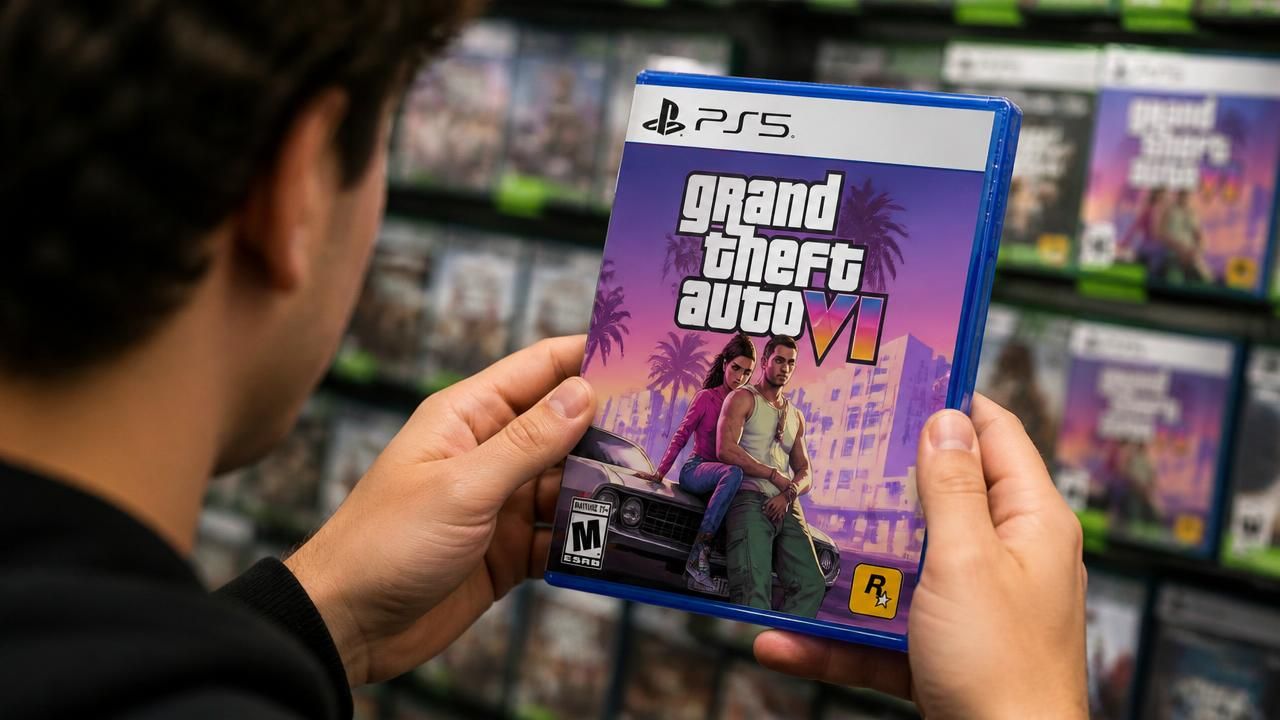
Grand Theft Auto VI has done what few entertainment products in history have managed: it didn't just beat the record, it obliterated it. Rockstar Games announced that the long-awaited title generated $3.79 billion in retail sales in its first 24 hours, a figure the studio called "a new record for entertainment across any medium." The game, released Thursday, moved 32.5 million copies through preorders alone.
"It is with immense gratitude that we enter a new chapter of Rockstar Games with the release of Grand Theft Auto VI," Sam Houser, the studio's president and founder, said in a statement. "We are incredibly humbled by the response from players around the world and we couldn't be more excited to share this moment with you."
The number was reported almost identically across outlets — The Verge, The New York Times, Yahoo Finance, GeekTyrant, TechXplore and others all carried the $3.79 billion figure — but the framing diverged sharply. Trade and gaming outlets treated it as a coronation; business coverage focused on parent company Take-Two Interactive's balance sheet; and at least one outlet used the milestone to spotlight the labor conditions behind it.
A record measured against its own predecessor
The most telling comparison is with Grand Theft Auto V, the 2013 title that became the most profitable entertainment product in history. GTA V earned $815.7 million in its first day and crossed $1 billion within three days. GTA VI has done roughly 4.6 times that first-day business in the same window — a leap that reflects both a far larger global games market and the unique cultural status the franchise has accumulated over 13 years.
- Day-one revenue: $3.79 billion, versus $815.7 million for GTA V in 2013.
- Copies sold at launch: 32.5 million preorders, a figure that alone exceeds the lifetime sales of most blockbuster games.
- Comparable benchmarks: The largest theatrical opening weekends in history — Avengers: Endgame and Spider-Man: No Way Home — are measured in the low single-digit billions globally across their entire runs, not 24 hours.
Men's Journal noted the scale bluntly in its headline, contrasting the $3.79 billion haul with GTA V's $815.7 million. TechXplore rounded the figure to $3.8 billion, a rounding that itself speaks to the size of the number. MSN's aggregation framed it as "nearing $4 billion," while The Big Lead described it simply as an all-time revenue record in 24 hours.
An $8 billion horizon
The launch is only the opening act. Yahoo Finance framed the 13-year wait between mainline entries as a potential $8 billion opportunity, reflecting analyst expectations for the game's first year across unit sales, the eventual PC release, and — crucially — GTA Online, the persistent multiplayer mode that turned GTA V into a decade-long annuity of microtransactions and expansions.
That business model is the real story for Take-Two shareholders. A $3.79 billion launch is spectacular, but it is also a one-time event; the recurring revenue that follows will determine whether GTA VI justifies the years of development spending and marketing that preceded it. The preorder figure of 32.5 million is particularly significant to analysts because it represents committed demand — revenue effectively booked before a single review landed.
"We are incredibly humbled by the response from players around the world and we couldn't be more excited to share this moment with you." — Sam Houser, president and founder, Rockstar Games
The human cost behind the headline
Not every outlet led with the money. MSN's coverage carried a pointed headline: GTA 6 made $3.79 billion in its first day, "but Rockstar's workers still lack job security." The framing reflects a persistent critique of the blockbuster games industry — one that has grown louder as budgets have ballooned and layoffs have swept the sector.
Rockstar has faced crunch allegations for years, most notably during the development of Red Dead Redemption 2, when employees described extended overtime and mandatory "crunch" periods. The company has since shifted some development practices, including changes to contract worker policies, but critics argue that the industry's most profitable launch in history should translate into greater stability for the people who built it. The contrast — record-breaking revenue alongside demands for job security — has become a defining tension of modern AAA game development, where thousands of workers across multiple studios and support contractors can be laid off even after shipping a hit.
What happens next
The immediate questions are logistical. Rockstar and Take-Two will face scrutiny over server capacity, physical and digital supply chain, and the rollout of GTA Online's successor — historically the most lucrative component of the franchise. Fans and analysts will also watch for the PC version, which typically arrives later and represents an additional revenue wave.
For the wider entertainment industry, the message is unambiguous. Games now deliver opening-day numbers that film, television, and music cannot approach, and the most anticipated titles behave less like products and more like cultural events. Whether that concentration of attention and capital is sustainable — or whether it simply raises the stakes for every studio that follows — is the question the $3.79 billion figure leaves hanging.