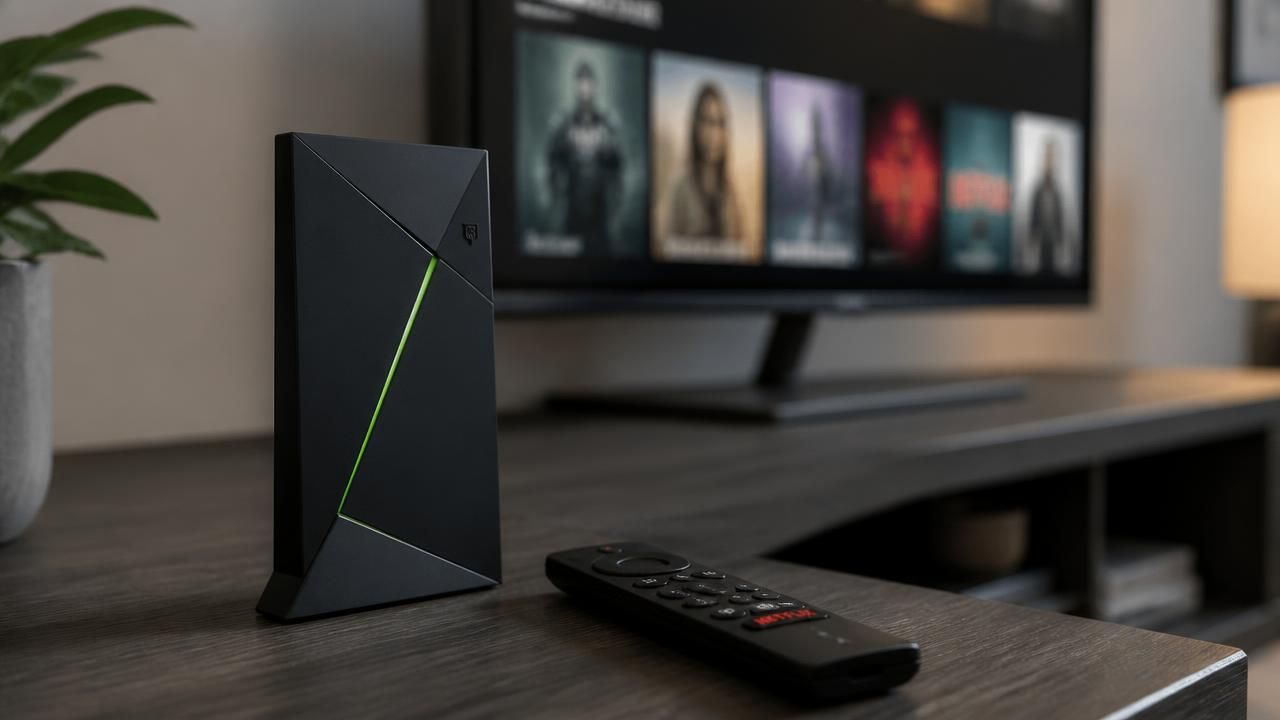
Nvidia has quietly raised the price of its Shield TV Pro by $100 and discontinued the standard Shield TV, making a streaming box that launched in 2019 dramatically more expensive than it was when it first hit shelves. As of October 2nd, the Shield TV Pro now sells for $299.99, up from $199.99 — a 50 percent increase on hardware that has not received a meaningful refresh in nearly seven years.
The move, first reported by Ars Technica and confirmed across multiple outlets, makes Nvidia's flagship Android TV device an unlikely poster child for a supply chain crisis that has its origins far from the living room: the global memory shortage driven by the artificial intelligence boom.
What Actually Changed
The facts are stark. The Shield TV Pro, which debuted in 2019 with an upgraded Tegra X1+ processor, 3GB of RAM and 16GB of storage, has held steady at $199.99 for most of its life. That price is now $299.99. Meanwhile, the entry-level Shield TV — the "tube" model introduced alongside the Pro in 2019, sharing the same Tegra X1+ chip but trimmed to 2GB of RAM and 8GB of storage — has been discontinued entirely.
The result is a product line that has shrunk from two options to one, with the surviving option now costing half again as much. Consumers looking for Nvidia's cheapest streaming entry point no longer have one.
Why a Streaming Box Costs $100 More
Nvidia attributes the increase to the rising cost of components. The specific culprit is memory. As hyperscalers and AI chipmakers have consumed staggering quantities of DRAM and NAND flash to feed data centers training and running large language models, the price of memory modules has spiked across the board.
Nvidia's Shield TV streaming boxes are the latest victims of the memory shortage that has seen prices increase dramatically for everything from digital cameras to game consoles.
That framing, from The Verge, captures the unusual nature of this story. This is not a case of a company raising prices because demand for its own product is surging. It is a case of a company raising prices because demand for someone else's product — AI accelerators and the memory they require — has made the components inside its own device more expensive to buy.
There is a certain irony here that several outlets noted: Nvidia is among the biggest beneficiaries of the AI boom, with its data center GPUs commanding enormous margins. Now that same boom is raising costs on Nvidia's own consumer hardware. As Martin Cid Magazine put it, the AI boom just made Nvidia's own Shield TV Pro $100 more expensive.
A Seven-Year-Old Device at a New Price
The timing has drawn scrutiny. The Shield TV Pro's internals have not meaningfully changed since 2019. The Tegra X1+ was itself a modest revision of the Tegra X1 that powered the original Shield TV in 2015. In effect, buyers are being asked to pay a premium price for silicon that predates the current console generation.
That has not stopped the Shield TV Pro from retaining a loyal following. Its appeal has never been raw horsepower — it is the software. Nvidia's upscaling features, broad codec support, and a relatively clean Android TV implementation have kept the device near the top of enthusiast recommendations for years, even as cheaper competitors like Google's Chromecast with Google TV and Amazon's Fire TV lineup undercut it on price.
At $299.99, that value proposition gets harder to defend. A buyer can now purchase a current-generation game console for roughly the same money, or several competing 4K streaming devices.
The Wider Fallout
The Shield TV is not an isolated case. Memory prices have climbed sharply across the industry, pushing up costs for:
- Game consoles, where manufacturers face the same DRAM and NAND pressure on fixed-price hardware
- Digital cameras, which rely on memory cards and internal storage that have both risen in cost
- Smartphones and laptops, where memory is a significant bill-of-materials line item
- Single-board computers and hobbyist hardware, which have seen some of the most dramatic percentage increases
The common thread is that AI infrastructure spending has effectively outbid consumer electronics for constrained memory supply. When a data center operator will pay nearly any price for HBM and high-capacity DDR5, consumer device makers either absorb the cost, pass it on, or exit the segment.
Two Strategic Signals
Nvidia's decision reads as two moves in one. The price hike is a straightforward response to input costs. The discontinuation of the standard Shield TV is more telling — a signal that Nvidia is unwilling to sell a low-margin, low-price streaming device in an environment where memory is expensive and its engineering attention is overwhelmingly focused on AI.
The Shield line has never been a major revenue driver for Nvidia. It functions more as a showcase for Tegra silicon and a foothold in the living room. When component economics turn hostile, that is precisely the kind of product a company consolidates or winds down.
What to Watch Next
The central question is whether this is a temporary inflation or a permanent reset. Memory markets are historically cyclical, and analysts have predicted that additional capacity coming online could ease prices. But the AI buildout shows no sign of slowing, and each new data center campus locks in further memory demand.
For now, Shield TV Pro buyers face a simple choice: pay $299.99 for a device whose design dates to 2019, or look elsewhere. The broader lesson is harder to ignore. The AI boom is not confined to server racks and stock tickers — it is showing up, $100 at a time, on the shelf at your local electronics retailer.
Nvidia has not announced a successor to the Shield TV Pro or indicated when, or whether, the standard Shield TV might return.