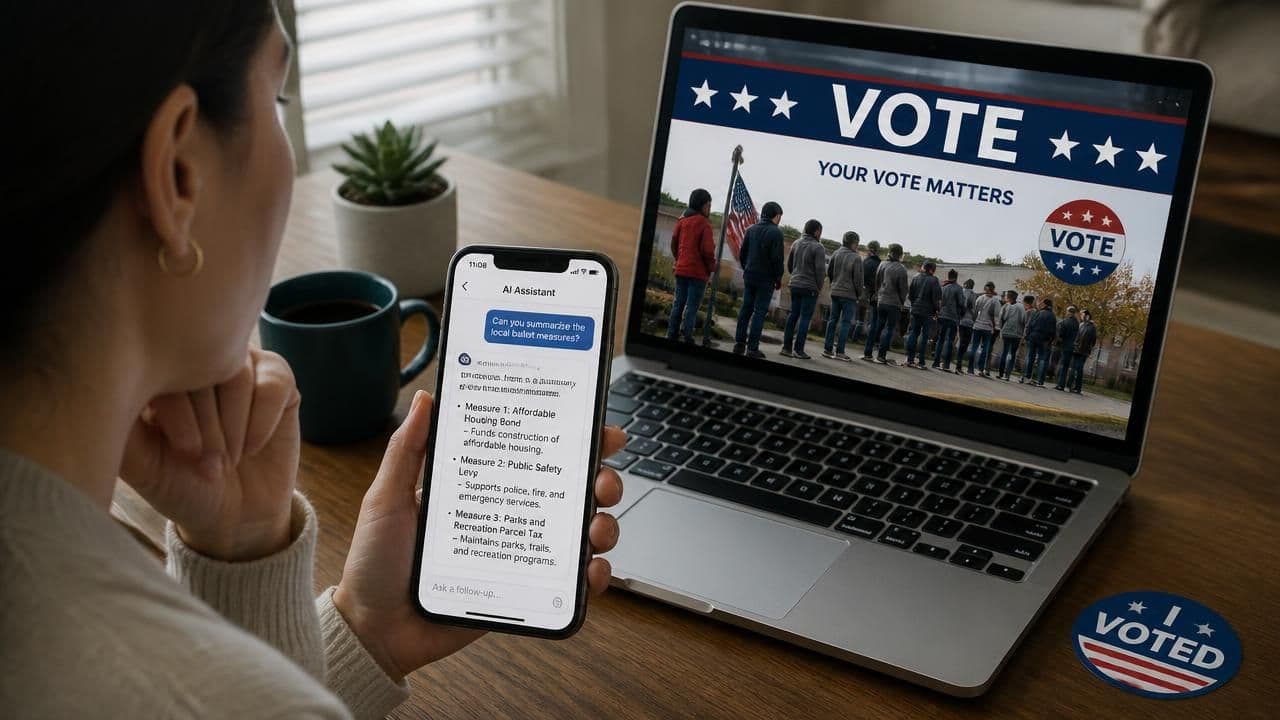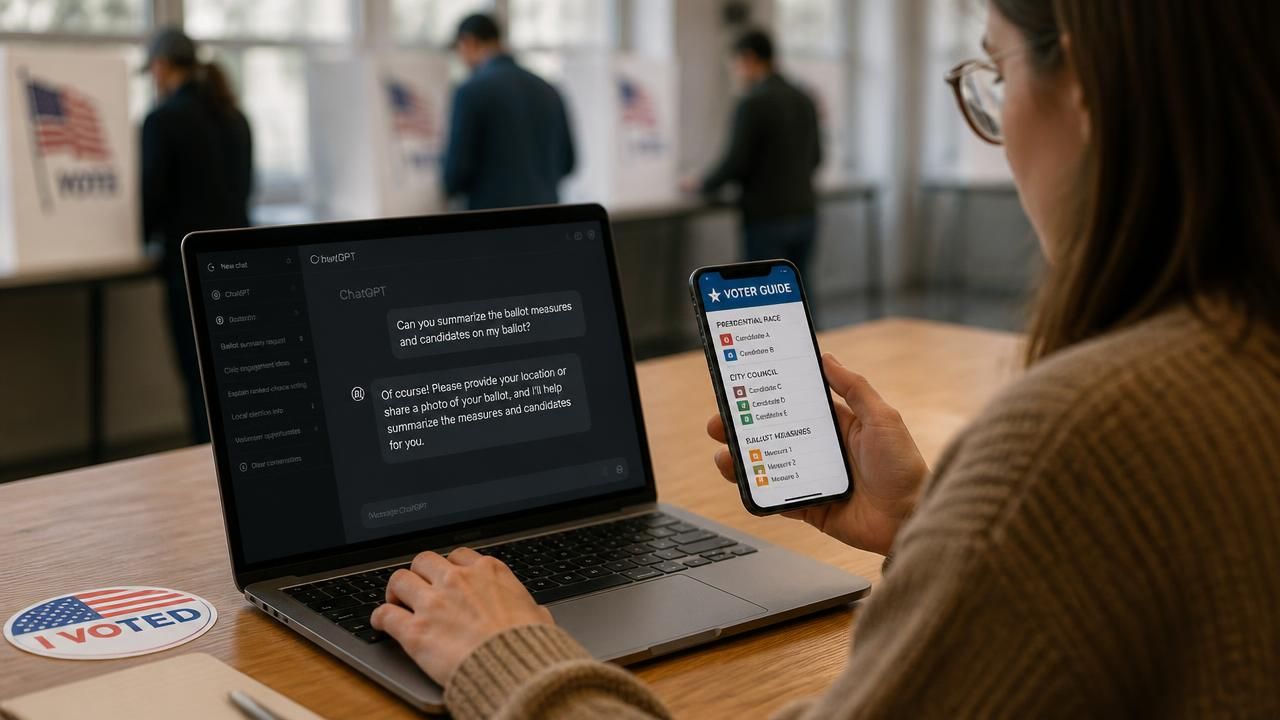
Across the country, early voting is already underway, and a growing number of Americans are turning to an unusual research assistant to prepare for the midterm elections: ChatGPT. According to reporting from NPR Politics and Boise State Public Radio, some voters are now asking the chatbot not just to explain ballot measures and down-ballot races, but to recommend whom to vote for — a striking new chapter in the collision between generative artificial intelligence and democratic decision-making.
“Voters are already voting in the midterms. This year, some voters are trying something new to get ready for the election: asking AI to help research their ballot and even decide who to vote for.” — NPR Politics
A New Kind of Ballot Coach
The trend reflects how quickly large language models have moved from novelty to utility. ChatGPT and its rivals handle hundreds of millions of weekly queries, and users have grown accustomed to outsourcing research, drafting, and even personal decision-making to them. Elections are simply the newest domain.
The appeal is easy to understand. A single prompt can summarize a crowded ballot, translate dense ballot-initiative language into plain English, compare candidates' stated positions, and produce a cheat sheet in seconds. For voters facing long, low-information down-ballot races — judicial retention seats, county commissions, water district boards — that convenience is genuinely valuable.
Mainstream outlets are meeting the moment with traditional service journalism. MSN's guide, “Voting in the 2026 midterms? Here's what you need to know before Nov. 3,” focuses on deadlines, registration rules, ID requirements, and polling logistics — the unglamorous mechanics that actually determine whether a ballot gets counted. The contrast is instructive: legacy outlets answer procedural questions with verified information, while chatbots answer substantive questions with generated text.
Where the Technology Falls Short
The problem is that large language models are not designed to be authoritative. They generate plausible-sounding text by predicting likely sequences of words, not by retrieving verified facts. That architecture produces well-documented failure modes:
- Hallucinations. Chatbots can invent candidate positions, misstate ballot language, or cite legislation that does not exist.
- Stale knowledge. Models trained before a given election cycle may not know who is currently running, who dropped out, or what a late-breaking controversy changed.
- Sycophancy and bias. Systems often mirror a user's framing, telling voters what they appear to want to hear rather than delivering neutral analysis.
- Opaque sourcing. Unlike a news article with named sources, a chatbot answer rarely shows its work.
That last point matters most for elections. A voter who reads a newspaper can evaluate the outlet's record and check its citations. A voter who asks a chatbot for a recommendation typically receives confident prose with no audit trail at all.
Privacy: The Other Ballot Box
There is a second, less visible cost. A widely shared account headlined “I Asked a Privacy Tool What ChatGPT Knows About Me. The Result Was Terrifyingly Accurate” illustrated how much personal inference can be reconstructed from AI interactions — inferred location, occupation, health concerns, political leanings, and family details. Voting decisions, by extension, are among the most sensitive data points a person can volunteer.
Querying a chatbot about a local race can reveal a user's address, party leanings, and the specific issues that move them. Depending on retention policies and account settings, that profile can persist. Privacy researchers consistently advise voters to avoid entering identifying details — full names, addresses, precinct numbers — into consumer chatbots, and to treat every prompt as potentially stored.
From Politics to Medicine: A Broader Trust Test
The voting story is really one front in a larger argument about how much authority society is willing to hand to AI. Forbes's “Can You Trust ChatGPT For Medical Advice? A Doctor's Guide” makes a parallel case in the health domain: chatbots can be useful for explaining terminology, preparing questions for a physician, or understanding a diagnosis — but they are not substitutes for licensed clinical judgment, and they can miss emergencies.
Both cases share a structure. AI performs best as a translation layer — converting jargon into plain language and helping users organize their own thinking. It performs worst when asked to render verdicts: which treatment, which candidate.
“Can You Trust ChatGPT For Medical Advice?” — a question Forbes poses to doctors, and one that election officials are now effectively asking about the ballot.
How the Coverage Differs
Public radio framed the story around voter behavior and curiosity, emphasizing the novelty of the practice. The consumer-tech and health coverage approached the same underlying technology with skepticism, stressing verification, liability, and data exposure. Service journalism, meanwhile, stayed focused on deadlines and mechanics. Read together, the sources describe a single phenomenon from three angles: what people are doing, what could go wrong, and what they should do instead.
What Voters Should Do
Election administrators and AI researchers largely converge on a middle path — use the tools for scaffolding, not for decisions:
- Ask the chatbot to explain a ballot measure rather than to recommend a vote.
- Cross-check every factual claim — names, dates, positions — against a county elections office, the League of Women Voters, or a local newspaper's voter guide.
- Never paste addresses, precinct numbers, or other identifying details into a chatbot.
- Treat any AI endorsement as one unverified opinion among many, not as a neutral arbiter.
The deeper question will outlast this cycle. As AI assistants become the default interface for information, the line between researching a decision and delegating it will keep blurring. For now, the technology is best understood as a very fast, very confident research assistant that never cites its sources — useful for the first draft of an opinion, dangerous as the last word on a ballot.