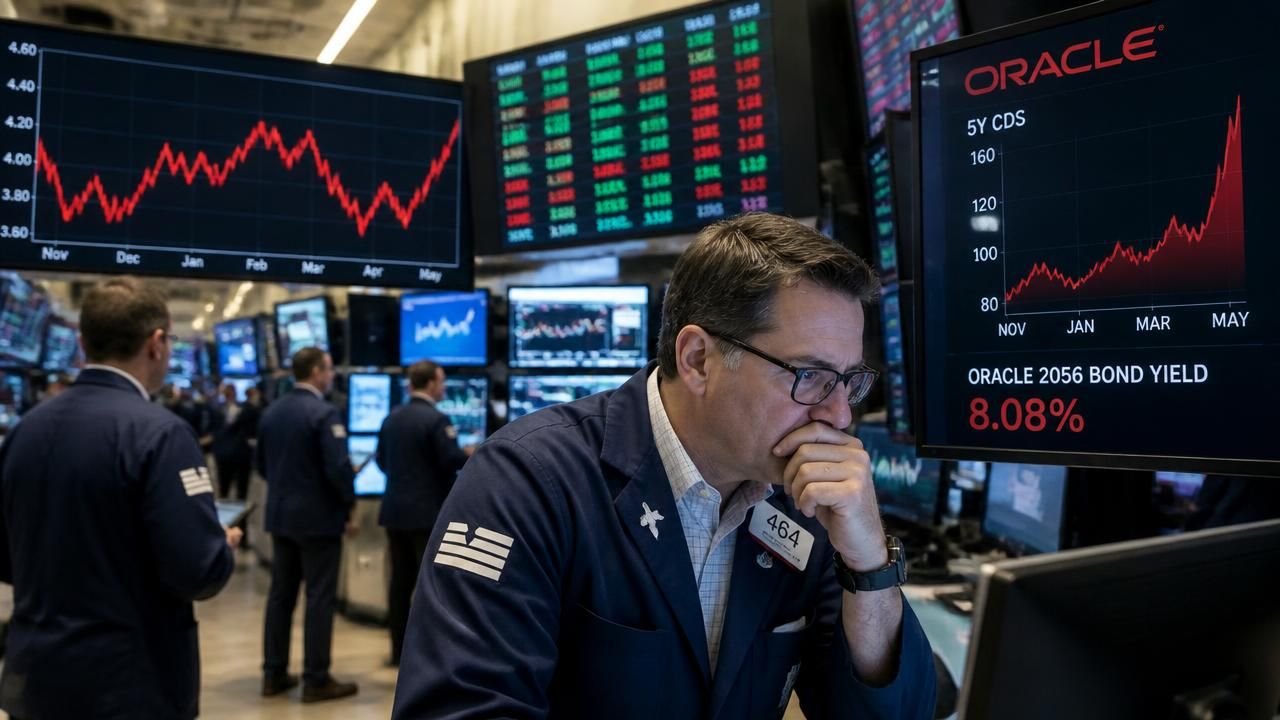
Wall Street is caught between two powerful forces: an AI-fueled equity rally that keeps setting records, and a bond market sell-off that is pushing yields higher and flashing warning signs not seen in years. The tension has become the central question in financial markets, with Bloomberg, Reuters, Morgan Stanley and a wave of market commentary all converging on the same theme: can stocks continue to ignore the message from bonds?
The Bond Market's Warning
Bond yields have risen sharply, and the sell-off is not just about Federal Reserve policy. It reflects growing demand for capital from AI infrastructure, heavy government borrowing, and sticky inflation. Reuters warned that an AI-driven surge in bond yields could be the next risk for markets and growth. When yields rise, the present value of future corporate cash flows falls, hitting long-duration assets like technology and AI stocks hardest. MSN's review and preview framed the bond market's warning as a historical signal that investors should consider defensive positioning—though the exact move varies by cycle.
The most concrete sign of stress comes from Oracle. Its credit default swaps hit records, and its 2056 bonds now yield over 8%. That is a remarkable premium for a large, investment-grade technology company. Oracle has positioned itself as a major AI cloud player, but its debt-financed expansion is being repriced by credit markets. The move suggests bond investors are increasingly worried about the cost and risk of the AI capex boom.
AI Stocks Shrug—For Now
Equity investors have so far taken a different view. Bloomberg's 'Insight with Haslinda Amin' examined why AI stocks are ignoring bond market warnings. The show, which features high-profile interviews and analysis across business and finance, highlighted the optimism around AI productivity, earnings growth, and a secular tech revolution. For many portfolio managers, AI is not a bubble but a multi-year transformation that can justify premium valuations even as discount rates rise.
That optimism has kept AI leaders aloft despite rising yields. But the divergence is widening. MSN noted that warnings about AI's importance to the stock market are bringing new scrutiny. Which matters more to stocks—bond market or AI risks? The volatility gauge might offer an answer. The VIX, Wall Street's fear index, has remained relatively subdued, suggesting investors are not yet panicking. If VIX spikes while yields rise, it would confirm that bond turmoil is overwhelming AI enthusiasm.
Morgan Stanley and the Risk Stack
Morgan Stanley sees risks piling up for stocks. Financial Express reported the bank is asking whether rising yields will be the trigger for a broader equity correction. The concern is not just yields themselves but the speed of the move. Rapid yield increases can trigger de-risking, margin calls, and a shift from equities to bonds. Add in stretched valuations, concentration in a handful of AI names, and geopolitical uncertainty, and the risk stack looks fragile.
Panic on Wall Street as experts warn bond turmoil could crash stock market. — MSN headline
That headline captures the fear, though it may overstate the immediate danger. Other outlets, including Bloomberg and Reuters, frame the issue more as a warning than a forecast. History offers a playbook. MSN's review and preview noted that history says investors should make one move when bond markets sell off. That move is often defensive: rotate toward quality, shorten duration, hold more cash, or add fixed income at attractive yields. The exact prescription varies, but the direction is consistent—reduce exposure to the most rate-sensitive corners of the market.
Why AI and Bonds Are on a Collision Course
The AI boom and the bond market are linked in ways that are not always obvious. AI investment requires enormous capital: data centers, chips, power, and debt. When governments and corporations compete for capital, yields rise. Reuters warned that an AI-driven surge in bond yields could be the next risk for markets and growth. In other words, the same force lifting AI stocks—massive investment—may also be pushing up the cost of money that eventually undermines those very stocks.
Oracle is the clearest example. Its 2056 bonds yielding over 8% and record CDS levels signal that credit markets are demanding a much higher premium to finance its AI ambitions. If other AI infrastructure borrowers face similar treatment, the boom could slow. That would hit earnings expectations across semiconductors, cloud computing, and data-center REITs.
What to Watch
- Oracle's credit default swaps and long-dated bond yields: A canary for AI-related credit risk.
- The 10-year Treasury yield: A break above recent ranges could pressure equity multiples.
- The VIX: A spike would show bond market warnings are finally reaching stock investors.
- AI earnings: Strong results could justify optimism, but weakening guidance would expose the divergence.
- Fed policy: Any hint of higher-for-longer rates would intensify the bond sell-off.
The Bottom Line
For now, AI stocks are winning the tug-of-war. But the bond market's warning is getting louder. Oracle's record CDS and 8% yields on 2056 bonds are not noise; they are a signal that the cost of capital is rising for the AI economy. Morgan Stanley and others see risks piling up. Bloomberg's analysis asks why AI stocks ignore bonds. The answer may be that investors believe AI earnings will outrun higher rates. If they are wrong, the volatility gauge will offer the first real answer—and history suggests the move will be defensive.