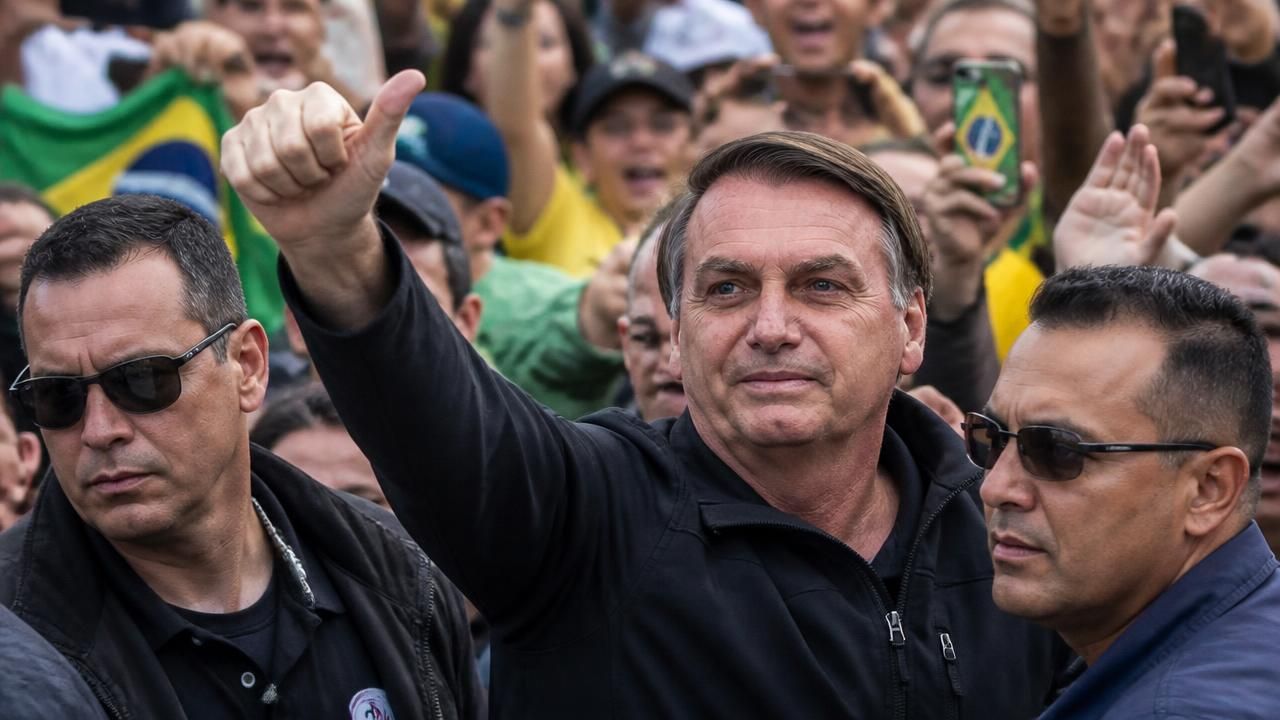
Brazil's presidential election is headed to a second round after Senator Flávio Bolsonaro delivered a first-round performance that ran well ahead of what investors, pollsters and prediction markets had been positioned for, according to projections and results reported across international outlets.
The outcome sets up a runoff against President Luiz Inácio Lula da Silva, extending a polarised campaign that has already reshaped expectations for Brazilian assets, interest rates and the country's fiscal trajectory heading into 2026.
Markets Poised for a Monday Surge
The clearest immediate consequence was financial. Bloomberg reported that Brazilian assets were "set to jump" after Bolsonaro came in ahead of Lula in the first round — a result it described as "a far better showing than investors were positioned for." That framing dominated the business press in the hours after polls closed: the story was less about the vote count itself than about the gap between market positioning and political reality.
The logic is familiar to anyone who traded Brazil through the 2022 cycle. A stronger-than-expected right-of-centre showing typically lifts the real, supports local equities and steepens the local yield curve, as investors price out the most expansionary policy scenarios and price in a more market-friendly runoff. Bloomberg's read was blunt: the first round had handed Brazilian risk assets a catalyst they had not been given by the polling consensus.
The Numbers: Polls and Prediction Markets Diverge
The most striking feature of the first round was the divergence between traditional polling and betting markets — a split that one MSN analysis addressed directly under the headline "Polymarket says Bolsonaro leads. Brazil's polls say it's tied. Both are right — here's why."
Pre-election surveys pointed in more than one direction. A Quaest poll showed Lula's lead over Flávio Bolsonaro narrowing in the final stretch, while a separate Datafolha survey had Lula maintaining his advantage. Yahoo published both framings side by side in the run-up to Sunday, illustrating how sensitive the race had become to methodology, timing and turnout assumptions.
Oddschecker, meanwhile, reported that Flávio Bolsonaro "continues to extend" his lead in betting markets, with a runoff considered likely even before the first-round result was confirmed. The implication is that money was leaning toward the Bolsonaro camp before voters had their say — and that the actual result validated the market's read more than the pollsters'.
"A far better showing than investors were positioned for." — Bloomberg Markets, on Flávio Bolsonaro's first-round performance
A Runoff, Not a Resolution
Reuters reported that "Bolsonaro beats expectations in Brazil presidential vote, will face Lula in runoff," while CNBC framed the same event around narrowing margins: "Brazil election headed to runoff, projection shows, as Bolsonaro lead narrows." KLCC's coverage emphasised the broader ideological shift, describing a "Lula-Bolsonaro run-off as right gains ground" — a reminder that the runoff is not simply a rerun of 2022 but a referendum on how far Brazil's electorate has moved since.
The differences in framing are instructive:
- Financial media (Bloomberg, oddschecker) treated the first round primarily as a positioning event, focusing on assets, odds and surprise value.
- Wire services (Reuters) stressed the runoff outcome and the underperformance of pre-election expectations.
- Broadcast and digital outlets (CNBC, MSN, Yahoo) emphasised the closeness of the race, the state of polling, and the mechanics of a second round.
- Public radio (KLCC) placed the result in a longer political context, highlighting the right's momentum.
Several aggregator pages — including those from detroitnews.com and MSN — were inaccessible or truncated at the time of publication, a reminder that much of the first-round coverage reached readers through syndicated and paywalled channels rather than original reporting.
Why It Matters Beyond Brazil
Brazil's runoff carries weight well beyond its borders. The country is Latin America's largest economy and a pivotal player in commodity markets, climate policy and the broader emerging-market complex. A second round that pits Lula against a Bolsonaro keeps the two most recognisable brands in Brazilian politics at the centre of the story, ensuring volatility for the real and for Brazilian sovereign debt through the runoff period.
For investors, the key questions are now fiscal: whether a Bolsonaro-led government would pursue spending restraint and central-bank credibility, and whether a Lula victory would extend the current policy mix. The first round answered the political question only partially — it produced a runoff, not a verdict — but it decisively answered the market's question about momentum.
What to Watch Next
Attention now turns to endorsement dynamics, turnout in the runoff and whether polling firms adjust their models after a first round that betting markets read more accurately than surveys. Analysts will also be watching whether Monday's expected rally in Brazilian assets holds, or fades once the political arithmetic of the second round becomes clearer. For now, the signal from Bloomberg, Reuters and the betting markets is consistent: Bolsonaro beat expectations, the race is tighter than polls suggested, and Brazil is heading into a runoff with its markets repriced.