Tesla delivered 486,532 electric vehicles in the third quarter of 2026, a 2.1 percent decline from the 497,099 cars it sold in the same period a year earlier — a dip that would normally rattle a company whose valuation rests on the promise of relentless growth. Instead, Tesla shares rose in morning trading, because the number comfortably beat the 456,600 vehicles analysts had penciled in, a figure that would have represented an 8 percent year-over-year collapse.
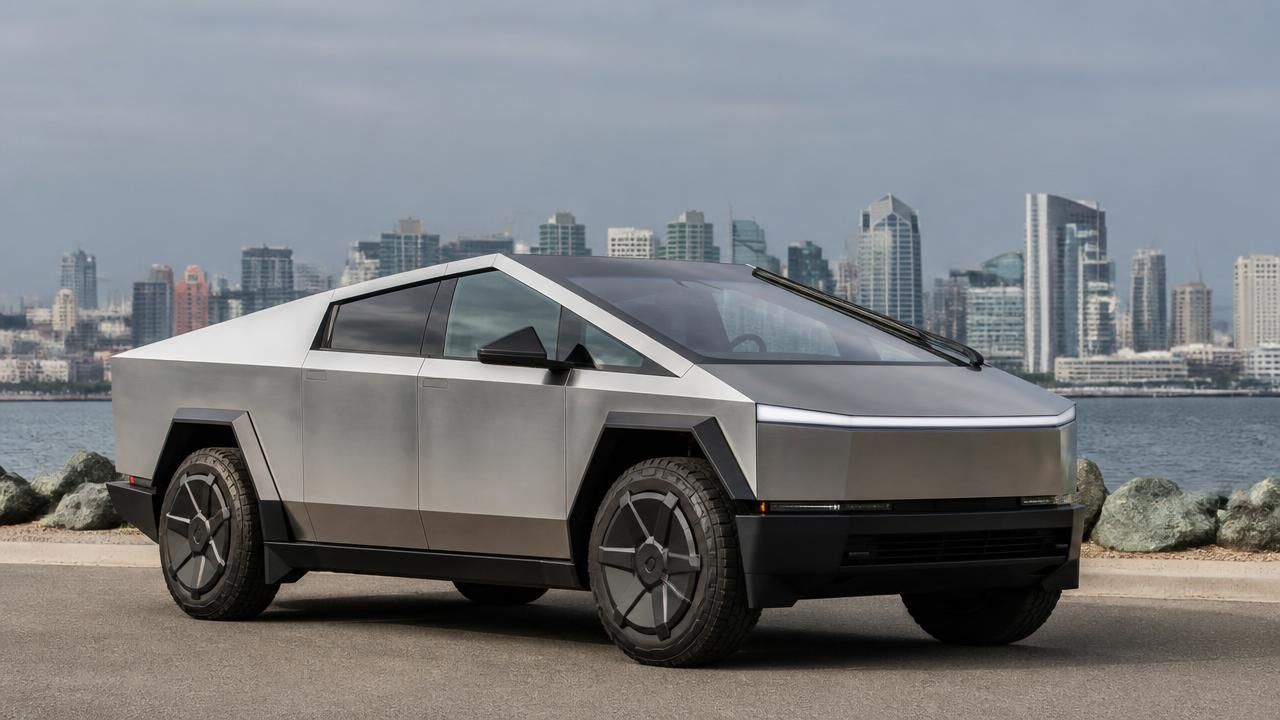
But beneath the headline beat lies a sharper story about the Cybertruck: the angular stainless-steel pickup that Tesla once hailed as a revolution in vehicle design is now selling so poorly that its sales category has fallen by nearly 40 percent — even as the company quietly raised its price by $5,000.
A Tale of Two Numbers
Tesla's production figures tell a story at odds with its delivery totals. The company built 464,391 vehicles in Q3, a 3.7 percent increase year over year. Of those, 457,387 were Model 3s and Model Ys — a 4.9 percent jump — while just 7,004 units fell into the catch-all "other models" bucket.
That bucket is where the Cybertruck lives, alongside a smattering of Semis and the forthcoming Cybercab. It is also shrinking fast. The category posted a 39.8 percent year-over-year decline, and it is now doing more work than ever: with the Model S and Model X retired, the Cybertruck is the only consumer vehicle Tesla sells that isn't a Model 3 or Model Y.
In other words, roughly 1.4 percent of Tesla's quarterly output came from everything that isn't its two mass-market sedans and crossovers — and the Cybertruck is the dominant share of that sliver.
The Price Hike Nobody Asked For
The Cybertruck's troubles are not new. What is new is Tesla's response: a $5,000 price increase. Financial and automotive outlets framed the move with varying degrees of incredulity.
Tesla's Cybertruck Isn't Selling, So Naturally It Now Costs $5,000 More — Carscoops
Despite Abysmal Sales, Tesla Raises Cybertruck Prices Because Why Not? — autoevolution
MSN, carrying the story to a mainstream audience, zeroed in on the strategic question underneath the pricing decision: Is demand really strong? The implicit answer, given the data, is that it is not — and that the price hike may be less a vote of confidence than a margin play.
Yahoo Finance's coverage, headlined "Tesla Raises Prices on Cybertruck Almost No One Will Buy," captured the same tension. Raising prices on a low-volume product can serve several purposes: protecting per-unit margins on a costly-to-build vehicle, reducing the incentive to manufacture units that sit on lots, or simply testing how inelastic the remaining buyer base — wealthy early adopters and Tesla loyalists — truly is.
How the Story Is Being Framed
The divergence in coverage is instructive. Ars Technica approached the quarter as a financial markets story, emphasizing the analyst beat, the stock's positive reaction, and the production-versus-delivery gap. Its headline led with the "free fall" in Cybertruck sales, but the article's substance was about Tesla's ability to outperform lowered expectations.
The automotive and finance outlets led with irony instead. Their shared thesis: a company raising prices on a product with collapsing demand is signaling something other than confidence — perhaps a retreat from volume ambitions, perhaps an attempt to wring revenue from a niche before it narrows further.
Both framings are defensible, and together they describe a company in an awkward transition. Tesla is still growing production, still beating expectations in a softening EV market, and still trading at a premium that assumes future growth. Yet its non-core products are contracting violently.
The Broader Context
The Cybertruck was unveiled in 2019 with a promised starting price near $40,000 and a reservation list that Tesla claimed exceeded one million. By the time deliveries began in late 2023, the entry price had climbed past $60,000, and subsequent trims pushed well into six figures. The truck has since faced recalls, quality complaints, polarizing aesthetics, and intensifying competition from the Ford F-150 Lightning, Rivian R1T, and a wave of new electric pickups from legacy automakers.
Meanwhile, the retirement of the Model S and Model X removes Tesla's traditional halo vehicles, concentrating the company's consumer lineup almost entirely on the Model 3 and Model Y — a pair that now accounts for 98.6 percent of production. That concentration is efficient, but it leaves Tesla with little room to absorb a demand shock in its two core nameplates.
What to Watch
- Q4 deliveries: Whether Tesla can reverse the 2.1 percent year-over-year decline or whether the slide becomes a trend.
- Cybertruck pricing: If the $5,000 increase holds, or if Tesla discounts it away within a quarter — a pattern the company has followed before.
- Cybercab and Semi: Whether Tesla's remaining "other models" eventually justify the category, or whether it keeps contracting toward irrelevance.
- Margins: Pricing actions on low-volume vehicles are often margin stories in disguise; Tesla's next earnings report will reveal which.
For now, the quarter offers a paradox that Wall Street has learned to tolerate: shrinking sales on paper, a stock that rises anyway, and a flagship product whose price goes up precisely as its buyers disappear.