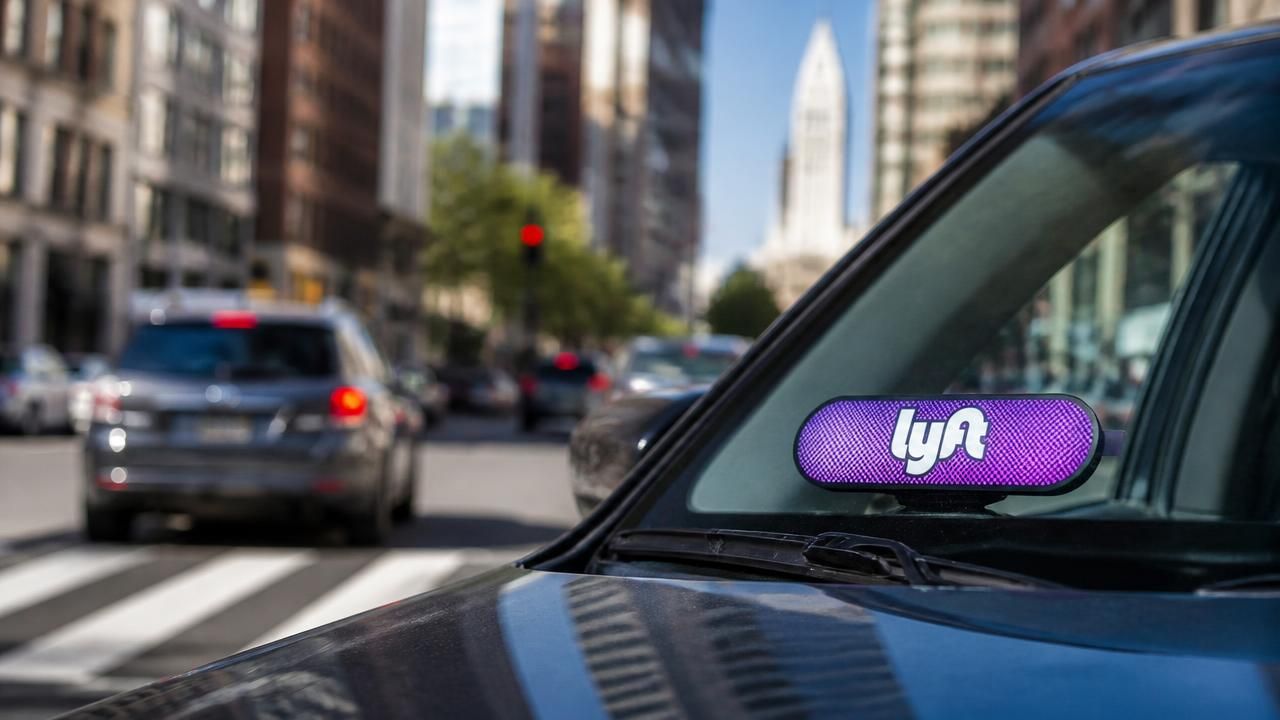
Lyft has agreed to pay $272.5 million to settle allegations that it committed wage theft by misclassifying its drivers as independent contractors rather than employees, California Attorney General Rob Bonta and three city attorneys announced Thursday. The agreement, described by local outlets as record-breaking, resolves the state's claims against Lyft over conduct stretching from 2016 to 2020 — but leaves the company's larger rival squarely in the crosshairs.
The case against Uber, filed alongside the Lyft action in May 2020, continues. That split outcome means the legal question at the heart of California's gig-economy wars — whether ridehail drivers are employees entitled to minimum wage, overtime and expense reimbursement, or independent contractors running their own small businesses — remains formally unresolved for the state's biggest player.
How the case began
The litigation dates to May 2020, when then-Attorney General Xavier Becerra — now the Democratic candidate for governor — sued both Uber and Lyft, arguing the companies had evaded state law by declaring their drivers were not employees. Becerra was joined by the city attorneys of San Francisco, Los Angeles and San Diego, giving the action both statewide and municipal weight.
In a Thursday statement, the attorney general's office alleged that Lyft "committed wage theft by misclassifying drivers as independent contractors rather than employees" between 2016 and 2020. That framing is significant: it casts the dispute not as a technical dispute over labor categories but as unpaid compensation owed to hundreds of thousands of California drivers.
Lyft "committed wage theft by misclassifying drivers as independent contractors rather than employees." — California Attorney General's statement
Thursday's settlement affects only Lyft. The office of current Attorney General Bonta announced the resolution jointly with private plaintiffs who had pursued parallel claims, a detail highlighted in regional coverage of the announcement.
Why $272.5 million matters
The sum is among the largest ever extracted from a gig-economy platform in a worker-classification dispute, and it lands in a state that has spent years trying to define the boundary between employee and contractor.
California's legal architecture on this question has shifted repeatedly. A 2018 state Supreme Court decision, Dynamex, adopted a strict "ABC test" for classifying workers, making it far harder for companies to treat workers as contractors. The Legislature codified that standard in 2019 as Assembly Bill 5. Ridehail companies then bankrolled Proposition 22, the 2020 ballot measure that exempted app-based drivers from AB 5 while offering limited benefits; voters approved it, and it survived a court challenge in 2023.
That backdrop explains why the settlement is being read in multiple ways. Business and insurance trade coverage treated it primarily as a liability and risk-management story — a nine-figure balance-sheet event for a company that has struggled to post sustained profits. Regional outlets, by contrast, led with the word "record-breaking," emphasizing the scale of relief for drivers in the Bay Area and beyond.
Who gets the money
The settlement is designed to secure monetary relief for drivers who worked for Lyft during the covered period, distributed through a process involving the state and the private plaintiffs. Drivers who believe they are covered should watch for claims procedures and eligibility notices as the agreement moves through court approval.
Beyond the payout itself, the deal carries a structural message. Attorney General Bonta's announcement framed it as a landmark outcome for misclassified workers, while industry observers noted that the resolution avoids a full trial that could have produced a sweeping statewide precedent on employment status.
Uber's continuing exposure
The most consequential element for the broader market may be what the settlement does not cover. Uber, which has long argued that its drivers value the flexibility of independent contracting, still faces the state's parallel claims. Any eventual resolution — or trial — would apply to a far larger driver base than Lyft's and could reshape the economics of the entire ridehail sector.
Both companies have argued that reclassifying drivers as employees would force them to cut service in many markets, raise fares and schedule drivers in shifts rather than letting them log on and off at will. Labor advocates counter that the contractor model simply shifts operating costs — fuel, vehicle wear, insurance and unpaid waiting time — onto drivers, effectively subsidizing low fares.
The wider stakes
Beyond California, the settlement will be studied by regulators and lawmakers in other states weighing similar classification rules, and by delivery and gig platforms that rely on contractor workforces. It also arrives during a competitive moment for Lyft, which has been fighting to hold market share against Uber while trying to demonstrate a credible path to profitability.
For drivers, the immediate question is practical: how much relief each will see, and when. For the industry, the question is whether a nine-figure settlement in the country's most active labor-enforcement state becomes a template — or an outlier that Uber ultimately contests to a different conclusion.
- Settlement amount: $272.5 million, covering alleged misclassification from 2016 to 2020.
- Parties: California Attorney General Rob Bonta, three city attorneys, and private plaintiffs; Lyft only.
- Still pending: The state's 2020 action against Uber.
- Legal backdrop: Dynamex, AB 5 and Proposition 22 define California's contested classification rules.
Thursday's announcement closes one chapter of a five-year legal fight — but with Uber's case unresolved, the argument over who counts as an employee in the app economy is far from settled.