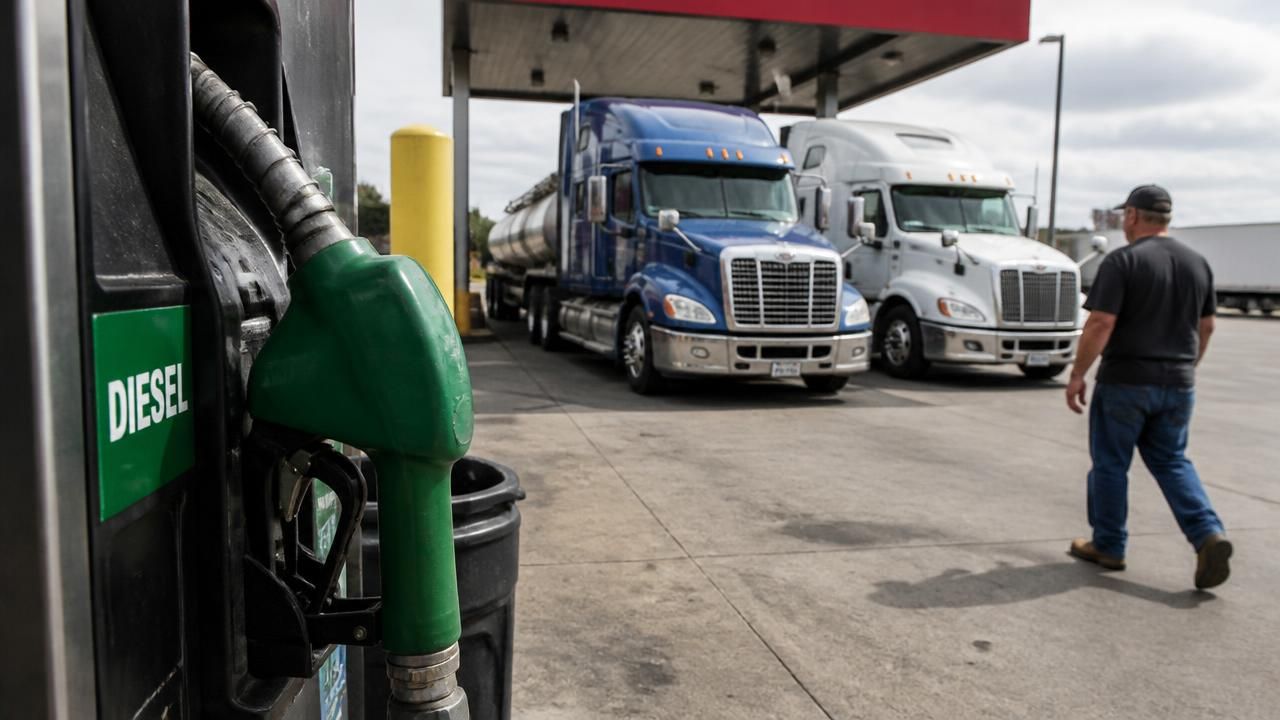
Diesel fuel in the United States has blown past $6 a gallon for the first time on record, a milestone that is rippling far beyond the truck stop — into grocery aisles, school district budgets, farm fields and the price of nearly everything that travels by road. The national average for on-highway diesel now sits roughly two dollars above regular gasoline, an unusually wide gap that has turned a fuel most drivers never pump into one of the most closely watched inflation indicators in the country.
The surge caps a year of relentless increases that began with rebounding post-pandemic demand, tightened further after Russia's invasion of Ukraine upended global energy flows, and has been sustained by refinery capacity that simply cannot keep pace with worldwide diesel consumption. Because diesel powers the freight network — long-haul trucks, rail, barges, tractors, construction equipment and backup generators — its price feeds into the cost of goods long before those goods reach a shelf.
"Diesel's new high of $6 per gallon will make 'just about everything' more expensive," one financial outlet warned, capturing the consensus among analysts tracking the run-up.
Why diesel costs more than gasoline
The intuition that diesel should be cheap is a holdover from another era. For most of the twentieth century, diesel typically sold for less than regular gasoline in the United States. That relationship flipped in 2004, and it has never fully reverted.
Three forces drove the change. First, new air-quality standards required refineries to produce ultra-low-sulfur diesel, a cleaner but costlier fuel to make. Second, global demand shifted: Europe's heavy reliance on diesel passenger cars and Asia's booming industrial economies pulled diesel barrels onto the world market, where U.S. refiners now compete for the same supply. Third, taxes — the federal excise on diesel is 24.4 cents per gallon versus 18.4 cents for gasoline — tilt the pump price further.
Add a refining system optimized for gasoline in a country that consumes far more of it, and diesel becomes the tighter, more exportable and more volatile product. When inventories fall, prices spike.
From the pump to the produce aisle
The practical effect is blunt. Freight operators, who burn thousands of gallons a week, pass fuel surcharges down the supply chain. Retailers, farmers and manufacturers absorb what they can and pass along the rest. The result is upward pressure on food, building materials, clothing and consumer goods at precisely the moment households are already stretched.
Regional coverage has tracked the same story through a local lens. In Washington state, outlets reported record gasoline and diesel prices through September and published county-by-county breakdowns showing where drivers could still find the cheapest fuel — a service that has become a staple of local news as the national average sets one benchmark after another.
Industry watchers note that the pain is layered on top of an already expensive year: data compiled by business publications showed both gasoline and diesel on track for their most expensive August on record, with further records falling in the weeks that followed.
School buses, farms and pickup trucks
Among the most immediate casualties are public institutions with fixed budgets. School districts across the country have been forced to monitor transportation costs closely, with some weighing route consolidation or contingency funds as diesel climbs. Districts that locked in fuel contracts before the spike are insulated for now; those buying on the spot market are not.
The squeeze also reaches agriculture, where diesel runs irrigation pumps, combines and grain haulers during the critical harvest window, and construction, where heavy equipment has no realistic electric substitute at scale.
Even the automotive world is reacting. One enthusiast publication ran a reader poll asking whether record diesel prices make General Motors' Duramax engine — the company's heavy-duty diesel offering — less appealing to buyers. It is a small but telling question: diesel's traditional advantage has always been fuel economy and torque, and when the fuel costs more per gallon than premium gasoline, the math that once justified a diesel pickup gets harder to defend.
How the story is being framed
Coverage of the record has diverged along predictable lines, and together those frames form a fuller picture:
- National news outlets emphasize the macro economy, describing diesel as the fuel "hauling everyday goods" and framing the record as a deepening strain on the logistics that underpin consumer prices.
- Business and finance outlets focus on the pass-through, warning that a $6 gallon of diesel will make "just about everything" more expensive and treating the milestone as an inflation signal.
- Local newsrooms translate the national number into county-level gas maps, school bus budgets and commuter advice.
- Trade and enthusiast publications examine consequences for specific products, from heavy-duty trucks to the diesel engine market itself.
What comes next
The trajectory depends on factors largely outside American control: refinery maintenance schedules, European demand ahead of winter, the pace of Chinese industrial activity and the durability of sanctions on Russian energy exports. Seasonally, diesel demand rises in autumn as harvest and heating season overlap, and inventories remain thin by historical standards.
Analysts see little quick relief. Refinery capacity in the U.S. and abroad has shrunk over the past decade as older plants closed, and new capacity takes years to permit and build. Meanwhile, the long-term transition toward electrification is advancing most quickly in the segments that use the least diesel — passenger cars — leaving the heavy-duty, agricultural and industrial users most exposed to price shocks with few near-term alternatives.
For now, the record stands: a fuel that most Americans never pump has become one of the clearest measures of how expensive it has become to move anything at all.