RedBird Capital Partners has clinched a deal to become the lead investor in Puck, taking a majority stake in the subscription publishing upstart at a valuation of roughly $250 million, according to reports confirming the transaction. The move marks the latest step in founder Gerry Cardinale's push to assemble a portfolio that spans sports rights, film and television production, and now premium journalism.
The deal, first reported by MSN and confirmed by The Hollywood Reporter under the headline "RedBird Closes Deal to Buy Majority in Puck," hands the New York–based firm control of a business that has carved out an unusual niche: high-priced, insider-adjacent newsletters covering Wall Street, Washington, Silicon Valley and Hollywood. Puck was founded in 2021 and has built its model on bundled subscriptions and star bylines, a strategy that has drawn interest from legacy publishers and private capital alike.
A $250 Million Bet on Subscription Journalism
The valuation places Puck in rarified company for a company of its age. For RedBird, the logic is less about audience scale than about influence and margins. Puck's readers are, in effect, the same decision-makers RedBird already does business with across sports and entertainment — a customer base that makes the media property strategically complementary rather than purely financial.
The acquisition also gives RedBird a foothold in the increasingly contested market for direct-to-consumer content, where publishers ranging from The Information to Substack-backed independents are competing for high-income readers willing to pay for proprietary reporting. Puck's subscription-first economics sidestep the advertising volatility that has hammered much of digital media.
Cardinale's Wider Thesis: Sports, Media and Entertainment Converging
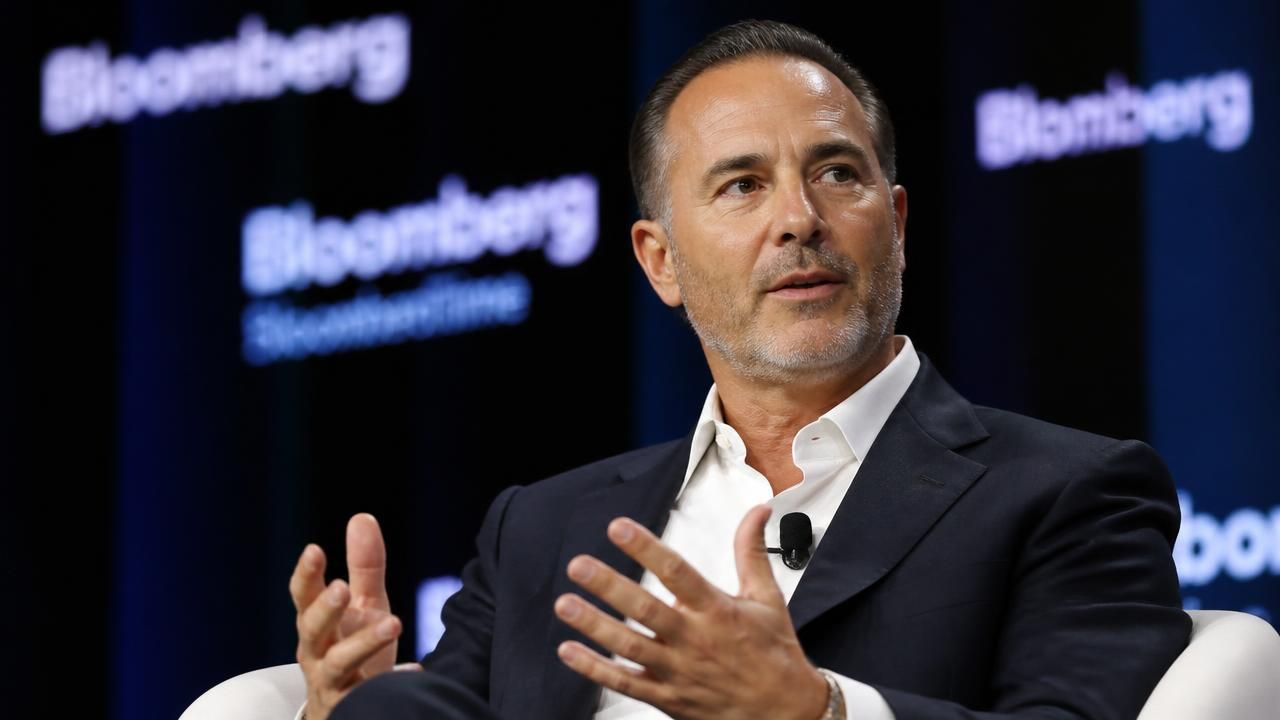
Speaking at Bloomberg Screentime 2026 in Los Angeles, Cardinale sat down with Bloomberg's Lucas Shaw to discuss his investment approach across sports, media and entertainment — and to address the future of a Paramount Skydance and Warner Bros. Discovery combination. His appearance placed the Puck deal in a broader framework that has defined RedBird's strategy: owning pieces of the intellectual property and live rights that streamers and broadcasters cannot easily replicate.
"The scarcity value is in the content and the rights, not in the pipes," Cardinale said at the event, according to remarks summarized by Bloomberg, arguing that the next phase of media investing will reward owners of franchises and audiences rather than distributors alone.
That thesis explains RedBird's deepening ties to Paramount. The firm was among the investors backing David Ellison's Skydance in its combination with Paramount, and it has been active across sports through stakes in Fenway Sports Group, the YES Network and other properties, as well as in production through assets including All3Media.
The Regulatory Piece: FCC Clears Foreign Investment
The Puck announcement landed alongside a separate but related development: the Federal Communications Commission approved the foreign investment component tied to a Paramount–Warner Bros. Discovery merger, according to MSN. The approval removes one procedural obstacle in a transaction that would reshape the upper tier of Hollywood, consolidating two of the industry's largest content libraries and streaming platforms under one roof.
Regulators have scrutinized foreign ownership stakes in U.S. broadcast assets for decades, and the FCC's sign-off was widely viewed as a prerequisite for any deal to proceed. Even so, the broader transaction still faces antitrust review, shareholder votes and the practical challenge of integrating two companies with thousands of employees and competing studio operations.
How the Coverage Differed
- Bloomberg framed the news cycle around Cardinale as a strategist, focusing on his investment philosophy and his read on a Paramount–WBD combination rather than the mechanics of the Puck deal.
- MSN's two reports emphasized deal terms and valuation, highlighting the $250 million price tag and RedBird's move to majority control.
- The Hollywood Reporter treated the transaction as a closed deal, foregrounding RedBird's emergence as Puck's lead investor.
Taken together, the coverage describes a single story with two centers of gravity: a boutique media acquisition and a much larger consolidation play that could determine which companies control premium content distribution for the next decade.
Why It Matters — and What Could Go Wrong
Private capital's appetite for media assets has grown as legacy advertising models erode. Yet the record is mixed. Buyouts of digital publishers have frequently ended in writedowns, and subscription businesses face churn risk once growth plateaus. Puck's challenge will be scaling beyond its core of influential readers without diluting the exclusivity that justifies its pricing.
Meanwhile, the Paramount–Warner Bros. Discovery question remains unresolved. If completed, a combination would create a studio and streaming giant with significant leverage over talent, licensing and carriage negotiations — a prospect likely to draw intense regulatory and political scrutiny regardless of the FCC's foreign-investment clearance.
For Cardinale, the two developments are best understood as one bet: that as distribution fragments, the durable value accrues to whoever owns the content, the rights and the audience relationships. Puck adds a small but influential piece to that portfolio. The Paramount question, still pending, would be the far larger one.