Australia's Lynas Rare Earths Ltd. has agreed to acquire Meteoric Resources Ltd. in an all-share deal valued at roughly A$968 million ($670 million), a transaction that would hand the world's largest rare earths producer outside China a direct stake in an emerging Brazilian source of the critical minerals used in electric vehicles, wind turbines, and defense systems.
The agreement, reported by Bloomberg Markets, marks one of the most significant consolidations in the global rare earths sector this year and underscores the breakneck pace at which Western governments and industrial players are scrambling to build supply chains independent of Beijing. The deal is structured entirely in shares, meaning Meteoric shareholders would receive Lynas stock rather than cash — a common approach in mining mergers that preserves the acquirer's balance sheet while giving target shareholders exposure to the combined entity's future.
Why Meteoric, and Why Brazil?
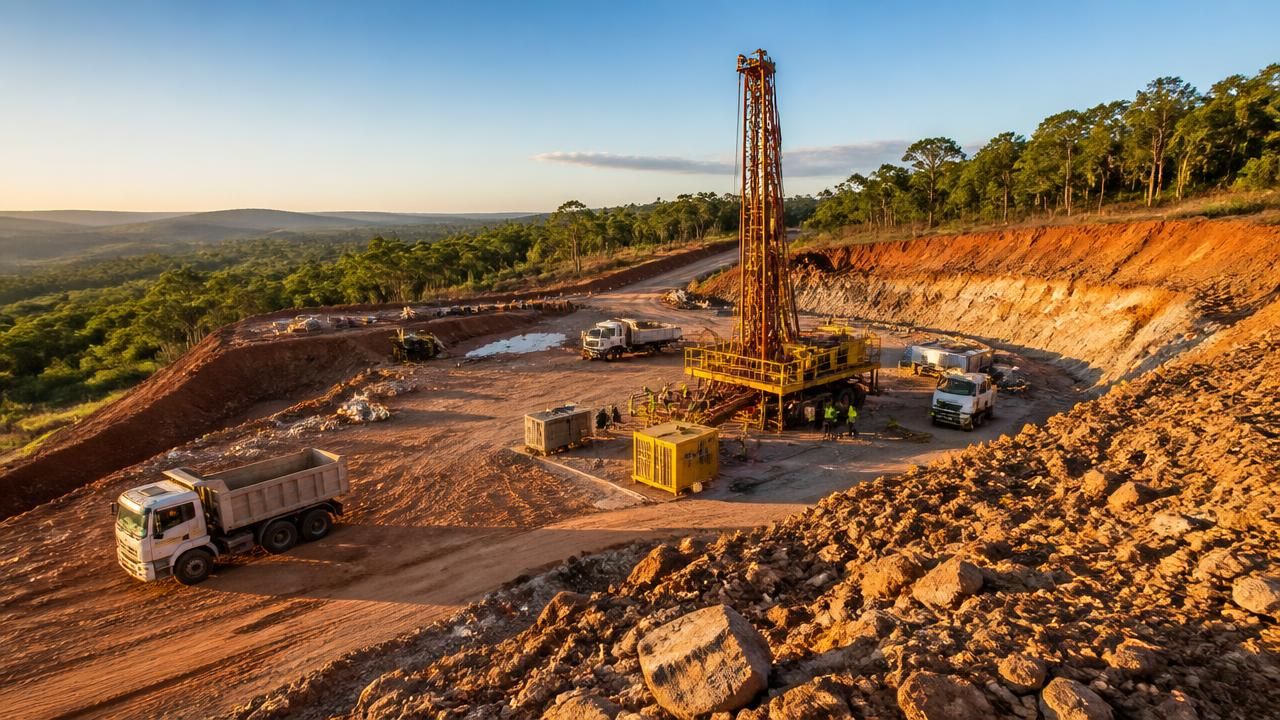
Meteoric Resources is an Australian-listed explorer whose flagship asset, the Caldeira ionic clay rare earth project in Minas Gerais, Brazil, has drawn attention as one of the few large-scale, non-Chinese sources of heavy and light rare earth elements. Ionic clay deposits are prized because they typically require simpler, lower-cost processing than hard-rock deposits — the type Lynas operates at its flagship Mt Weld mine in Western Australia.
Brazil has quietly emerged as a focal point in the global race for critical minerals. The country holds some of the world's largest reserves of niobium and graphite alongside significant rare earth deposits, and its government has been courting foreign investment as part of a broader industrial policy push. For Lynas, Caldeira offers geographic diversification away from Australia and Malaysia, where its operations have faced environmental scrutiny and community opposition.
The deal gives Lynas access to an emerging supplier of critical minerals in Brazil.
The Rinehart Connection
Bloomberg characterized the transaction as "Gina Rinehart backed" — a reference to the Australian mining billionaire's substantial shareholding in Lynas through her private company, Hancock Prospecting. Rinehart, one of the wealthiest people in Australia, has steadily accumulated stakes across the country's critical minerals sector, positioning herself as a pivotal player in the West's effort to counter Chinese dominance. Her backing of Lynas effectively signals confidence in the company's strategy of vertical and geographic expansion.
Rinehart's involvement also carries strategic weight. Hancock Prospecting holds interests in iron ore, lithium, and rare earths, and its support for a Lynas–Meteoric tie-up suggests Australia's mining establishment views consolidation as essential to competing at scale with Chinese producers such as China Northern Rare Earth Group.
A Rare Earths Sector Under Pressure
Rare earths have become one of the most geopolitically charged commodities in the world. China accounts for roughly 60% to 70% of global mining output and an estimated 85% to 90% of processing and refining capacity — a chokehold that Western policymakers have identified as a strategic vulnerability.
Lynas is the largest rare earths producer outside China, operating the Mt Weld mine in Western Australia and a processing facility in Kuantan, Malaysia. The company is also developing a heavy rare earth separation facility in Seadrift, Texas, supported by funding from the U.S. Department of Defense. Acquiring Meteoric would extend that footprint into South America, giving Lynas a third continent of production and a hedge against operational disruptions in any single jurisdiction.
The strategic logic mirrors moves elsewhere in the sector: the United States, the European Union, Japan, and Australia have all launched incentive programs, stockpiles, and bilateral agreements aimed at diversifying supply. Automakers, meanwhile, have signed long-term offtake agreements directly with miners to secure the neodymium and praseodymium — plus dysprosium and terbium — needed for high-performance magnets in EV motors.
Differing Frameworks in the Coverage
The coverage of the deal reflects how outlets frame the same event through different lenses. Bloomberg Markets led with the Rinehart connection and the strategic value of Brazilian critical minerals, treating the transaction as a geopolitical story as much as a financial one.
Aggregator coverage distributed via MSN emphasized scale, with headlines describing the deal as worth A$672 million on one version and an "A$1 billion tie-up" on another — figures that reflect the same transaction viewed in different currencies and rounding conventions. The Australian dollar figure of A$968 million sits just below the billion-dollar threshold in local currency, while the converted U.S. dollar value of roughly $670 million accounts for the apparent discrepancy. In a deal of this kind, headline values can also shift with share-price movements, since the consideration is denominated in Lynas stock rather than fixed cash.
That divergence in framing is itself telling: Australian readers are being told this is a near-billion-dollar national champion consolidation, while international readers are being presented with a mid-sized cross-border mining acquisition. Both are accurate; neither captures the full picture alone.
Risks and the Road Ahead
The transaction still faces hurdles. All-share mining mergers require shareholder approval on both sides, and Meteoric's investors may weigh whether Lynas stock represents better long-term value than holding a pure-play Brazilian rare earths developer. Regulatory approvals in Australia and Brazil will also be required, and Brazil's evolving mining permitting regime could add timelines that neither company fully controls.
Commodity price volatility is another factor. Rare earth prices have swung sharply in recent years as China adjusted export quotas and as demand forecasts for EVs and wind power were revised. A sustained downturn could pressure the economics of developing Caldeira, which remains a pre-production asset requiring significant capital expenditure.
Still, the direction of travel is clear. Western governments have committed billions to onshoring critical mineral processing, and consolidation among non-Chinese producers is likely to accelerate. If completed, the Lynas–Meteoric deal would create a rare earths champion spanning Australia, Malaysia, the United States, and Brazil — a genuinely global counterweight in a market that has, for three decades, been defined by a single dominant supplier.