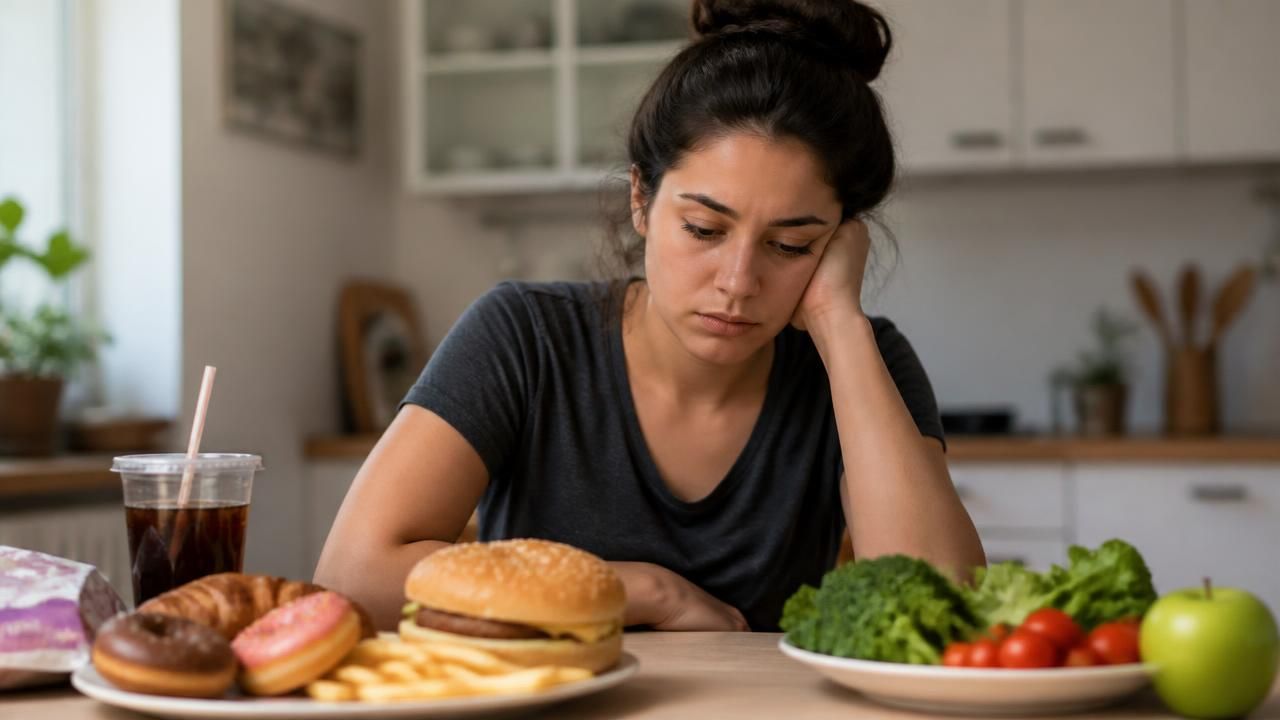
People being treated for depression who sharply reduced how much ultra-processed food they ate reported notable improvements in their symptoms, according to a small preliminary study — a finding that is being framed two very different ways as it circulates through health and science outlets this week.
The research, reported by ScienceDaily under the headline "Could quitting ultra-processed food boost your mental health?," followed a limited group of people with depression who dramatically cut back on industrially formulated foods. Participants experienced meaningful improvements in mood symptoms. The researchers suspect the benefit may work partly through the gut: less damage to the intestinal lining, less chronic inflammation, and — in theory — a calmer signaling environment for the brain.
Aggregators including MSN picked up the story twice, once as "Can cutting ultra-processed foods help with depression? A new study offers clues" and again under the more direct "Could quitting ultra-processed food boost mental health?" Both headlines lean on the same hedge: clues. That word is doing a lot of work, and it is worth taking seriously.
The gut-brain hypothesis, explained
The proposed mechanism is not exotic. Ultra-processed foods — the category defined by the NOVA classification as industrial formulations made mostly from substances extracted from whole foods, plus additives — have been associated with increased intestinal permeability, sometimes called leaky gut. When the gut barrier weakens, bacterial fragments can slip into the bloodstream, prompting low-grade immune activation that shows up as elevated inflammatory markers.
Chronic inflammation has long been linked to depression in a subset of patients, and some antidepressant research has even targeted inflammatory pathways directly. If diet is nudging that system, the logic goes, changing diet might nudge mood.
"Healthier eating may benefit the brain partly by reducing gut damage and chronic inflammation," the researchers suggest — a plausible mechanism, but one this study was not designed to prove.
A second, quieter finding: focus
A separate ScienceDaily item complicates the picture in an interesting way. Its headline — "Ultra-processed foods may be stealing your focus even if you eat healthy" — points to a distinct concern: cognitive effects that may appear regardless of whether a person's overall diet otherwise meets nutritional guidelines. In other words, the damage may not be about missing vitamins. It may be about what is in the food itself, or how quickly it delivers energy.
Researchers have proposed several explanations over the years: sharp blood-sugar swings after rapidly absorbed carbohydrates, additives that may affect the microbiome, disrupted reward signaling, or simple displacement of fiber and micronutrients. The distinction matters, because it reframes the debate. If ultra-processed foods hurt attention and mood through mechanisms other than nutrient deficiency, then a diet can be technically adequate and still be working against you.
Why the coverage splits in two
The outlets covering this story are not contradicting each other so much as emphasizing different halves of the same problem. Science-oriented coverage leads with the mental-health finding and the biology behind it. Aggregated consumer coverage asks the practical question — can cutting these foods help? A third framing, from USA Today's "Why we're hooked on processed food — and how to quit," treats the issue as a behavioral and food-environment story: why these products are engineered to be hard to stop eating, and what individuals can realistically do about it.
That third angle may be the most consequential, because it addresses the reason the research is hard to act on. Ultra-processed foods are cheap, shelf-stable, heavily marketed and now supply roughly 57% of calories in the average American diet. Advising people to cut back is easy. Doing it is not.
The evidence base is bigger — and more equivocal — than one study
This preliminary trial lands on top of a substantial body of observational work. A 2023 study in JAMA Network Open following roughly 30,000 women found that higher ultra-processed food intake was associated with increased risk of depression. A large 2024 umbrella review published in The BMJ pooled dozens of meta-analyses and reported associations between ultra-processed food consumption and higher risks of cardiovascular disease, type 2 diabetes, anxiety and depression, among other outcomes.
And a landmark 2019 randomized controlled trial from the National Institutes of Health — the rare study to put people in a metabolic ward and control exactly what they ate — found participants consumed about 500 extra calories per day and gained roughly two pounds over two weeks on an ultra-processed diet compared with a matched unprocessed one.
Still, association is not causation. Observational studies struggle with reverse causation: people who are depressed may eat differently, and may reach for convenient food precisely because their symptoms sap the energy to cook.
What to take from it
- Caveats first. The depression findings are preliminary, drawn from a small sample, and should not be read as a treatment recommendation. Anyone with depression should talk to a clinician before changing anything about their care.
- Whole foods, not perfection. Researchers generally suggest gradual swaps — cooking more meals from basic ingredients, reading labels for long additive lists — rather than an all-or-nothing purge.
- Watch for industry pushback. Food manufacturers have disputed the NOVA framework as imprecise, arguing that processing level is a poor proxy for nutrition.
- Better trials are coming. The field's next step is larger randomized controlled trials measuring both mood and cognition, which would move the conversation from clues to conclusions.
For now, the honest summary is a familiar one in nutrition science: the signal is consistent and biologically plausible, the mechanism is still being mapped, and the study everyone is citing this week is a starting point, not an answer.