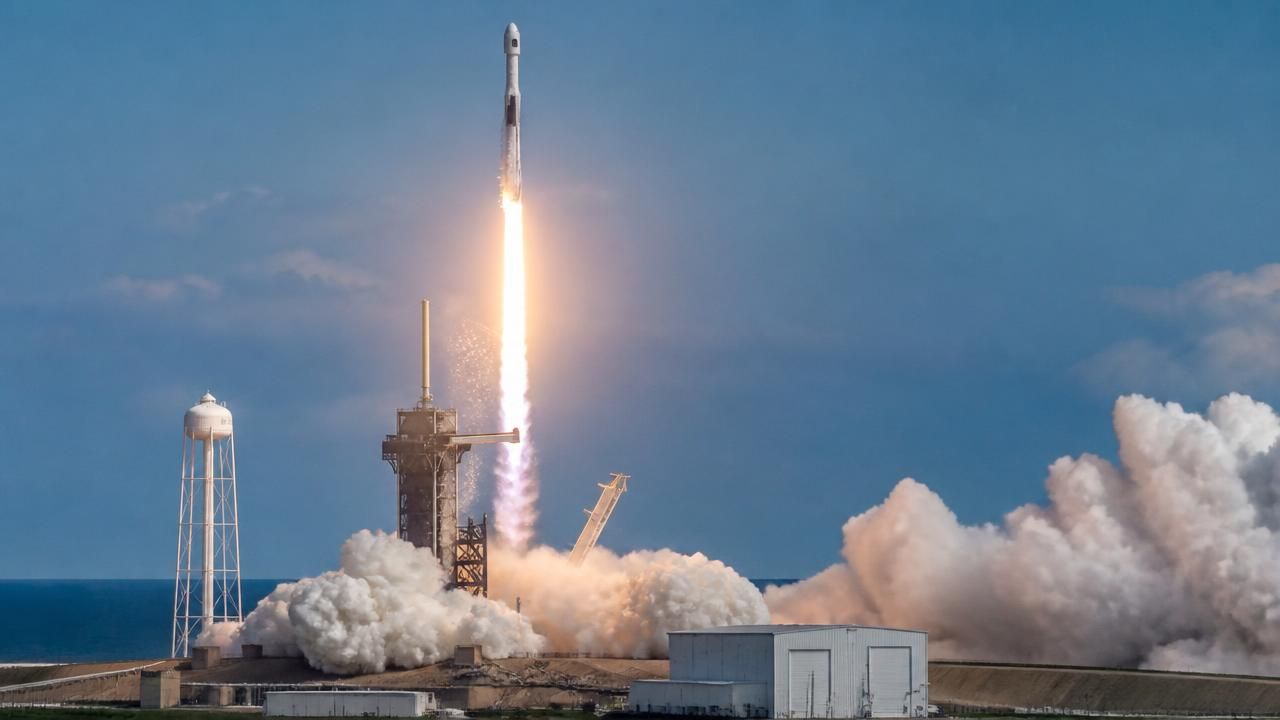
Four astronauts launched from Cape Canaveral Space Force Station in Florida aboard a SpaceX Crew Dragon capsule on the company's 13th long-duration crewed mission for NASA, beginning what is being described as the fastest U.S. crewed journey to the International Space Station ever flown.
The crew of four — two NASA astronauts, one astronaut from the Canadian Space Agency, and a Russian cosmonaut — lifted off atop a Falcon 9 rocket, riding the Dragon capsule toward the orbiting laboratory. The launch marked the first crewed flight from American soil in roughly six months, ending a hiatus in U.S. human spaceflight that had stretched through the late summer.
A Fast Track to the Station
Unlike earlier station crews that spent days catching up to the ISS, Crew-13 is on a hurried rendezvous profile designed to reach the station in a matter of hours rather than days. NASA and SpaceX have gradually refined the launch-to-docking sequence, trimming orbital phasing maneuvers and allowing the capsule to chase the station directly. The result: one of the shortest transit times of any U.S. crewed flight to date.
That speed matters for more than bragging rights. Shorter trips reduce the crew's exposure to cramped quarters, conserve onboard consumables, and cut the physical toll that spaceflight takes on the human body during the initial transit. It also gives NASA a tighter operational rhythm, since launching and docking quickly reduces the window in which orbital mechanics or weather could disrupt a mission.
Once Dragon approaches the station, the capsule will execute an automated docking, with the crew monitoring systems before joining the Expedition crew already aboard the outpost. The arrival brings the station back to its full, seven-person complement, a configuration that supports the bulk of scientific research conducted in orbit.
Who Is on Board
The mission carries a multinational crew that reflects the enduring partnership behind the ISS, even as relations between the United States and Russia remain strained on the ground. The roster includes two NASA astronauts, a Canadian Space Agency flyer — a reminder of Canada's three-decade presence in human spaceflight — and a Roscosmos cosmonaut, continuing the long-running seat-exchange arrangement that keeps the station operating with a mixed crew.
Several observers noted that a Central Florida astronaut is among the fliers, giving the Space Coast launch a homegrown flavor. NASA veteran Jessica Watkins has been identified as leading aspects of the mission, adding another chapter to her career after she previously served aboard the station as a flight engineer — a reflection of the deepening bench of experienced astronauts NASA can now call on.
“Epic ride” — how local coverage in Orlando described the launch, as skies opened up to allow SpaceX and NASA to send Crew-13 to space.
Weather Tensions Before Liftoff
Forecasters had warned in the hours before the launch window that Florida weather could threaten the attempt. Coastal cloud cover, thunderstorms, and shifting winds are perennial hazards at Cape Canaveral, where SpaceX has had to scrub or delay numerous flights over the years. South Florida coverage flagged the risk explicitly, noting that conditions could force a postponement. In the end, the skies cooperated, and the rocket climbed through a clearing window — a moment that local outlets framed as a dramatic break in the clouds.
Why Crew-13 Matters
The flight is the latest in the Commercial Crew Program, the NASA initiative that reestablished American human spaceflight after the retirement of the Space Shuttle in 2011. For nearly a decade, the U.S. relied on Russian Soyuz capsules to reach the station, paying for seats and ceding a strategic capability. SpaceX's Dragon restored an American launch option, and Boeing's Starliner has been working to join it.
With Crew-13, SpaceX has now flown more than a dozen long-duration crews, an operational cadence that has transformed the company from a brash startup into NASA's primary crew transportation provider. Falcon 9's reliability record, built on a reusable booster architecture, underpins that trust — the same architecture that traces its origins to the company's earliest test firings in Texas and its first orbital launches years ago.
The mission also underscores the international character of the station itself. Even as geopolitical tensions persist, the ISS remains one of the few arenas where the U.S. and Russia cooperate routinely. The presence of a cosmonaut aboard Crew-13 keeps that arrangement intact, ensuring the station can be crewed safely even if either nation's own vehicles were grounded.
What Comes Next
After docking, the Crew-13 astronauts will spend roughly six months aboard the station, conducting research spanning biology, materials science, Earth observation, and technology demonstrations designed to support future missions to the Moon and Mars. They will also take part in the routine maintenance and spacewalks that keep the aging outpost running.
NASA and SpaceX are expected to continue the rhythm of launches, with future crews already in training. For the Space Coast, the launch is another economic and cultural touchstone: hotels filled, viewing sites crowded, and central Florida reaffirming its place as the launch capital of the United States. For the crew, however, the milestone is simpler — the start of a fast ride to a laboratory 250 miles above the planet, and six months of work in the most extreme environment humans have ever routinely inhabited.