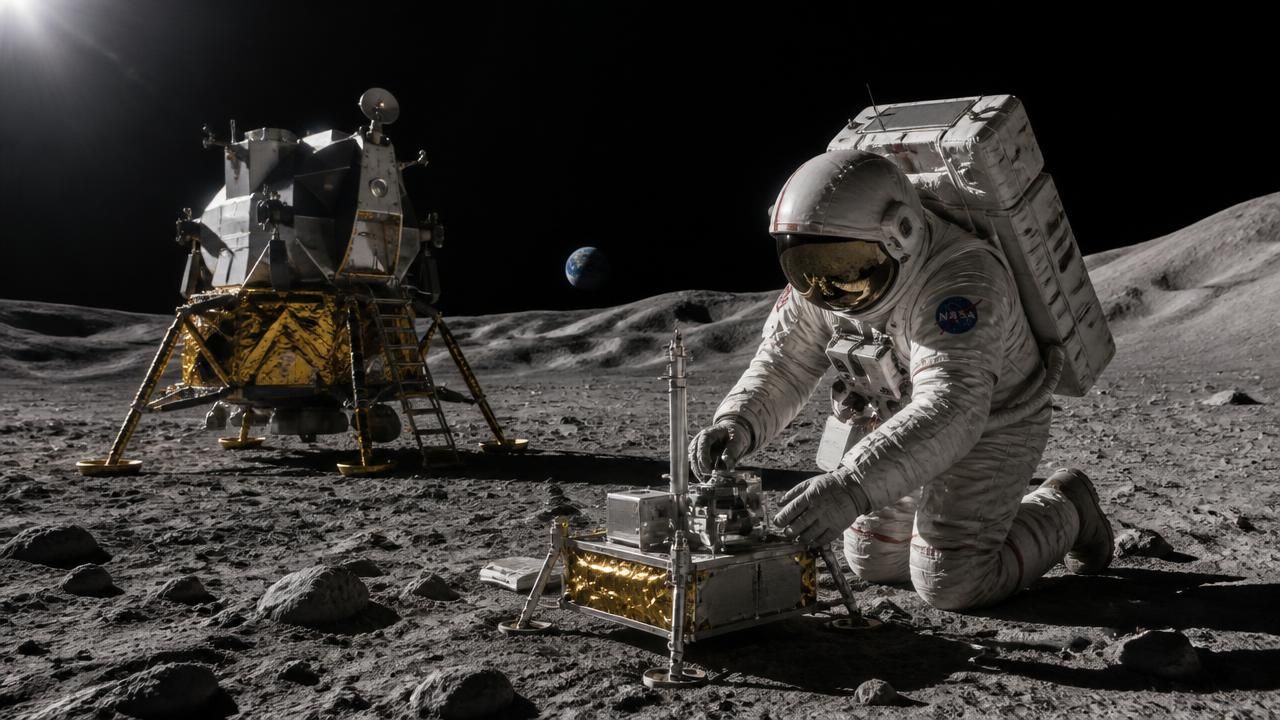
NASA is pressing ahead with plans to build humanity's first lunar outpost, unveiling a fresh slate of scientific investigations alongside roughly $600 million in commercial lander awards — a dual bet that the agency hopes will lock in the science, the hardware and the schedule for a sustained human presence on the Moon.
The three new instrument suites were selected through NASA's Payloads and Research Investigations on the Surface of the Moon (PRISM) program and will fly to the lunar surface aboard commercial landers under the CLPS (Commercial Lunar Payload Services) initiative. They form part of the agency's broader Moon Base Program, an outpost concept sited near the lunar South Pole and developed under the umbrella of Artemis.
According to NASA, the payloads will help researchers understand lunar resources, map natural shelters, and assess environmental hazards — the foundational groundwork, in the agency's framing, for a safe and sustained human presence.
'The ultimate interplanetary survival guide'
NASA's own release frames the selection in explicitly operational terms: this is science in service of survival, not discovery for its own sake.
"NASA Science is building the ultimate interplanetary survival guide to ensure that science goes first to the lunar surface to provide our future astronaut crews with the vital information, resources, and safety precautions needed ahead of time to survive the night on the Moon."
— Nicky Fox, associate administrator, Science Mission Directorate, NASA Headquarters
The reference to surviving the lunar night is not rhetorical. Near the South Pole, where the Moon Base is envisioned, permanently shadowed craters plunge to some of the coldest temperatures in the solar system, while adjacent ridgelines offer near-continuous sunlight. That juxtaposition — brutal cold beside reliable solar power — shapes nearly every engineering and science decision on the program.
The three science priorities
- Lunar resources: Characterizing water ice and other volatiles that could be harvested for drinking water, breathable oxygen and rocket propellant.
- Natural shelters: Mapping lava tubes and other subsurface voids that could shield crews from radiation and micrometeorites.
- Environmental hazards: Assessing surface conditions, dust behavior and radiation exposure that crews will face during long-duration stays.
The distinction matters. Resource prospecting turns the Moon from a destination into a supply depot; shelter mapping turns it from a campsite into a settlement; hazard assessment is the difference between a survivable mission and a fatal one.
From PRISM to the surface: the commercial pipeline
The payloads travel under CLPS, NASA's model of buying delivery services from private companies rather than building and operating its own landers. It is a deliberate shift in risk: the agency purchases a ride, not a vehicle, and accepts a higher tolerance for failure in exchange for lower cost and faster cadence.
That pipeline is scaling quickly. One outlet's headline put it bluntly — NASA's Moon Base is "taking shape with 20+ lunar landings planned." Regional coverage on Florida's Space Coast has tracked the parallel industrial build-out, including Blue Origin's progress on launch pad infrastructure, underscoring how the Moon Base program has become an economic story as much as a scientific one.
Cost, schedule and the fear of delay
Not every framing is triumphant. CNN's coverage led with NASA "making moves to dodge costly delays on its path to build a $30 billion moon base" — a figure that reframes the program as a multibillion-dollar infrastructure project with the attendant risk of cost overruns and slipping timelines.
That tension is familiar. NASA's Artemis-era ambitions have repeatedly collided with budget realities and technical setbacks, and the agency is now structuring awards to spread risk across multiple commercial partners rather than concentrating it in a single prime contractor. The roughly $600 million in lander awards announced alongside the science selections is best understood in that light: a down payment on redundancy.
A Mars rover — on the Moon?
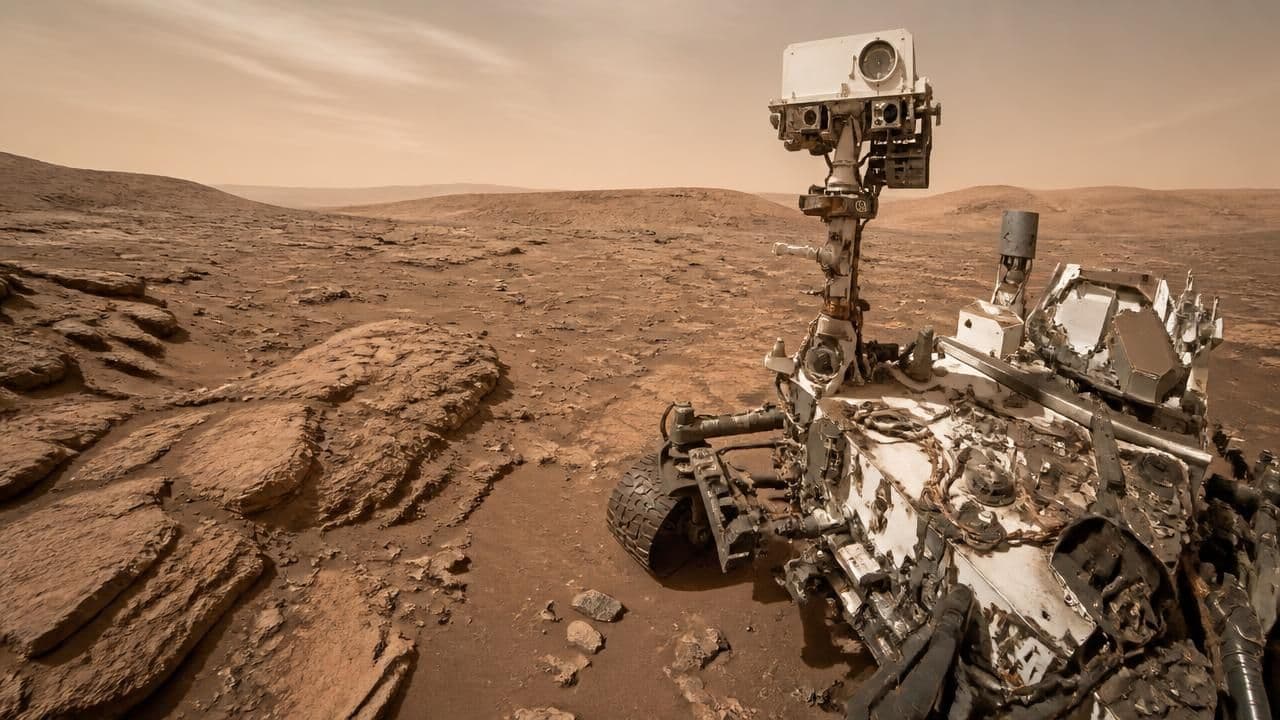
Among the more intriguing threads in recent briefings is a proposal to send a Mars rover to the Moon. The New York Times reported that NASA may dispatch a rover built on Mars heritage — the lineage of Curiosity and Perseverance — to the lunar surface, while Yahoo's coverage described it as part of a broader Moon Base update.
The logic is pragmatic: flight spares and proven designs already exist, and the Moon offers a nearby, accessible proving ground for autonomous driving, sample handling and long-duration surface operations that would later be applied on Mars. It also suggests NASA is thinking of the Moon and Mars as a single integrated campaign rather than competing destinations.
Built on decades of lunar science
The push rests on earlier breakthroughs, most notably the discovery of water on the Moon — a finding that transformed lunar exploration from a symbolic endeavor into a resource proposition. The same agency portfolio that produced exoplanet hunters like TESS and distributed-computing initiatives such as the interstellar-focused SETI-style projects now feeds directly into lunar operations.
Coverage of the announcement has also produced a small but telling discrepancy: at least one science outlet described the selection as "four new Moon missions," while NASA's own release specified three new investigations and their payload suites. The gap reflects how broadly the term "mission" is applied — individual instruments, payload suites and lander deliveries are often counted differently by different observers.
What comes next
The immediate next steps are integration and launch scheduling: matching instruments to landers, confirming landing sites near the South Pole, and validating that hardware can survive the transit and the lunar night. Further PRISM selections and CLPS task orders are expected as the program matures.
For NASA, the stakes extend beyond science. A functioning Moon Base would establish the first permanent human foothold beyond Earth orbit, anchor a commercial cislunar economy and serve as the rehearsal for crewed Mars expeditions. For the scientists waiting on the data, the payoff is simpler and more immediate: the first systematic survey of the terrain, resources and hazards of the place humans intend to live next.