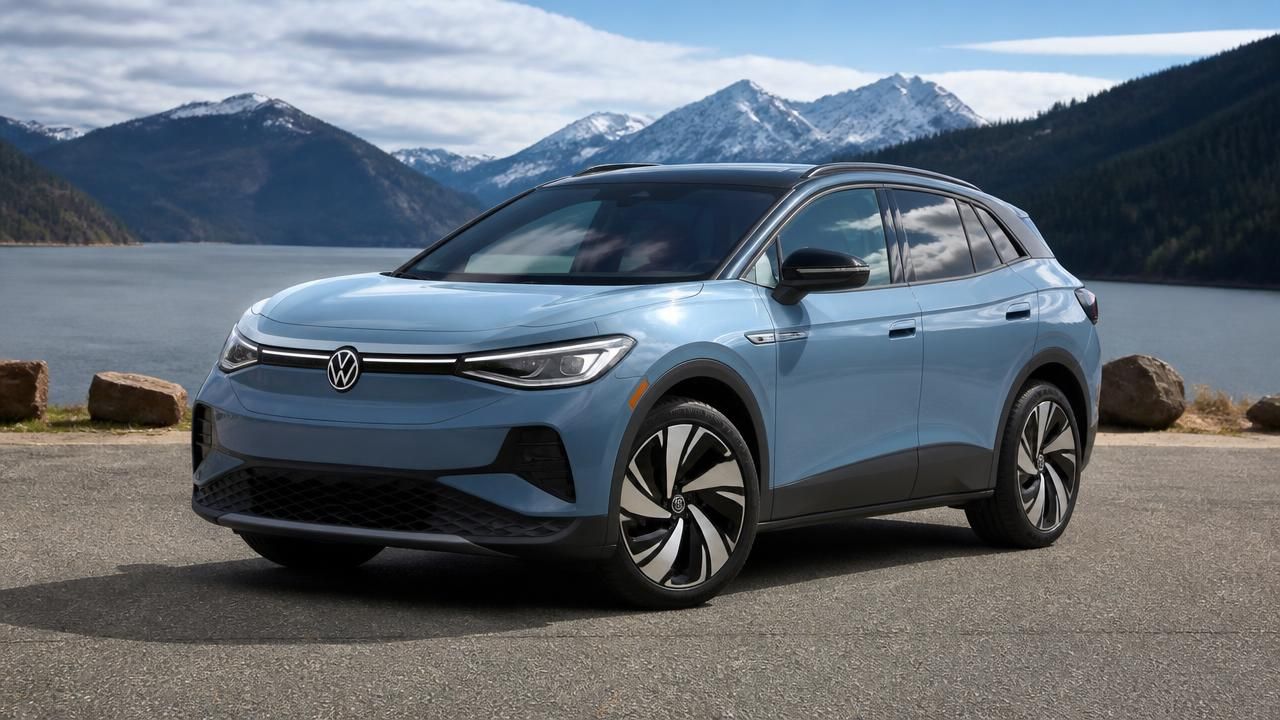
Volkswagen has confirmed the worst-kept secret in Wolfsburg: the ID.4 is being retired, and its replacement will wear a name that millions of drivers already recognize. The new electric crossover will be called the ID.Tiguan, borrowing the badge of Volkswagen's global best-selling combustion SUV rather than continuing the alphanumeric experiment that began with the ID.3 and ID.4.
The announcement, made Monday, also spells the end of the ID.5, the sloped-roof coupe-SUV variant that shared the ID.4's MEB platform. According to reports from Motor1 and Newsbytes, Volkswagen is consolidating both models into a single, more conventionally styled electric Tiguan — a move that trims an increasingly crowded lineup while trading two struggling nameplates for one with decades of brand equity behind it.
What Volkswagen Actually Announced
The ID.Tiguan is scheduled to launch in Europe in early 2027, where it will slot into a refreshed electric family alongside the forthcoming ID.Polo and ID.Cross. Volkswagen has also confirmed the vehicle for the United States, where the ID.4 was previously assembled at its Chattanooga, Tennessee plant, but only "at a later date." Canadian availability, according to one regional report, remains unannounced — a detail that underscores how cautiously VW is sequencing its EV rollouts after a bruising few years of softening demand.
Design details are still officially under wraps. Spy photographers, however, have already captured heavily camouflaged prototypes, with InsideEVs publishing what it called the best look yet at the ID.4's successor. Autoevolution reported that the first-ever ID.Tiguan is due in October, and that the electric model will be sold alongside the existing internal-combustion Tiguan rather than replacing it — a two-track strategy that lets Volkswagen hedge across powertrains in markets where EV adoption has stalled.
A Rename, or a Rethink?
How much of the ID.Tiguan is genuinely new is a matter of framing. Cars UK characterized the vehicle bluntly as a facelift of the ID.4, suggesting an updated MEB-based crossover rather than a clean-sheet redesign. Other outlets have framed it as a more substantial reboot aimed at correcting the ID.4's weaknesses — notably its generic styling, software complaints, and a cabin that never matched the premium push of its price tag.
One MSN headline captured the stakes with unusual candor: "Volkswagen's ID. Tiguan Aims To Succeed Where The ID.4 Failed." The Verge was more diplomatic, describing the decision as a straightforward acknowledgment of consumer behavior.
The decision is an acknowledgment by the German automaker that its more recognizable nameplates like Tiguan are likely an easier sell with consumers, especially when it comes to EVs.
The Tiguan name carries real weight. As an internal-combustion model, it has been one of Volkswagen's top global sellers for well over a decade, with a customer base in Europe, China, and North America that associates the badge with practical, mainstream family transport. The ID.4, by contrast, arrived in 2020 as part of a wave of deliberately futuristic, number-and-letter EV branding that has aged poorly with shoppers who still struggle to distinguish an ID.4 from an ID.5 or an ID.6.
Why Volkswagen Is Rethinking Its EV Names
The shift reflects a wider correction across the auto industry. Through the late 2010s, legacy automakers assumed that electric vehicles needed their own distinct sub-brands — think Mercedes-Benz's EQ lineup, BMW's "i" cars, or Volkswagen's ID. family — to signal novelty. As EV adoption has broadened beyond early adopters, that logic has inverted. Buyers now say they want electric versions of cars they already know: an electric Golf, an electric Tiguan, an electric Polo.
Volkswagen appears to have absorbed the lesson wholesale. The ID.Polo, ID.Cross, and now ID.Tiguan form the core of a next-generation lineup where familiar names do the marketing work. It is a strategy that mirrors what Ford did with the Mustang Mach-E and what Kia has done by folding electrified variants into existing nameplates like the EV6 — though the EV6's numeric name shows the industry is far from consistent.
The Stakes for Volkswagen's EV Ambitions
The timing is not accidental. Volkswagen has spent the past two years navigating slowing EV sales growth in Europe and the United States, the expiration of US federal EV tax incentives, mounting competition from Chinese manufacturers, and internal pressure to cut costs at its German plants. The ID.4 was meant to be the volume pillar of its electric offensive; instead, it became a symbol of the gap between the company's ambitions and its execution.
- Europe: ID.Tiguan arrives in early 2027, joining ID.Polo and ID.Cross in a rebranded electric range.
- United States: Confirmed for launch, with timing only described as "at a later date."
- Canada: No launch date announced.
- Lineup impact: Both the ID.4 and the ID.5 coupe-SUV are discontinued.
- Coexistence: The electric ID.Tiguan will be sold alongside the combustion Tiguan in some markets.
Whether the name alone can move metal is the open question. A familiar badge lowers the cognitive barrier to an EV purchase, but it does not solve charging infrastructure anxiety, residual-value fears, or the price gap that still separates electric crossovers from their gasoline equivalents. Volkswagen's own ID.4 experience suggests that a competent vehicle with a forgettable identity is a hard sell; the ID.Tiguan bets that the opposite — a familiar identity applied to an improved vehicle — is a considerably easier one.
For an industry still searching for the formula that turns EV curiosity into EV ownership, that is a test worth watching. Volkswagen has spent five years teaching drivers a new alphabet. Starting in 2027, it will try speaking their language instead.