Uber is expanding beyond moving people and food to something far more mundane — and, by its own accounting, far more foundational: the parking space.
The ride-hailing giant announced the launch of Uber Parking, a native in-app reservation feature that lets drivers find, book and pay for garage and lot spaces ahead of time. The tool is the first consumer-facing product to emerge from Uber's recent acquisition of SpotHero, folding a network of more than 13,000 parking facilities across 400-plus cities into the company's flagship app.
The launch was reported by The Verge, which detailed the mechanics of the feature, while MSN and The Next Web both led their coverage with the same strategic subtext: Uber is building parking infrastructure with an eye on robotaxis.
How Uber Parking Works
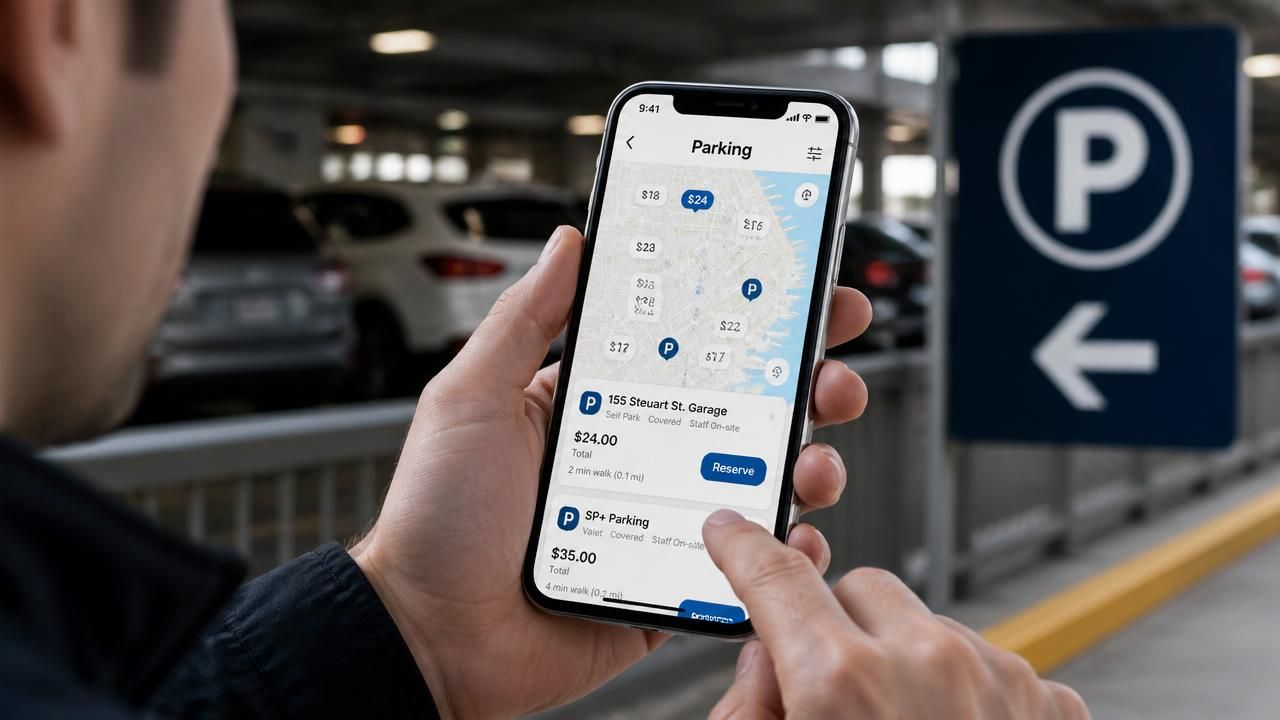
The feature is accessed through a new "Parking" icon inside the Uber app. Tapping it opens an interactive map showing availability, upfront prices and estimated arrival times, so drivers can compare options before committing. Users can filter results by self-park versus valet, outdoor lot versus covered garage, and whether staff will be on-site.
Before completing a booking, the app prompts users to enter vehicle details and license plate information — a step that matters both for garage access systems and for enforcement in facilities that use plate-based check-in. The reservation itself is handled entirely within Uber, meaning no third-party app, no separate account and no redirected payment flow.
The result is a rare example of a platform adding a utility that is neither a ride nor a delivery — but which sits squarely in the moments before and after both. A driver heading to a concert, an airport or a downtown office can now lock in a space hours in advance rather than circling the block.
The SpotHero Acquisition, Explained
Uber's move into parking did not start from scratch. The SpotHero deal handed the company an existing inventory of spaces, contracts with garage operators, and the operational know-how to manage real-time availability at scale. Rather than building that network, Uber bought it — a familiar playbook for a company that has spent the past decade assembling a transportation "super app" through acquisitions and integrations.
The 13,000-facility footprint puts Uber Parking immediately in competition with established parking apps, as well as with the garage operators who run their own booking systems. For those operators, Uber offers distribution: access to a massive existing user base that already has a payment method on file.
Why Robotaxis Keep Coming Up
Both MSN and The Next Web framed the announcement around autonomy, and the logic runs deeper than headline positioning. Autonomous vehicles do not need to park in the way human drivers do — but the companies operating them absolutely need places to stage, charge, clean and service fleets between trips. Curbside space and garage capacity are already the scarcest resources in dense cities, and whoever controls the booking layer for those spaces controls a key piece of infrastructure.
There is a consumer-side argument too. Uber's long-term pitch is that a growing share of trips will eventually be taken in vehicles that drive themselves, reducing the need for private car ownership and, in the company's telling, for parking altogether. Owning the parking transaction in the interim gives Uber data on where demand concentrates and which facilities sit near high-value trip origins — intelligence that becomes more valuable, not less, as fleets arrive.
The bet is that the company that owns the curb, the garage and the trip will be the one that owns the transition to autonomous fleets.
It is worth noting the tension in that strategy: a product that makes car ownership more convenient sits awkwardly beside a mission to reduce it. Uber's answer, implicitly, is that parking is a retention feature for the near term — a way to keep users inside the app on days they choose to drive — and a data asset for the long term.
What to Watch
- Coverage depth: 400-plus cities is broad, but density within those cities will determine whether the feature is genuinely useful or merely present.
- Pricing transparency: The promise of upfront prices tests whether Uber can avoid the fee creep that has frustrated users of its ride products.
- Operator pushback: Garage owners may resist ceding the customer relationship to a platform, as hotels did with online travel agencies.
- The autonomy timeline: Parking's strategic value hinges on how quickly robotaxi fleets scale — and how much staging infrastructure they require.
The Bigger Picture
Uber Parking is, on its surface, a modest convenience feature. But it fits a pattern: the company has steadily expanded from point-to-point rides into micromobility, transit ticketing, rentals, food and freight, each time converting an external transaction into an in-app one. Parking is the latest and perhaps the most literal example — the moment before a journey and the moment after it, captured.
Whether drivers adopt it will depend on execution: accurate availability, honest pricing and garages that actually honor reservations. Whether it matters strategically depends on something far less certain — the pace at which the vehicle stops needing a driver, and starts needing a place to wait.