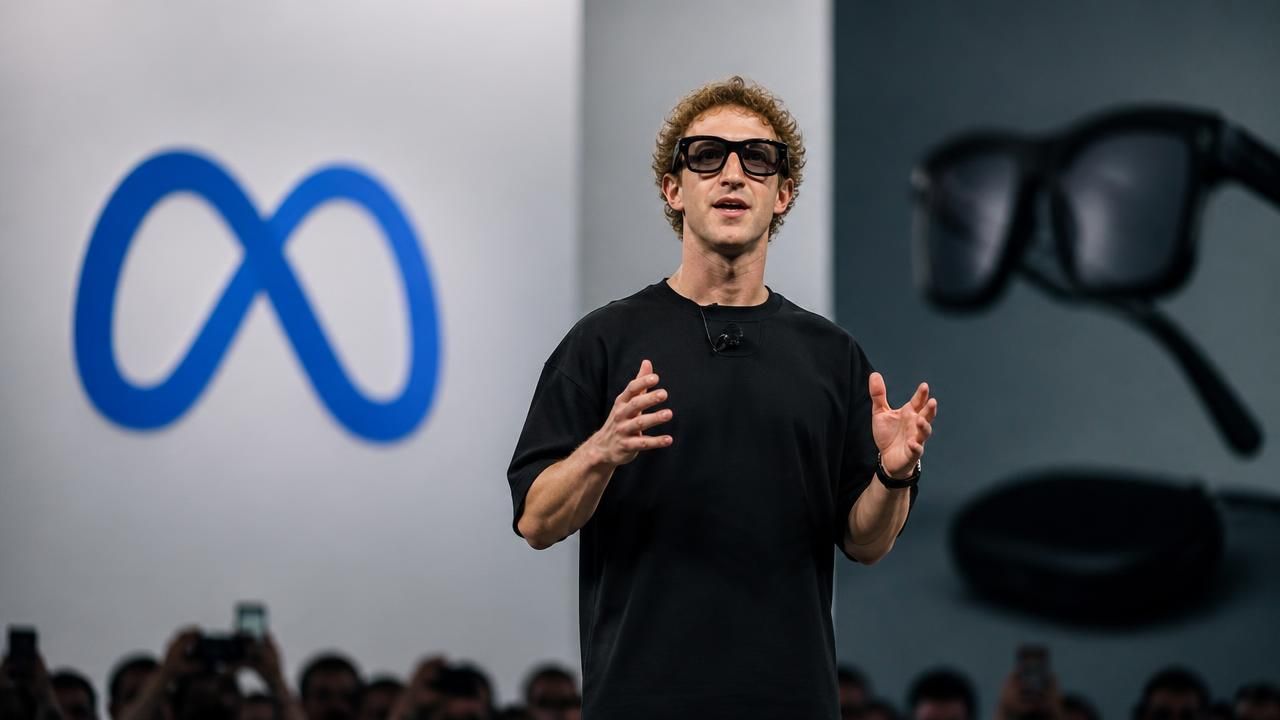
Meta used its annual Connect showcase on Wednesday to make its most aggressive argument yet that the smartphone is no longer the center of personal computing. The company unveiled a slate of new wearables led by the Meta VR Glasses, a lightweight, glasses-style device that packs full virtual reality into a frame roughly the size of everyday eyewear — plus a refreshed Ray-Ban Meta Gen 3 line, a camera-free AI eyewear option, and Muse Charm, a phone-free AI assistant designed to live on a keychain.
The blitz amounted to a single, coherent thesis: rather than betting on one winning form factor, Meta wants an AI-connected device for nearly every scenario. As one headline from Fortune India framed the event, the company is pitching consumers on "life beyond the smartphone."
The headliner: VR in a glasses frame
The Meta VR Glasses were the unambiguous star of the keynote. Unlike a conventional VR headset, the device compresses immersive virtual reality into a smart-glasses silhouette, relying on a tethered puck to handle power and processing. The result, as The Verge put it, is "full virtual reality in a smart glasses form factor" — and, per POC Network's framing, a headset designed to make you "forget you're wearing a headset."
The trade-off is familiar to anyone who has followed Meta's hardware ambitions: lightness and social acceptability come at the cost of a cable tether and an external compute unit. It is a deliberate compromise — Meta is prioritizing all-day wearability over the fully self-contained design of the Quest line. FinanceFeeds pegged the VR Glasses at $1,299, placing them firmly in premium, early-adopter territory rather than mass-market impulse-buy range.
A deeper Ray-Ban lineup — and a camera-free option
Meta also refreshed its mainstream smart glasses. The Ray-Ban Meta Gen 3 arrives with new AI features and expanded style and frame options, priced at $449 according to FinanceFeeds — a modest premium over earlier generations and a signal that Meta views the category as its volume play. Mashable characterized the rollout as "next-gen smart glasses," with the VR glasses and Ray-Ban Gen 3 sharing the spotlight.
Notably, Meta also introduced camera-free AI glasses, an acknowledgment that privacy concerns have been a persistent drag on smart-glasses adoption since the earliest Ray-Ban iterations. By offering a variant without optical sensors, Meta is courting users — and, potentially, regulators and venue operators — who are uneasy about always-available cameras on people's faces.
Muse: an agent that sees, acts and sells
The connective tissue across all of these devices is Muse, Meta's AI agent. According to Digital Trends, Muse is coming to the smart glasses and can "see and act for you" — a meaningful escalation from passive voice assistants toward agentic AI that perceives the user's surroundings and takes actions on their behalf. Muse Charm, meanwhile, pushes the assistant off the face entirely, putting an AI companion on your keychain with no phone required. Meta has not yet announced pricing for the Charm.
The commerce angle has not gone unnoticed. Trade publication Mumbrella argued that Muse puts AI agents "on the path to commerce" — a reminder that an assistant that can see, recommend and transact is ultimately an advertising and shopping surface, which is where Meta's core business lives. A single explanatory piece on Note.com framed the whole event around the new "AI-powered smart glasses featuring Muse," underscoring how central the agent is to Meta's messaging.
"Mark Zuckerberg champions an AI device for every scenario at Meta's big conference." — MarketWatch's framing of the keynote
The content and ecosystem play
Hardware without content is a demo, and Meta knows it. UploadVR catalogued the games and updates announced specifically for the Meta VR Glasses, a sign that the company is trying to avoid the barren-launch problem that has plagued previous VR pushes. Getting developers to build for a new form factor early — even one with a tethered puck — is the only way the VR Glasses avoid becoming a showcase device.
How the coverage split — and what it reveals
The breadth of reactions says as much about Meta's strategy as the products themselves:
- The gadget press (The Verge, Mashable) treated Connect as a product carousel, emphasizing the "biggest announcements" and the sheer volume of new frames and features.
- Business and markets outlets (FinanceFeeds, MarketWatch) zeroed in on price points, stock reaction — Meta shares around $744 — and Zuckerberg's "device for every scenario" pitch.
- Industry and trade press (Mumbrella, UploadVR) looked past the hardware to the two things that actually sustain a platform: monetization through AI agents and a developer pipeline.
Why it matters
Meta is making a bet that the next computing platform will not be a single device but a portfolio: glasses for the street, VR for immersion, and a pocketable or keychain AI for everything in between. That approach hedges against the risk that any one form factor fails, but it also asks consumers to buy into Meta's AI — and its privacy posture — multiple times over.
The camera-free glasses and the modest $449 Ray-Ban price suggest Meta has learned from earlier missteps. The $1,299 VR Glasses suggest it has not abandoned its appetite for premium, experimental hardware. Whether Muse becomes the agent that finally makes wearables indispensable — or merely another surface for advertising — is the question that will define Meta's next several Connect events.