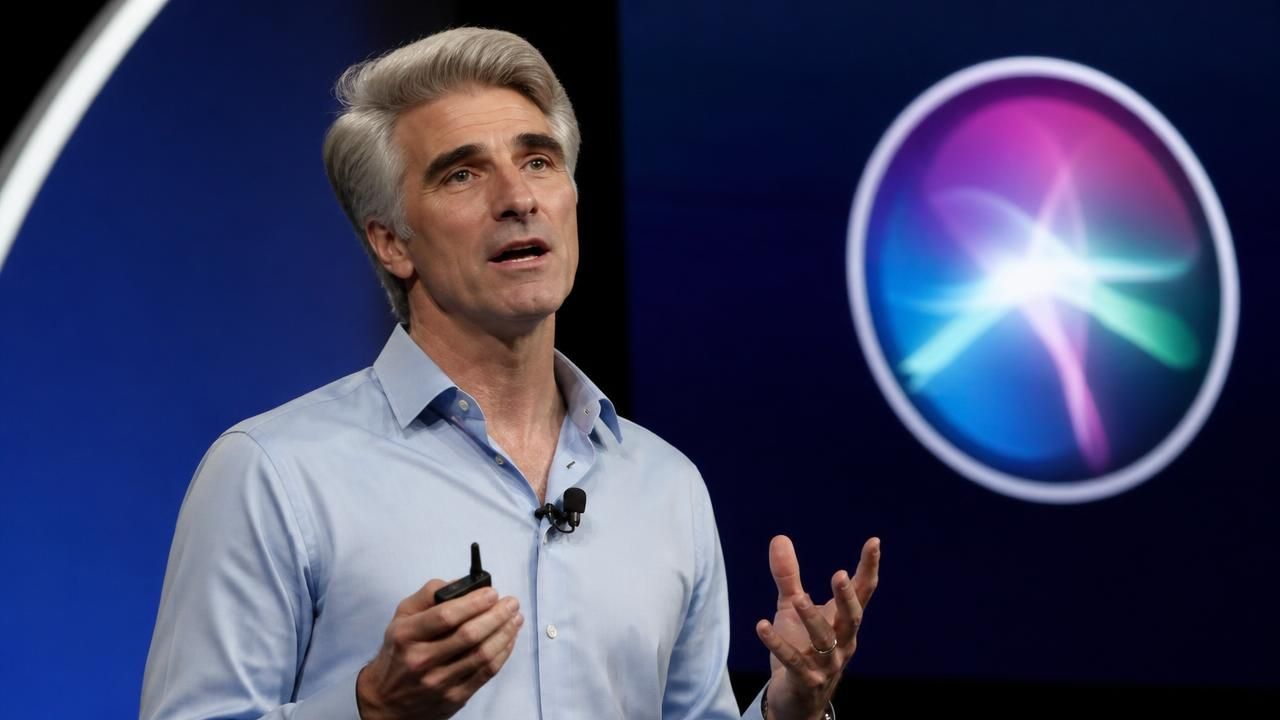
Apple is accelerating efforts to transform Siri from a familiar voice assistant into a genuinely agentic AI system—one that can take multi-step actions across apps rather than simply answer questions. The immediate trigger is a Bloomberg report by Mark Gurman, summarized by The Verge, which says Apple CEO John Ternus is pressing AI czar Craig Federighi to speed up the Siri roadmap and deliver a more powerful AI agent capable of competing with OpenAI’s Dots or Meta’s Muse. According to the report, Federighi has already delivered a functional version of Siri AI on an unusually short timeline, but the company is under no illusion about the competitive gap.
The company has no illusions that it’s keeping pace with its rivals.
That admission frames the central tension in Apple’s AI strategy. The company does not need to win a chatbot popularity contest, but it does need Siri to become useful enough to defend the iPhone’s role as the primary interface for apps, services, and personal data. The next several months are therefore less about a single splashy launch than about a sequence of incremental upgrades that make Siri feel less like a command parser and more like an assistant that can act.
From answers to actions
The most concrete near-term changes, according to The Verge, involve giving Siri fine-grained control over Apple’s first-party apps. That includes capabilities such as rotating and cropping images in Photos or organizing Safari tabs. Such tasks sound modest, but they are foundational: an agent that can reliably manipulate app interfaces and data can eventually chain those actions into longer workflows. MacRumors reports that Siri AI is rumored to become more like an agent as early as next year, while AndroidHeadlines frames the push as the Apple CEO promising major Siri AI enhancements with autonomous agentic powers.
The rollout appears to be staggered. PCMag has highlighted five game-changing Siri features coming to the iPhone next week, and separately published a guide to 10 new iOS 27 features users should try. The volume of coverage suggests Apple is shipping improvements in waves rather than waiting for one complete reinvention. That approach carries risk—users may judge Siri on each incremental release—but it also lets Apple test reliability and privacy safeguards in public before granting the assistant broader autonomy.
The competitive and product reality
The pressure is not imaginary. OpenAI, Meta, and Google are all pushing agents that can browse, plan, and execute tasks. The Verge’s report places Apple’s effort explicitly in that race, naming OpenAI’s Dots and Meta’s Muse as benchmarks. MSN’s headline captures the paradox neatly: Apple could dominate the agentic AI market with Siri, just not this Siri. The implication is that Apple’s distribution and integration advantages are enormous, but the current product is not yet the agent that could exploit them.
Macworld strikes a similar note with a review framing that says Siri may know a lot more, but it is still not smart. Knowing more—through better search, richer context, or larger foundation models—is not the same as reasoning well, planning reliably, or recovering gracefully from mistakes. For users, the difference is obvious: a Siri that can find information is helpful, but a Siri that can complete a task without hand-holding is transformative.
Security, chatbots, and the Gemini question
Apple’s caution is most visible in how it talks about chatbots. AppleInsider reports that Siri AI will not get real chatbots until Apple can secure them. That reflects Apple’s long-standing preference for constrained, privacy-preserving experiences over open-ended generative systems that can produce unpredictable or unsafe outputs. The company is likely to gate more capable conversational features behind its own safety review, on-device processing where possible, and private cloud infrastructure where necessary.
A separate question is which foundation models power Siri AI. MacObserver examines whether Siri AI uses Google Gemini and what Apple actually says about the foundation models collaboration. The headline points to an unresolved issue in public discussion: Apple may rely on its own models for many tasks while partnering with third parties for others, but it has not framed those relationships as a simple replacement of Siri’s brain. For Apple, the model layer matters less than the trust layer—users must believe Siri will not leak data, misfire, or take irreversible actions without consent.
What users are seeing
Early hands-on coverage offers a mixed but instructive picture. Macworld’s report that a writer trained Siri AI to answer messages—and that it actually worked—shows the assistant can handle narrow, repetitive tasks when taught. That is a meaningful step toward agentic behavior, but it is not the same as autonomy. The gap between a successful demo and daily reliability is where Apple’s reputation will be won or lost.
PCMag’s coverage of upcoming Siri features and iOS 27 tools suggests Apple is using its annual software cycle to spread AI capabilities across the operating system rather than concentrating them in a single Siri button. That is consistent with Apple’s history: it rarely ships the first version of a category, but it often ships the version that reaches mainstream users. The question is whether the agentic era will give Apple that much time.
Why it matters
If Siri becomes a capable agent, Apple gains a powerful defensive moat. The assistant could orchestrate first-party apps, third-party services, and personal context in ways rivals cannot easily match. It could also reshape how users interact with the iPhone—less tapping, more delegation—and create new opportunities for developers who expose app actions to Siri. But if the improvements arrive too slowly or feel unreliable, Apple risks ceding the interface layer to competitors that are already comfortable with open-ended AI.
The next year is therefore decisive. Apple does not need Siri to be the most impressive chatbot. It needs Siri to be the most trusted agent—one that can act across the apps people already use, with security and privacy built in. The reports from The Verge, MacRumors, AppleInsider, Macworld, PCMag, AndroidHeadlines, MacObserver, and MSN all point to the same conclusion: Apple is moving, but the market is moving faster. The company’s challenge is to close the gap without breaking the trust that made Siri worth fixing in the first place.