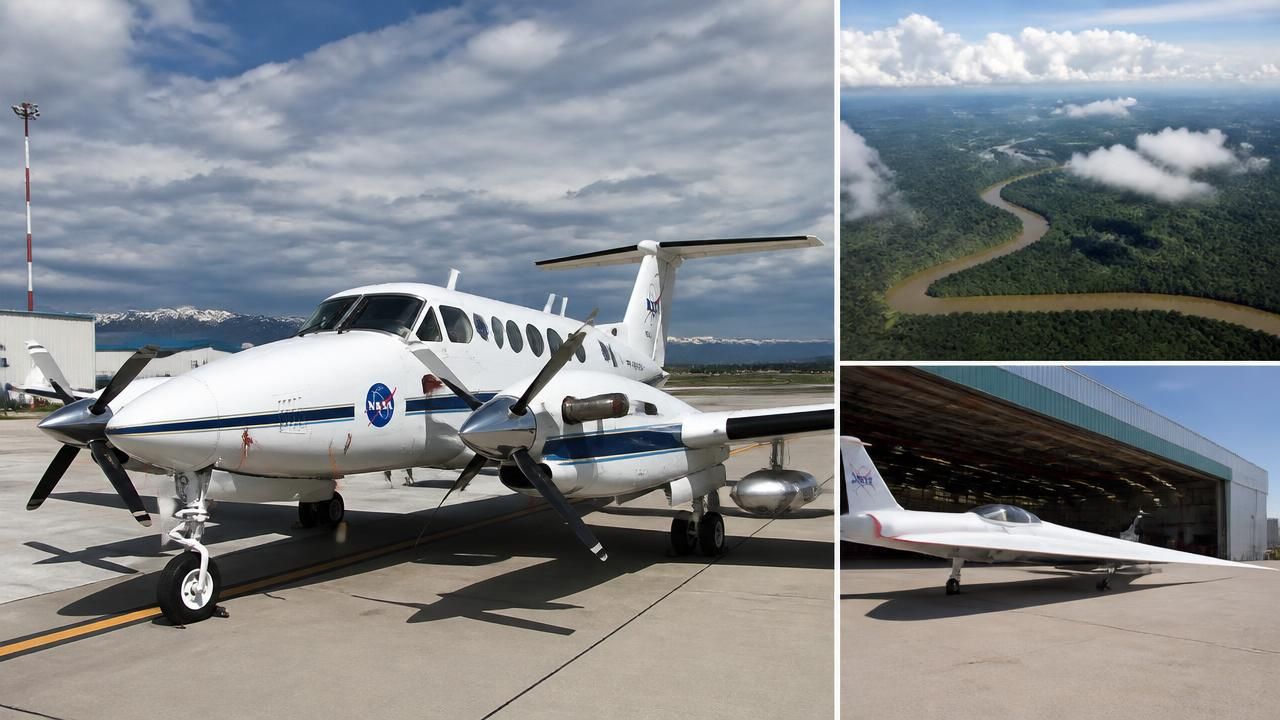
NASA is preparing to send a low-flying research aircraft over Northern Colorado farmland in October 2026, part of a new mission to measure agricultural emissions that scientists say remain a major blind spot in climate models. The FarmFlux campaign, jointly led by NASA’s Goddard Space Flight Center, Colorado State University, and Boston University, will deploy more than a dozen sensors aboard a Dynamic Aviation A200 to sample ozone, methane, ammonia, particulates, and other pollutants rising from agricultural lands and animal farms. The Colorado deployment is the first in a series that will later move to Texas, the Midwest, and California’s Central Valley. But it is not the only airborne research making news. Separate reports highlighted low-altitude flights that revealed Amazon methane emissions far above climate model estimates, while MSN reported that NASA’s quiet-supersonic X-59 had reached the speed and altitude its mission demands—a milestone on the path to changing air travel.
FarmFlux Targets a Hidden Climate Source
The FarmFlux mission is designed to close a gap in understanding how agriculture interacts with the atmosphere. NASA says agricultural emissions are an important and understudied part of Earth’s land and atmosphere systems. The agency plans to use low-altitude flights to capture emissions that satellites and ground stations can miss, especially over heterogeneous farmland and animal operations.
Agricultural emissions represent an important and understudied part of Earth’s land and atmosphere systems.
During the Colorado deployment, the Dynamic Aviation A200 will fly low over farmland near Greeley. Its sensor suite will measure ozone, methane, ammonia, particulates, and other pollutants. The goal is not only to quantify what is rising from fields and farms but also to understand how those emissions interact with the broader atmosphere. The first series of flights will be followed by additional low-altitude research over farmland in Amarillo, Texas, from late October to early November. For the March to July 2027 growing season, NASA plans to fly a P-3 Orion over the Midwest and California’s Central Valley, with a focus on croplands.
Local coverage from k99.com framed the campaign in practical terms: NASA aircraft will fly low over Northern Colorado farmland, a visible reminder that the research is happening in residents’ backyards. The station’s headline emphasized the local impact, while NASA’s own release stressed the mission’s scientific objectives and its multi-institution leadership.
Amazon Methane Measurements Challenge Climate Models
A separate phys.org report, headlined “Low-altitude flights reveal Amazon methane emissions far above climate model estimates,” adds urgency to the push for better airborne monitoring. Methane is a potent greenhouse gas, roughly 80 times more powerful than carbon dioxide over a 20-year period. If climate models are underestimating emissions from the Amazon, as the report suggests, then global carbon budgets and warming projections may be off.
The finding echoes the logic behind FarmFlux: direct measurements from aircraft can reveal emissions that are difficult to capture from space or from sparse ground networks. The Amazon is a vast, complex ecosystem where wetlands, vegetation, and human activity all contribute to methane fluxes. Low-altitude flights can sample fine-scale plumes and identify hotspots that models may smooth over. The phys.org report did not supply full details in the available summary, but its headline alone signals a significant challenge to existing estimates.
X-59 Quiet Supersonic Jet Hits Key Milestone
On the aviation side, two MSN reports said NASA’s quiet-supersonic X-59 had reached the speed and altitude its mission demands. Another headline described the supersonic jet as reaching a milestone on the way to changing air travel. The X-59 is an experimental aircraft designed to fly faster than sound while producing a quieter sonic thump rather than a loud boom. If successful, the technology could help regulators reconsider bans on overland supersonic flight.
The milestone suggests the aircraft’s design is meeting the performance envelope needed for its mission. However, the MSN summaries did not provide specific flight data, dates, or quotes. Even so, the reports frame the achievement as a step toward a new era of commercial supersonic travel, one in which speed does not come with the same noise penalties that doomed earlier supersonic jets. Challenges remain, including fuel burn, emissions, cost, and certification. But the X-59 milestone shows that NASA’s aeronautics research is advancing alongside its climate science flights.
A Broader Pattern of Airborne Science
Taken together, the stories reveal how different outlets frame NASA’s aircraft research. NASA’s own release emphasizes interagency and university partnerships, sensor payloads, and mission timelines. A local station focuses on what residents will see and hear. A science outlet highlights the gap between measured emissions and modeled estimates. MSN focuses on the spectacle and promise of supersonic travel. Each angle captures part of a larger whole: aircraft are uniquely capable of bridging scales, from the farm field to the upper atmosphere.
FarmFlux will begin its Colorado flights in October 2026, with Texas and Midwest deployments to follow. The data could improve emissions inventories, inform agricultural practices, and refine climate models. The Amazon methane findings suggest that such measurements are not a luxury but a necessity. And the X-59 milestone shows that the same agency pushing atmospheric science is also reshaping the future of flight. The common thread is simple: what happens in the air—and what we measure there—matters for both the climate and the way we travel.