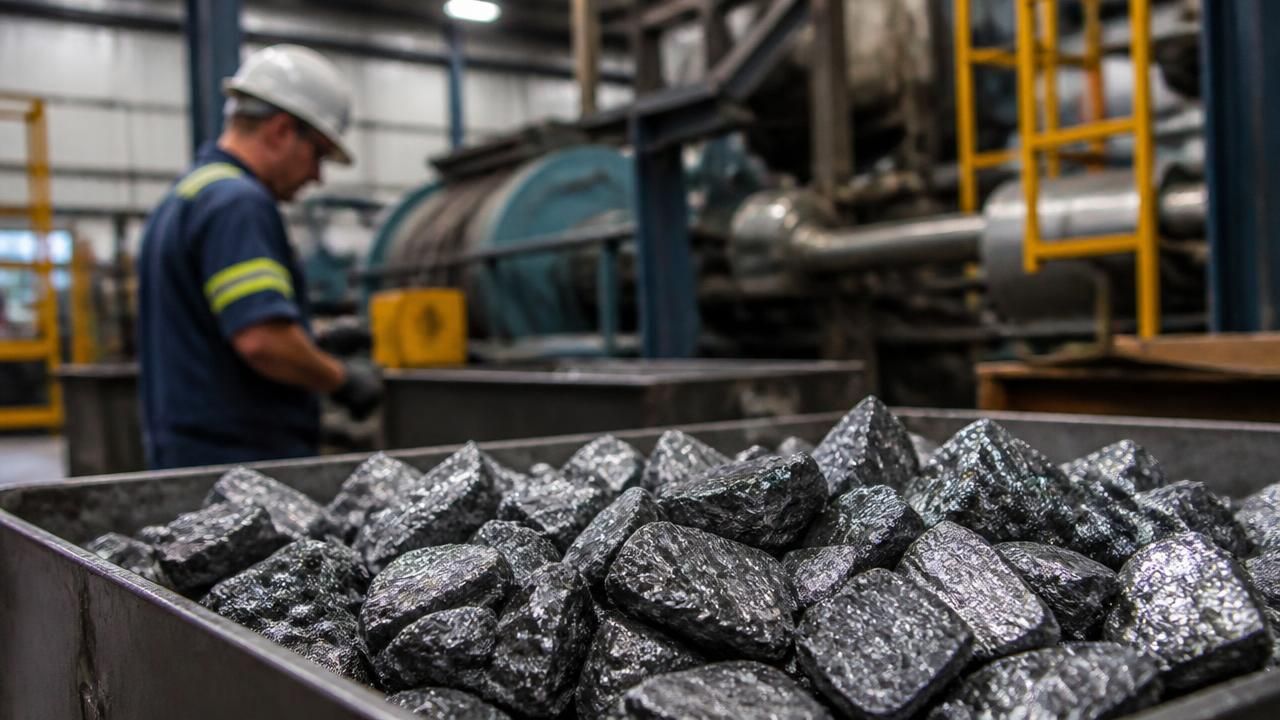
The Elmet Group Co., a US tungsten maker, is at the center of a sweeping effort to reshape the global supply chain for one of the defense industry's most critical minerals. The company has secured a $450 million investment from the US government, led by the Pentagon, and will buy a 4.99% stake in Vietnam's Masan High-Tech Materials Corp., according to Bloomberg. The deal also locks in more than eight years of tungsten supply for Elmet, deepening American access to a metal that is essential for weapons, aerospace, semiconductors, and industrial manufacturing.
The investment is part of a broader push by Washington to reduce reliance on China, which dominates global tungsten production and processing. Tungsten, known for its extreme hardness and high melting point, is used in armor-piercing munitions, missile components, cutting tools, and electronics. For years, US officials have warned that over-dependence on foreign sources poses a national security risk. The Elmet package, which also includes the restart of the Springer tungsten plant in Nevada, is one of the most concrete steps yet to address that vulnerability.
A Three-Part Strategy: Cash, Equity, and Ore
The deal has several moving parts. First, the $450 million US government investment, reported by Yahoo Finance and Hoodline, provides Elmet with the capital to expand domestic tungsten production. Second, the company will acquire a 4.99% stake in Masan High-Tech Materials, Vietnam's leading tungsten miner and processor. That stake, just under the 5% threshold that often triggers additional regulatory disclosure, gives Elmet a strategic foothold in Southeast Asia's tungsten sector. Third, Elmet has secured an eight-year-plus supply agreement, according to Bloomberg, insulating it from spot-market volatility and geopolitical disruptions.
Elmet will buy a 4.99% stake in Vietnam's Masan High-Tech Materials Corp. and secure more than eight years supply of the metal, deepening US access to the critical mineral, Bloomberg reported.
Meanwhile, Hoodline reported that the Nevada Springer Tungsten Plant is restarting with the Pentagon cash and will process ore from Queensland, Australia. That detail is significant: it shows the US is not just securing foreign supply but also rebuilding domestic processing capacity. The Springer plant, which had been dormant, could become a key node in a new allied tungsten network that stretches from Australia to Vietnam to the United States.
Wall Street Reacts: Pentagon Could Own 20%
Forbes reported that Elmet's stock surged on the news, with the Pentagon potentially owning as much as 20% of the company. That figure reflects the scale of the government's bet on Elmet. While the exact structure of the equity component has not been fully detailed, the prospect of a major US defense agency holding a significant ownership stake in a critical-minerals producer is unusual. It signals that the Pentagon is willing to take direct financial risk to secure supply chains, not merely write contracts.
The market reaction was immediate. Investors saw the $450 million injection as a validation of Elmet's strategy and a sign that tungsten is moving from a niche industrial metal to a strategic asset. The stock surge also reflects expectations that the company could become a prime beneficiary of future government funding for critical minerals. However, the rally may also raise questions about valuation and execution risk, especially given the complexities of integrating Vietnamese supply, Australian ore, and a restarted Nevada plant.
Why Tungsten Matters
Tungsten is not a rare earth element, but it is equally strategic. It has the highest melting point of any metal, making it indispensable for high-temperature applications. Its density and hardness make it ideal for kinetic energy penetrators, radiation shielding, and heavy alloys. China produces more than 80% of the world's tungsten, according to industry estimates, and has increasingly used export controls as a geopolitical tool. In 2023, China announced restrictions on gallium and germanium exports, and in 2024 it extended controls to antimony and other critical minerals. Tungsten has long been on the US critical minerals list.
The Elmet deal is part of a wider US strategy that includes the Defense Production Act, the Inflation Reduction Act's critical minerals provisions, and partnerships with allies such as Australia, Canada, and Japan. The Biden administration and Congress have pushed for onshoring and friend-shoring of supply chains. The Pentagon's Office of the Assistant Secretary of Defense for Industrial Base Policy has been funding projects to expand domestic processing of lithium, rare earths, and other materials. Tungsten is now firmly on that list.
Challenges and Open Questions
Key Risks to Watch
Despite the optimism, several challenges remain. Building a resilient tungsten supply chain takes time. The Nevada Springer plant must be brought back online, permitted, and staffed. Ore from Queensland must be shipped and processed economically. The Masan stake gives Elmet influence but not control. And China could respond with price cuts or export restrictions to squeeze Western producers.
- Permitting and environmental review: Restarting a dormant plant in Nevada may face regulatory hurdles and community concerns.
- Price volatility: Tungsten prices can swing sharply, affecting the economics of new projects.
- Geopolitical risk: Vietnam and Australia are stable partners, but shipping lanes and trade policies can change.
- Equity dilution: If the Pentagon ends up with a 20% stake, existing shareholders could see dilution, though the government ownership may also provide stability.
Analysts will also watch how Elmet integrates the three pieces. The Vietnam stake is small but symbolic. The eight-year supply deal provides certainty. The Nevada plant offers domestic capacity. But the true test will be whether Elmet can produce tungsten at competitive prices and secure long-term offtake agreements with defense contractors and industrial customers.
The Bigger Picture
The Elmet story is a case study in how the US is rethinking national security. Critical minerals are no longer just a trade issue; they are a defense issue. The Pentagon's willingness to invest $450 million and potentially take a 20% equity stake shows that the government is prepared to act as a strategic investor. For Elmet, the deal provides capital and credibility. For Washington, it provides a foothold in Vietnam and a restarted domestic plant. For the market, it provides a new narrative: tungsten is back.
Whether this model can be replicated across other critical minerals remains to be seen. But as great-power competition intensifies, the line between industrial policy and defense policy is blurring. Elmet's rise is a reminder that in the race for strategic materials, the winners may be those who can combine government backing, allied resources, and domestic processing. The coming months will show whether this $450 million bet pays off.