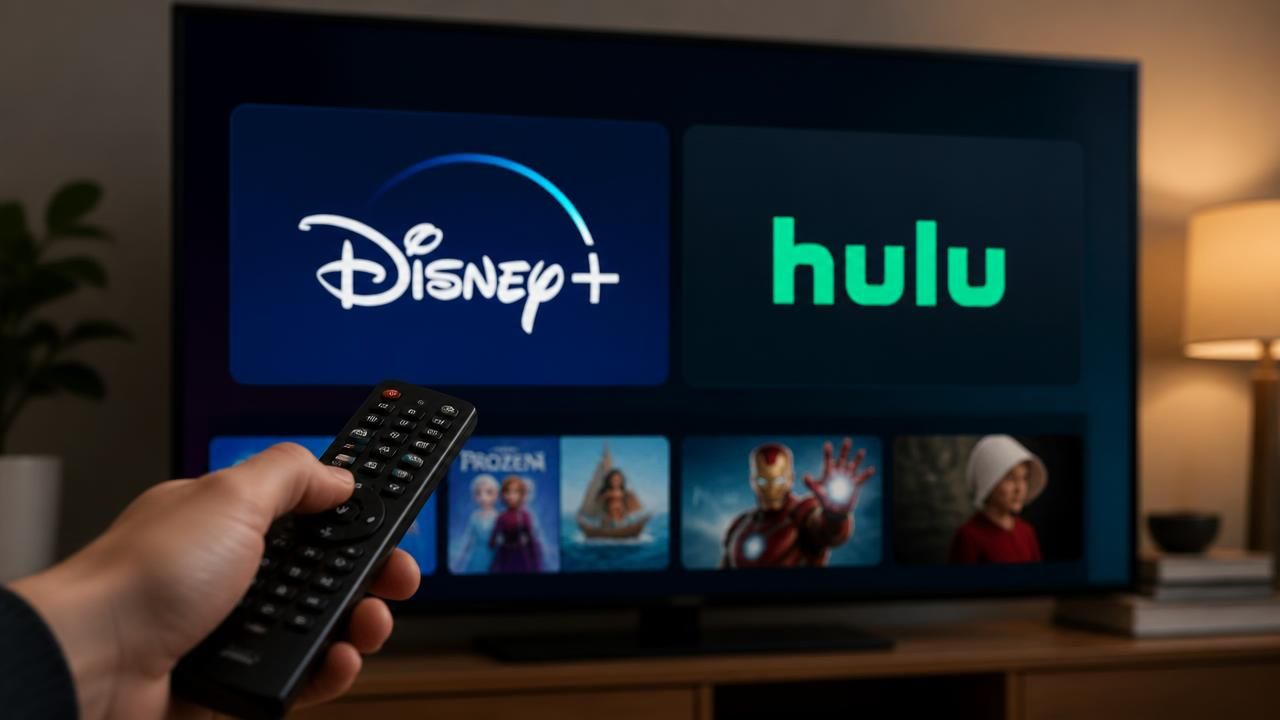
Disney is raising prices at Disney+ and Hulu again, asking subscribers to pay more for the same libraries as the company leans harder on bundles to keep viewers from walking out the door.
The ad-free standalone plans for both services — which also carry 4K and HDR streaming — are each rising 13 percent, from $19 a month to $21.50 a month, according to Ars Technica. The cheaper, ad-supported tiers of each service will increase from $12 to $12.50. The new pricing takes hold as soon as Wednesday, the Detroit News reported, giving subscribers little warning before their next billing cycle.
What subscribers will pay
- Disney+ Premium (ad-free, 4K/HDR): $19 to $21.50 per month, a 13 percent increase
- Hulu (ad-free): $19 to $21.50 per month, a 13 percent increase
- Disney+ with ads: $12 to $12.50 per month
- Hulu with ads: $12 to $12.50 per month
The gap between ad-free and ad-supported viewing is now $9 a month, a spread designed to make the cheaper, advertising-funded tier — and the bundles built around it — considerably more attractive.
A familiar, four-year cadence
Ars Technica framed the move bluntly, noting that Disney+ has now absorbed its fourth price increase in four years. That trajectory has been steep. Disney+ launched in November 2019 at $6.99 a month, an aggressive price meant to buy market share in the opening salvos of the streaming wars. The ad-free tier has since roughly tripled, crossing $10 in 2022, $13 in 2023, and $15.99 in 2024 before settling near $19 and now $21.50.
Disney+ got its fourth price hike in four years today. Hulu prices also went up.
The timing is not accidental. Ars Technica noted the increases follow a period in which Disney's streaming profits roughly doubled, a milestone the company has used to argue that its direct-to-consumer business has finally turned the corner after years of billion-dollar losses.
Bundles, not standalone plans
The clearest signal may be in how the news was positioned. MSN's coverage led with the strategic intent rather than the price tag: Disney+ and Hulu are raising prices again as Disney steers subscribers toward bundles.
Disney+ and Hulu raise prices again as Disney steers subscribers toward bundles.
That framing reflects a well-documented industry playbook. Disney sells a Duo bundle combining Disney+ and Hulu, a Trio package that adds ESPN+, and a premium version of each. Bundled subscribers pay less per service, but they churn at meaningfully lower rates — a metric Disney executives have repeatedly highlighted as the company's most important streaming number. Raising standalone prices widens the bundle discount without technically cutting the headline price of the package.
Why the company can do it now
For most of the past five years, Disney was spending heavily on content — Marvel series, Star Wars spinoffs, Pixar originals — while charging prices well below the cost of the service. That era is over. Studios have shifted from growth-at-any-cost to margin discipline, cutting content budgets, licensing titles to rivals, and passing costs to consumers through advertising tiers and recurring increases.
The wider streaming economy
Disney is not acting alone. Netflix, Warner Bros. Discovery's Max, Paramount+, and Peacock have all raised prices over the past two years, and most have pushed hard on ad-supported plans after years of dismissing them. The result is a streaming landscape that increasingly resembles the cable bundle it disrupted — a handful of services, rising monthly costs, and advertising woven back into the experience.
For consumers, the math is getting uncomfortable. A household subscribing to four major ad-free services can now easily exceed $80 a month, approaching what a mid-tier cable package once cost. Analysts expect a growing share of viewers to rotate between services — subscribing for a hit show, canceling, and returning later — a behavior that pressures the subscription model that streaming economics depend on.
The churn question
The central risk is straightforward: every price increase trades revenue per subscriber for the possibility of losing subscribers outright. Disney has so far weathered previous hikes with modest attrition, aided by password-sharing crackdowns and a deep franchise catalog. But the cumulative burden of four increases in four years may test that tolerance, particularly among price-sensitive households already juggling multiple subscriptions.
What to watch
Two numbers will tell the story over the next few quarters: the growth of ad-supported sign-ups and the churn rate among standalone subscribers. If the bundle strategy works, Disney can keep raising the standalone price while converting viewers into cheaper, stickier packages that still generate healthy per-user revenue through advertising. If it does not, the company may find that the fourth hike in four years is the one subscribers finally refuse to absorb.