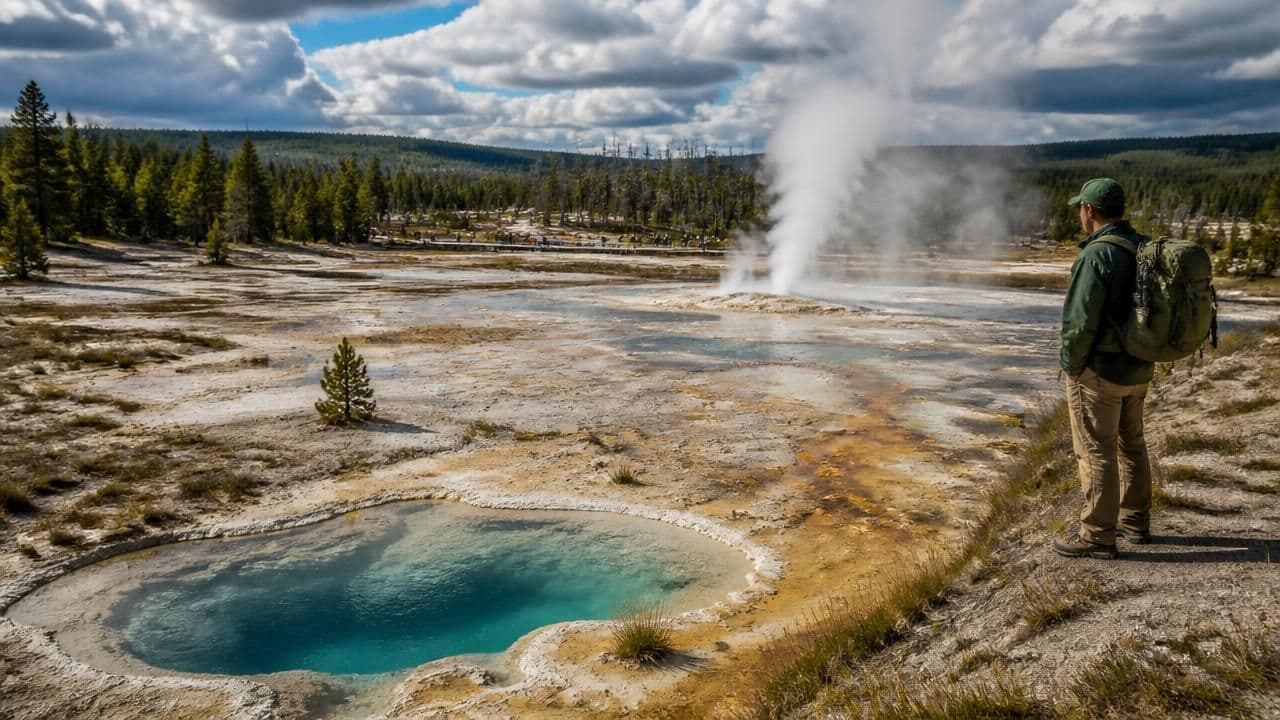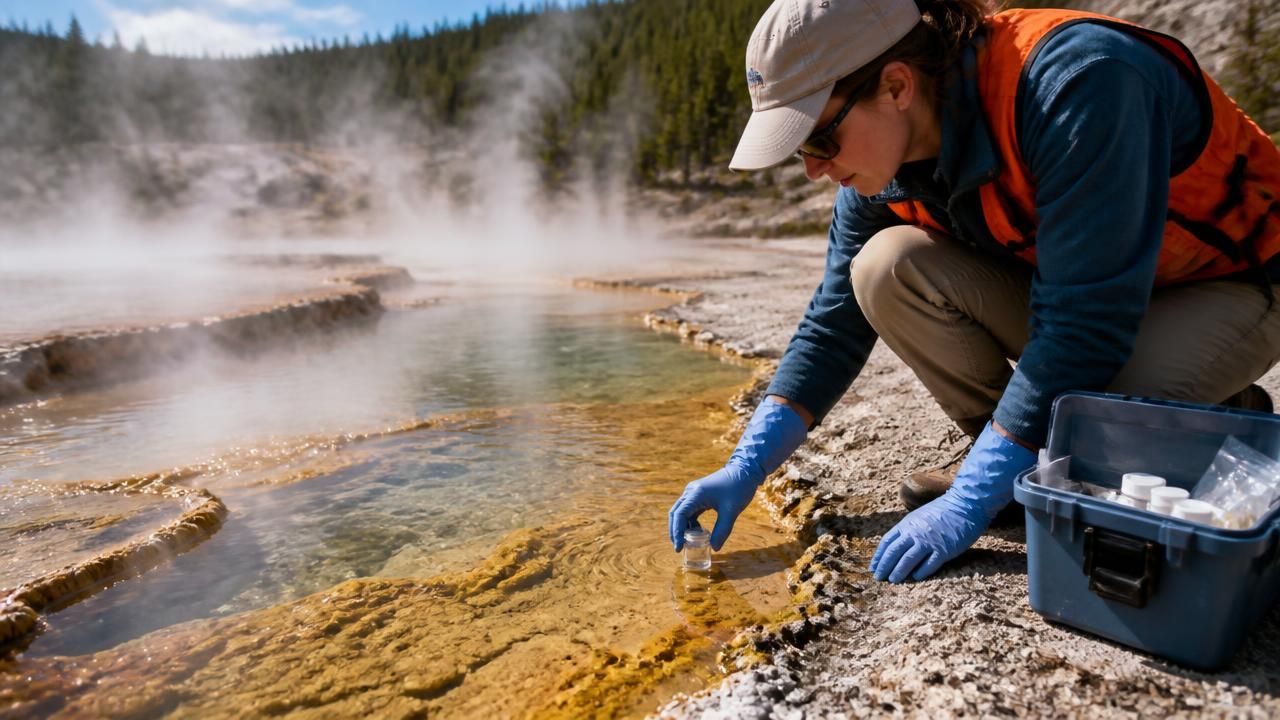
Scientists have identified a single-celled organism that can keep reproducing at 145°F (63°C) and continue moving at temperatures up to 147°F — a threshold never before documented for a complex, nucleated cell. The organism, described as Incendiamoeba cascadensis, has been nicknamed the "fire amoeba" for both its habitat and its extraordinary tolerance.
The name translates roughly to "fire amoeba of the Cascade mountain range," a nod to the geothermal hot springs of the Pacific Northwest where the species was discovered. Its formal description places it in the domain Eukaryota — the branch of the tree of life that includes amoebas, fungi, plants, and animals, including humans — rather than among the bacteria and archaea that have long been known to survive in extreme heat.
A Record for Complex Life
The distinction matters. Prokaryotes — the simple, non-nucleated cells of bacteria and archaea — are the undisputed champions of high-temperature survival. Deep-sea hydrothermal vent archaea such as Pyrolobus fumarii and Geogemma barossii have been shown to grow at temperatures exceeding 110°C, with some strains surviving autoclaving conditions that would incinerate most organic tissue.
Eukaryotes, by contrast, have long appeared far more delicate. Their larger, compartmentalized cells rely on membrane-bound organelles, intricate protein machinery, and a cytoskeleton that tends to unravel under sustained heat. Previously documented eukaryotic thermophiles — heat-loving algae, ciliates, and fungi in hot springs — generally top out well below 60°C.
By pushing a complex cell to reproduce at 63°C, Incendiamoeba cascadensis widens that known envelope by a meaningful margin, and it does so while remaining motile at even higher temperatures, a sign that its cellular machinery is not merely dormant or shielded but actively functioning.
The finding pushes at the outer boundary of what biologists thought a complex, nucleated cell could endure — and suggests that boundary was drawn too conservatively.
How the Story Was Covered
Outlets approached the discovery from noticeably different angles, reflecting their distinct audiences.
- NPR framed the amoeba as a philosophical as well as biological curiosity, emphasizing that it "pushes the limit of what's possible for complex life" — a framing aimed at general audiences interested in the boundaries of the living world.
- IFLScience led with the hard number, describing an amoeba "reproducing at 63°C, the highest temperature ever recorded for a complex cell," prioritizing the metric for a science-literate readership.
- The Financial Times kept it brisk and record-driven: a new "fire amoeba" that "breaks heat survival record," treating the finding as a headline-worthy milestone.
- Phys.org anchored the story in place, calling it a "hot spring amoeba" and foregrounding the geothermal environment that produced it.
- Aggregators such as MSN circulated variations on the theme — "creature thrives at scalding temps too high for all other known life" and "tenacious hot springs amoeba sets heat-tolerance record" — illustrating how the same study can be repackaged around superlatives.
Not every outlet was reachable: several syndicated versions and at least one original science site returned server errors, leaving the underlying journal paper itself less widely accessible than the headlines suggested. That gap is worth noting — the core claims rest on the published description of the organism, and independent replication of the temperature limits has yet to be reported.
Why Extremophiles Matter
Organisms that thrive where life should not exist have repeatedly rewritten biology's rulebook. The discovery of hyperthermophiles in the 1970s and 1980s reshaped the tree of life, eventually leading to the recognition of Archaea as a separate domain and fueling the search for life at deep-sea vents.
Each new record carries implications beyond taxonomy:
- Astrobiology: If eukaryotic cells can operate near 63°C, the range of potentially habitable environments on worlds such as Europa, Enceladus, or Mars — where liquid water may persist under pressure or ice — grows subtly wider.
- Biochemistry: The amoeba's proteins and membranes must possess unusual stability, offering potential templates for industrial enzymes that function without cooling.
- Evolution: The species raises questions about how heat-tolerance adaptations arise in complex cells and whether similar mechanisms exist in organisms not yet sampled.
- Ecology: Geothermal springs in the Cascade range and similar systems worldwide remain poorly catalogued, suggesting the true diversity of heat-loving eukaryotes is unknown.
The Bigger Picture
The "fire amoeba" arrives at a moment of renewed interest in the limits of life, as climate change pushes organisms worldwide into unfamiliar thermal territory. Understanding how cells cope with extreme heat — and where the hard ceiling lies — informs everything from conservation biology to the design of heat-tolerant crops.
For now, though, the story is simpler and stranger: a microscopic organism barely visible to the naked eye, living in scalding water in the Cascade mountains, reproducing at a temperature that would kill nearly everything else on Earth. Its discovery does not answer where the limits of complex life lie — it merely moves the boundary outward, and invites scientists to ask what, if anything, lies beyond it.