November’s night sky is serving up a celestial buffet that ranges from slow, bright fireballs to a washed-out meteor shower, a close planetary pairing and a historic deep-space milestone. Skywatchers across the Northern Hemisphere—and especially in dark-sky pockets of Southern California—are being told to look up, but also to temper expectations. The month’s headline events are a supermoon, the Southern Taurid and Leonid meteor showers, a tight-looking Mars-Jupiter pairing and NASA’s Voyager 1 becoming the first spacecraft to reach a distance of one light-day from Earth.
Fireballs first: Southern Taurids peak
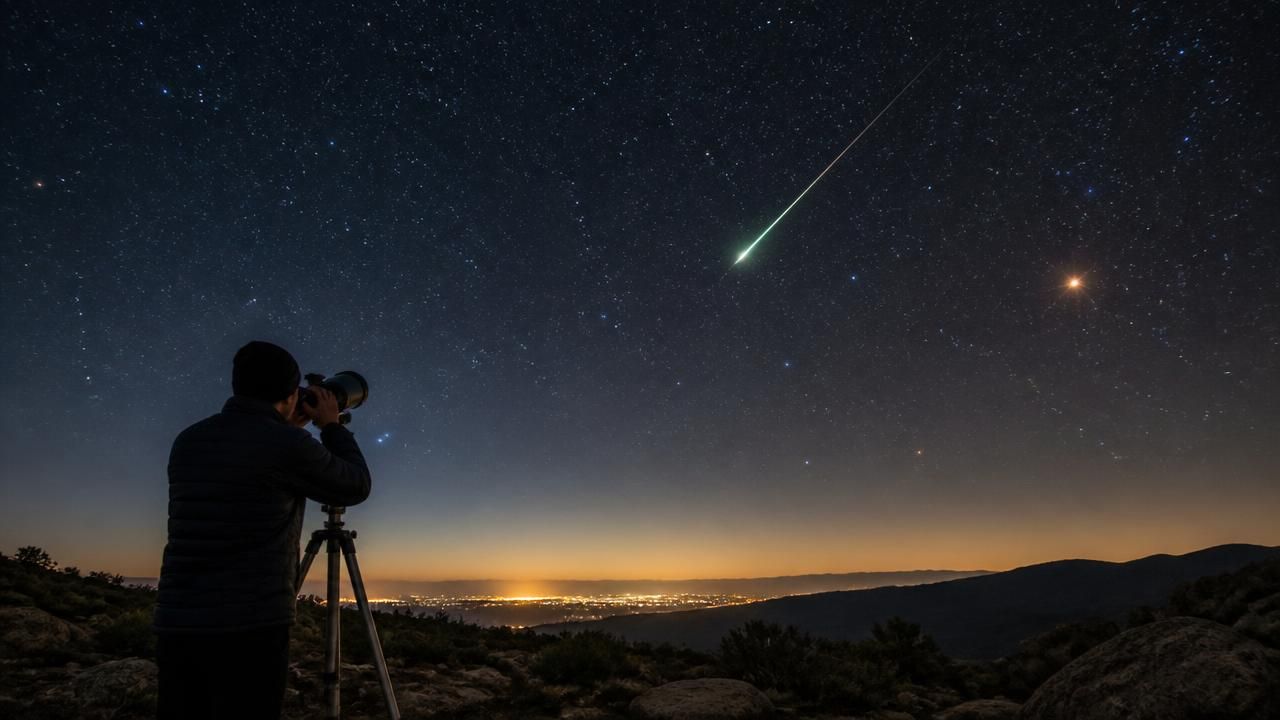
The Southern Taurid meteor shower has moved into its peak window, and outlets are split between excitement and caution. MSN framed the shower as bringing “rare fireballs tonight,” while a companion headline warned, “Don’t get too excited.” Both points are valid. The Taurids are not a prolific shower—typical rates are only a handful of meteors per hour—but they are famous for producing bright, slow fireballs that can streak across a large swath of sky. The debris stream comes from Comet 2P/Encke, and because the particles are spread out, the shower is broad rather than sharp. The Southern Taurids peak in early November, while the Northern Taurids follow later in the month.
“Don’t get too excited” is how one outlet framed the Southern Taurids’ peak—a reminder that fireball potential does not mean a meteor storm.
Leonids meet a supermoon
The Leonid meteor shower peaks mid-month, but this year it shares the sky with November’s full moon—often called the Beaver Moon—which is also a supermoon. The Leonids are fast, sometimes bright meteors produced by debris from Comet Tempel-Tuttle. In outburst years they can produce spectacular storms, but in ordinary years observers might see 10 to 15 meteors per hour under dark skies. A supermoon’s glare will wash out many fainter streaks, especially before midnight. Union Leader highlighted that collision of events, noting the Leonids peak alongside the supermoon this weekend. The practical advice: bright fireballs may still punch through the moonlight, but casual observers should not expect a meteor storm.
How to watch
- Find a dark spot away from city lights and let your eyes adapt for 20 to 30 minutes.
- Look away from the moon; the shower’s radiant may be in Leo or Taurus, but meteors can appear anywhere.
- Watch after midnight and before dawn, when the radiant is higher and the sky is darkest.
- Bring a reclining chair, warm clothes and patience—meteor watching is a waiting game.
Mars and Jupiter pair up
Science Daily also flagged a close pairing of Mars and Jupiter as one of November’s standout sights. The two planets are not actually near each other—Jupiter is hundreds of millions of kilometers farther out—but they can appear strikingly close from Earth’s viewpoint. Such conjunctions are visual treats for naked-eye skywatchers and a good target for small telescopes, which can reveal Jupiter’s moons and Mars’s reddish disk in the same field of view. The pairing also offers a useful way to tell planets from stars: planets tend to shine steadily, while stars twinkle.
Voyager 1 reaches one light-day
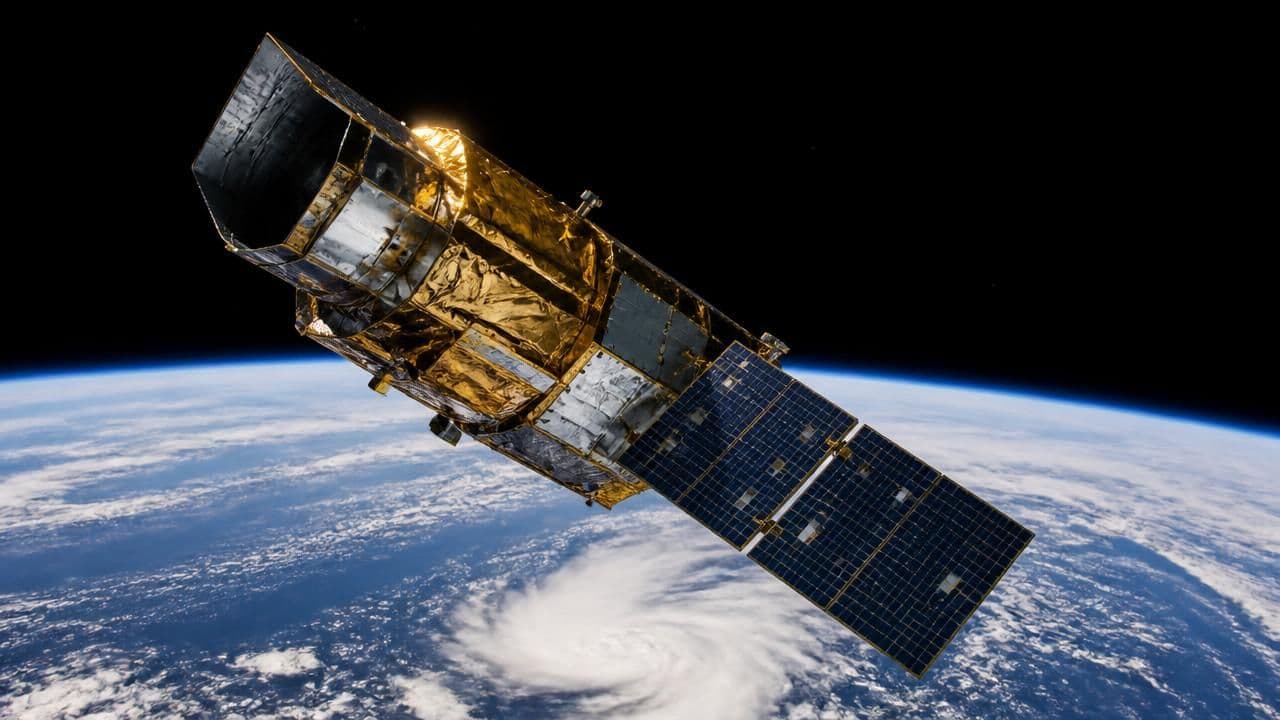
Beyond the meteor showers and moon, Science Daily noted a historic milestone from NASA’s Voyager 1: the spacecraft has become the first human-made object to reach a distance of one light-day from Earth. That is roughly 25.9 billion kilometers, or 16.1 billion miles. The figure is not just a number; it describes light travel time. A radio command sent to Voyager 1 now takes about 24 hours to arrive, and a reply takes another 24 hours. Voyager 1, which launched in 1977 and crossed into interstellar space in 2012, is still sending back data from the edge of the Sun’s influence. Its twin, Voyager 2, is also in interstellar space but is farther behind.
How coverage framed the month
The story has been told through several lenses. Science Daily took the broadest view, packaging meteor showers, fireballs, the supermoon, Mars-Jupiter and Voyager 1 as a single “don’t miss” celestial calendar. MSN leaned into the Taurids’ fireball reputation with a headline that promised rare fireballs and another that cautioned against overhyping the shower. Union Leader localized the Leonids and supermoon for readers wondering whether the weekend was worth staying up for. Edhat offered a Southern California skywatching guide, while Tempo ran a listicle of the “8 best night sky events.” The differences are mostly about emphasis: the same sky, marketed to different audiences with different levels of hype and local detail.
For Southern California observers, the advice is familiar: get away from coastal light domes and into the desert or mountains if possible. Even then, the supermoon will brighten the sky. The best strategy is to treat the month as a series of chances rather than one perfect night. Watch for Taurid fireballs early in the month, catch the Leonids around their peak if the moon allows, use the Mars-Jupiter pairing as a skywatching anchor, and pause to appreciate the fact that a 1970s spacecraft is now a full light-day away.