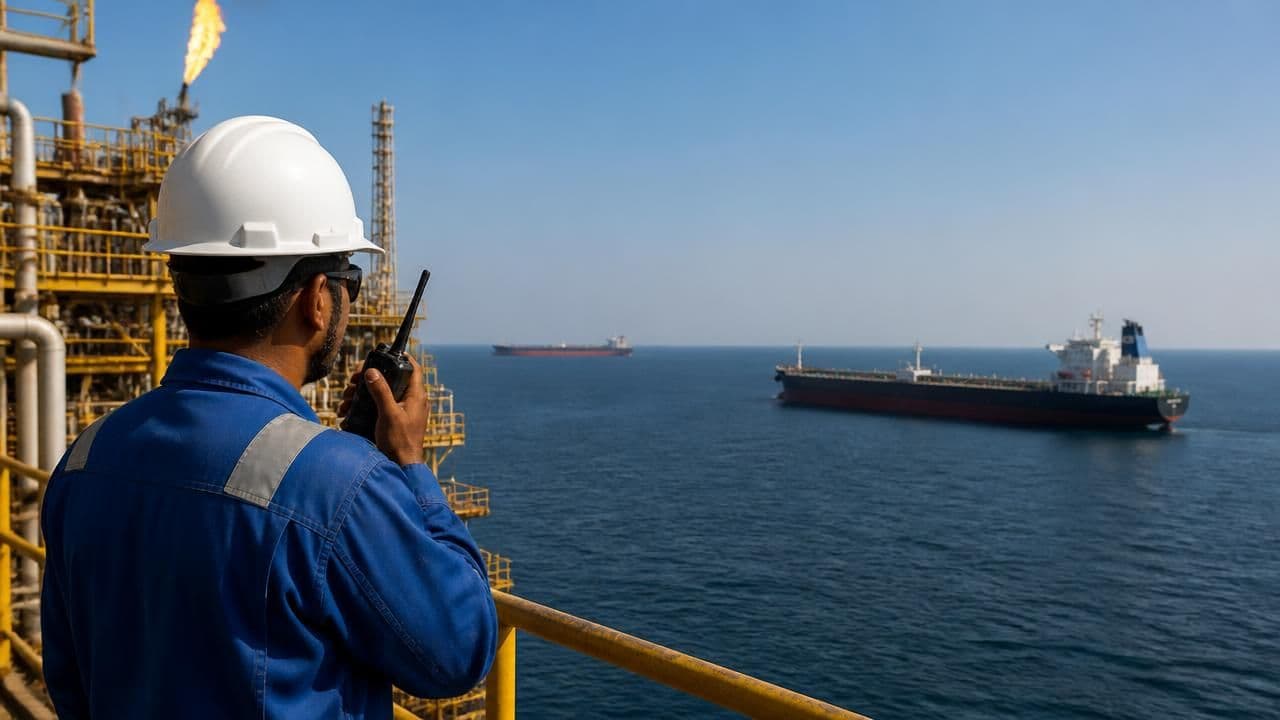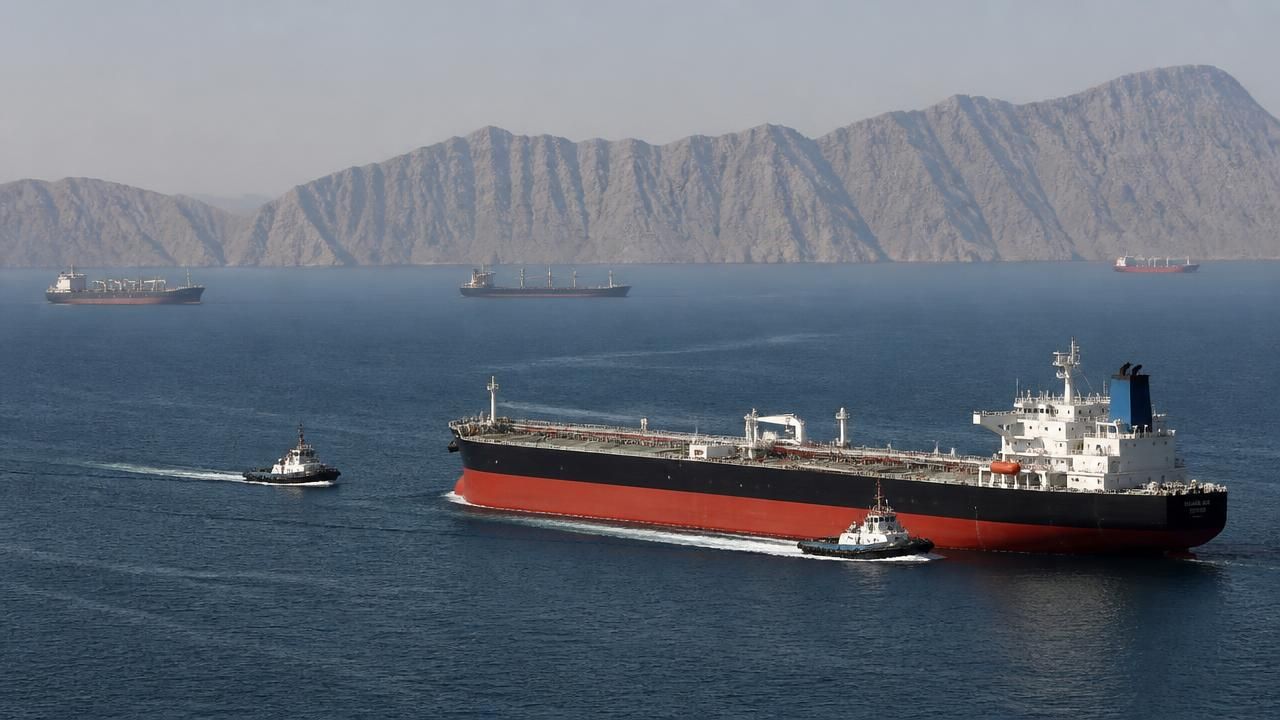
Saudi Arabia is leaning harder on the Strait of Hormuz for its crude exports after an attack disabled the kingdom's critical East-West pipeline — the conduit built precisely to let Saudi oil reach global markets without passing through the world's most heavily trafficked chokepoint. The shift, first reported by Reuters and Bloomberg, marks a significant reordering of how the world's largest oil exporter moves roughly its most strategically vital commodity.
The East-West pipeline, often called Petroline, runs about 1,200 kilometres from the giant oil fields of the country's eastern province to Yanbu on the Red Sea. For decades it has functioned as Saudi Arabia's geopolitical escape hatch: if Hormuz were ever closed by conflict, the pipeline's roughly five million barrels per day of nameplate capacity could keep crude flowing to Europe and Asia via the Suez Canal and the SUMED system.
A Safety Valve Removed
That valve is now shut. Reports from Reuters and OilPrice.com describe the pipeline as "offline" following an attack, with Saudi Arabia responding by ramping up Gulf-loading volumes. Oil prices rose after the shutdown was reported, as traders priced in a global supply chain suddenly dependent on a single, vulnerable transit corridor through which roughly a fifth of the world's oil normally passes.
"Oil prices rise after Saudi Arabia shuts down critical pipeline that bypasses Strait of Hormuz."
The irony is structural. Saudi crude heading to Europe or North America can normally travel west. With Petroline down, much of that volume must now be pushed east through Hormuz, loaded onto tankers bound for Asia, or absorbed into domestic and regional storage — reversing the logic of a pipeline network designed to de-risk the kingdom's exports.
Hormuz Becomes the Only Way Out
OilPrice.com reports that Saudi oil exports have rebounded at Hormuz even as the East-West pipeline remains offline — evidence that Riyadh is capability-matching rather than fully replacing lost route capacity. Bloomberg's coverage frames the same development more cautiously, noting that Saudi tanker traffic is exposed from Hormuz all the way to the Red Sea, where vessels have faced mounting risk in recent months.
That divergence in framing is notable. Bloomberg's "Saudis Seek to Boost Hormuz Oil Exports" positions the move as a deliberate policy response. Its separate headline — "Saudi Oil Exports Dive as Tankers at Risk From Hormuz to Red Sea" — suggests the underlying export picture is one of disruption, not recovery. Reuters splits the difference, reporting the export ramp-up as a data-driven fact while stressing the pipeline attack as the trigger.
Tankers in the Crosshairs
The physical risk is compounding. Reports carried by MSN describe projectiles striking both Saudi and South Korean oil tankers, raising the prospect that the attacks are aimed at shipping rather than fixed infrastructure alone. South Korean-flagged and South Korean-chartered vessels are frequent carriers of Gulf crude, and any strike on them widens the pool of states with a direct stake in the escalation.
For insurers, the math changes immediately. War-risk premiums on Gulf loadings typically spike within days of a tanker incident, and those costs are ultimately passed to refiners and, eventually, to consumers. Charterers reroute, slow-steam, or refuse loadings altogether — behaviour that can reduce effective export capacity even when terminals and pipelines are technically functioning.
Markets, the AI Trade, and a $12 Billion Deal
The energy shock lands against an otherwise buoyant risk backdrop. Bloomberg's Horizons Middle East & Africa briefing highlighted both the Saudi export story and a resurgent AI-linked equities trade, alongside a reported $12 billion property development deal in the Maldives — a reminder that capital flows into the region remain robust even as physical supply chains face disruption.
That combination — geopolitical risk premium in oil, speculative enthusiasm in technology — has become a defining feature of the current market regime. Traders are effectively running two narratives at once: a commodity complex constrained by chokepoints and sabotage, and an equity market still priced for an artificial-intelligence-driven earnings boom.
What to Watch
- Repair timelines for Petroline. The duration of the outage determines whether Riyadh can restore its dual-route export capacity before storage and floating inventory are drawn down.
- Further tanker incidents. Repeated strikes would push war-risk premiums to levels that make some Gulf loadings uneconomic regardless of official export targets.
- OPEC+ spare capacity. Most of the world's unused production sits behind the Strait of Hormuz — capacity that only matters if it can physically reach buyers.
- Price signalling. Whether crude holds its gains or fades will reveal how much of the move is sentiment versus genuine barrels lost.
For now, the picture from seven separate reports is consistent on one point: Saudi Arabia's ability to move oil is no longer a logistical footnote but the central variable in global energy pricing — and the route it once built to avoid Hormuz is, for the moment, part of the problem rather than the solution.