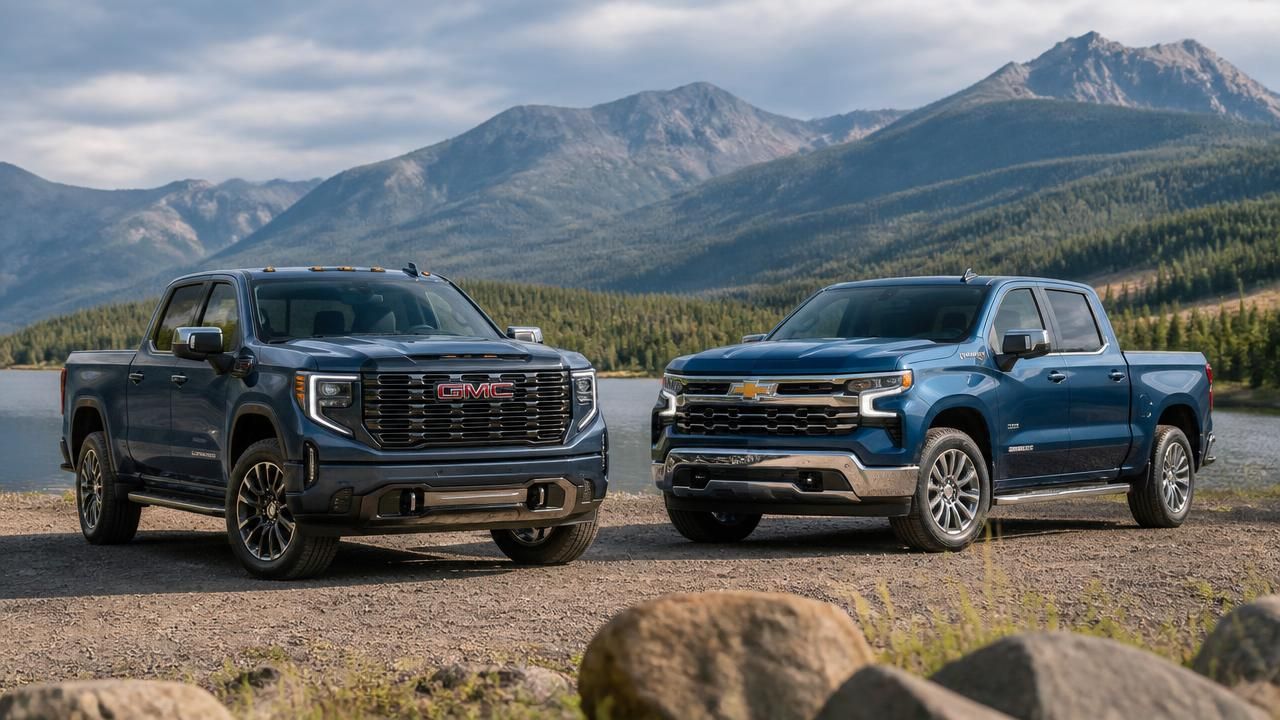
General Motors has unveiled a new software experience for its upcoming 2027 Chevrolet Silverado and GMC Sierra pickups, and the headline writers wasted no time declaring victory for phone mirroring. Within days, the announcement was being described as a dramatic reversal: GM "brings back" Apple CarPlay, GM "capitulates" on its CarPlay ban, GM "caves" after saying it wouldn't.
There is just one problem with that framing. According to The Verge, GM never actually removed CarPlay from its gas-powered trucks in the first place — which makes the idea of "bringing it back" something of a category error.
What GM Actually Announced
The automaker said its next-generation Silverado and Sierra trucks will ship with a refreshed software interface, including a new look for Apple CarPlay and Android Auto, the phone-mirroring systems that let drivers project their smartphone's apps onto the vehicle's central display. The redesign is part of a broader push to modernize GM's in-vehicle user experience across its highest-volume, most profitable product line.
The trucks in question are gas-powered full-size pickups, a segment that accounts for an enormous share of GM's North American profit. That detail is central to understanding the reaction.
The Confusion, Explained
In 2023, GM made a loud, deliberate break with the auto industry's status quo: it said its new electric vehicles would not offer CarPlay or Android Auto. Instead, EVs such as the Chevrolet Blazer EV and Silverado EV would run GM's own Google-built infotainment system, with native Google Maps, Google Assistant and app support built in. At the time, GM signaled that gas-powered models would eventually follow the same path.
That plan generated years of backlash from customers and reviewers, and it became the lens through which virtually every subsequent GM software announcement has been read. So when GM detailed the new Silverado and Sierra interface — and mentioned CarPlay and Android Auto by name — much of the press treated it as surrender.
"Naturally, this led to some confusion about whether GM was 'bringing back' CarPlay and Android Auto to its vehicles," The Verge noted, pointing to Yahoo Finance's framing of an "about-face" and an Apple Insider headline boasting that GM had "caved" on its decision to remove the interface. Even The Verge's own commenters, the outlet acknowledged, misread the situation.
How the Headlines Diverged
The split in coverage was stark and instructive.
- Apple-aligned outlets framed the news as capitulation. MacDailyNews ran the headline: "GM capitulates on Apple CarPlay ban; brings back system later this year." Apple Insider used the word "caved."
- Mainstream aggregators treated it as a straightforward consumer win, with MSN carrying headlines like "GM brings back Apple CarPlay as buyers demand it" and "GM is bringing back Apple CarPlay and Android Auto after saying it wouldn't."
- Enthusiast and trade sites tied the change to a specific model year, with iThinkDiff reporting: "GM Brings Back Apple CarPlay And Android Auto Back To The 2027 Chevrolet Silverado."
- Skeptical tech coverage pushed back on all of it. The Verge's core argument was that a system can't be restored if it was never withdrawn — at least not from the trucks in question.
"GM can't 'bring back' Apple CarPlay because it never left." — The Verge
The divergence reflects a real ambiguity in GM's communications. The company has never offered a single, clean, definitive statement about the long-term fate of CarPlay in its combustion lineup. It has said EVs will go without it. It has hinted gas models would eventually do the same. It has then shipped gas models with it intact. That leaves room for every outlet to read the story differently — and for readers to come away with four incompatible versions of the same announcement.
Why GM Wanted CarPlay Gone
GM's original rationale was not arbitrary. Executives argued that deeply integrated, first-party software would reduce driver distraction, allow tighter pairing with advanced driver-assistance features such as Super Cruise, and give GM direct access to vehicle and driver data that phone-mirroring systems largely bypass. It is the same logic that has pushed Tesla and Rivian toward fully proprietary interfaces and led Apple and Google to fight for dashboard real estate across the industry.
The counterargument, made forcefully by buyers and reviewers, is that consumers have spent a decade building their digital lives inside Apple Maps, Spotify, Waze and iMessage, and expect their $60,000-plus truck to accommodate them. Surveys have repeatedly shown that a significant share of shoppers consider CarPlay a must-have feature — sometimes even a deal-breaker.
Why This Matters Beyond One Truck
GM's software push has been one of the bumpier chapters in its recent history, marked by leadership turnover in its software organization and well-publicized early glitches in its EV infotainment systems. Meanwhile, the company has softened its all-electric ambitions, adding plug-in hybrids to its North American lineup as EV growth has slowed — a shift that gives its gas trucks renewed strategic importance.
In that context, the 2027 Silverado and Sierra software reveal is less a dramatic reversal than a careful hedge: keep the feature customers demand where the money is, and continue experimenting with a proprietary stack where the volume is still small.
The lingering question is what happens to the EVs. GM has not said it will restore CarPlay and Android Auto to its electric lineup, and the redesign announced for the trucks does not change that. For now, the safest reading of the story is also the least dramatic one: GM never took CarPlay out of its trucks, and it still hasn't put it back into its EVs — no matter what the headlines say.