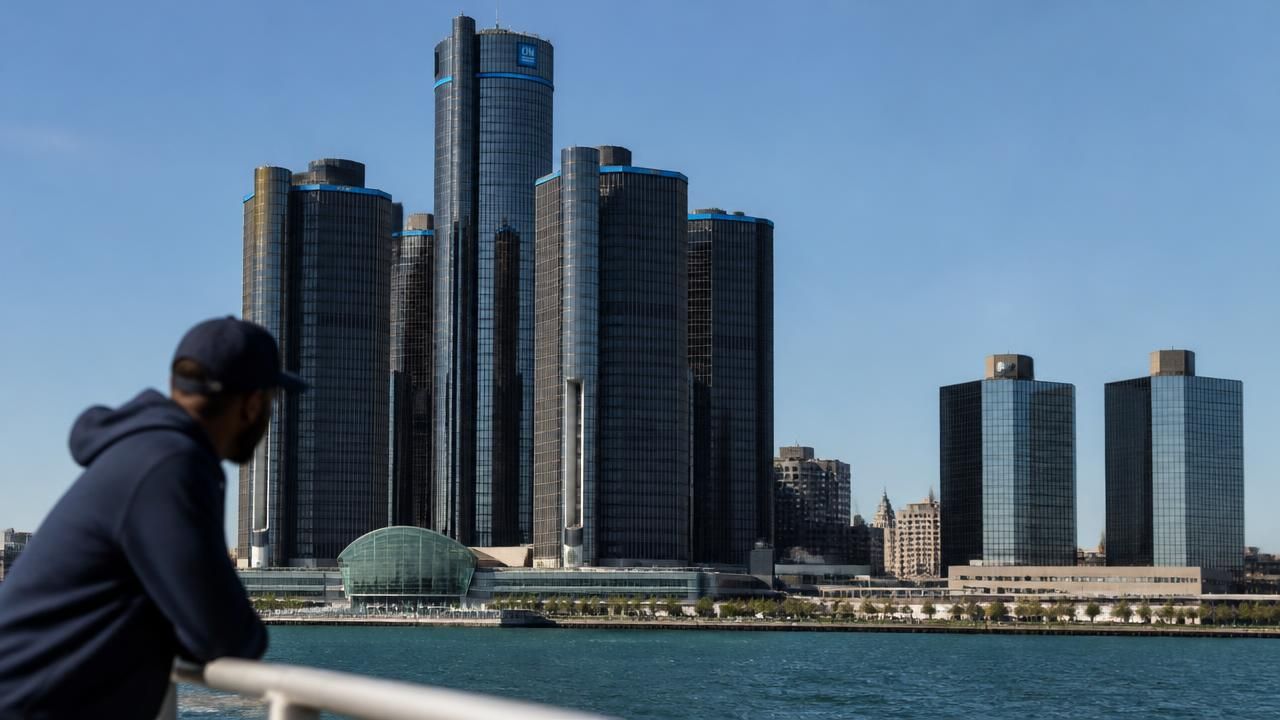
Detroit’s long-awaited redevelopment of the Renaissance Center is turning into a high-stakes test of how the city pays for big-ticket revitalization — and who controls it. General Motors and Dan Gilbert’s Bedrock are seeking $550 million in taxpayer funds for the project, according to MSN, while Deadline Detroit reports that Gilbert is putting up $1 billion for a nonprofit redevelopment of the sprawling riverfront complex. The combination of private capital, public subsidy and a nonprofit ownership structure has drawn pushback from community members and at least one city councilman, setting off a debate over transparency, governance and the risk to public dollars.
The plan’s financial architecture is unusual. Deadline Detroit’s headline emphasizes Gilbert’s $1 billion commitment to a nonprofit redevelopment of the Renaissance Center, the iconic complex that serves as GM’s headquarters and a symbol of Detroit’s downtown revival. But the project also depends on a substantial public contribution: MSN reported that “pushback greets GM, Bedrock ask for $550M in taxpayer funds for RenCen.” That mix — private philanthropy and investment, corporate participation and government support — is central to the case supporters are making and the skepticism critics are voicing.
A Broader Bedrock Bet on Detroit
The RenCen fight comes as Bedrock remains one of the most active developers in Detroit. In an interview with Bloomberg Markets’ Romaine Bostick on “The Close,” Bedrock CEO Jared Fleisher pointed to Dan Gilbert’s investment in restoring and filling 140 buildings across Detroit and Cleveland, totaling more than 21 million square feet. Fleisher also highlighted the Hudson’s site, where a new tower is rising on the former department store location and is expected to be completed in 2027. Bloomberg framed the story around Bedrock’s long-term bet on Detroit real estate; local coverage has focused more tightly on the RenCen’s financing and governance.
That contrast matters. For Bloomberg’s markets audience, the Hudson’s tower and the 140-building portfolio are evidence of a developer scaling up in two Midwest cities. For Detroiters, the RenCen proposal raises a more immediate question: why does a project with a $1 billion private commitment still need $550 million from taxpayers, and what will the public get in return?
Pushback Over Money and Structure
The political tension has been sharp. One MSN headline reported that the “Bedrock CEO calls councilman's questions about Detroit RenCen deal indecent.” The remark suggests how personal and confrontational the debate has become, with a routine request for scrutiny — a councilman’s questions about a major public subsidy — being characterized as out of bounds. ClickOnDetroit reported that the Bedrock CEO defended the RenCen redevelopment plan as community members questioned the nonprofit structure. That structure is at the heart of the dispute: a nonprofit could allow the project to access different financing tools or philanthropic support, but critics worry about accountability, transparency and whether public money would be insulated from democratic oversight.
“Bedrock CEO defends RenCen redevelopment plan as community questions nonprofit structure,” ClickOnDetroit reported, capturing the central fault line in the debate.
The objections are not necessarily a rejection of redevelopment. They are a demand for details. How would the nonprofit be governed? Who would sit on its board? What happens if the project’s costs rise or its revenue falls short? Would the public contribution be structured as a grant, a loan, a tax abatement or something else? Those questions have not been fully answered in public, and the lack of clarity has fueled the pushback that MSN described.
Demolition Caution and Historical Context
The Detroit News added another dimension. In an opinion piece headlined “Bedrock, GM shouldn't take the wrecking ball to RenCen so fast,” columnist Thompson cautioned against rushing demolition. The headline reflects a broader preservationist concern: the Renaissance Center is not just a set of buildings but a landmark of late-20th-century Detroit, built in the 1970s as a symbol of downtown renewal and later acquired by GM as its headquarters. Tearing down parts of it too quickly could foreclose options, erase architectural history and disrupt a riverfront district that the city has spent decades trying to revive.
At the same time, the complex’s age and design present real challenges. The RenCen’s inward-facing layout, massive podium and separate towers have long complicated efforts to connect it to the rest of downtown. Any credible redevelopment must address those urban-design issues, not just the balance sheet. Supporters of the current plan say a nonprofit model can bring in mission-driven capital and long-term stewardship; critics say it can blur responsibility and leave taxpayers exposed.
Why It Matters
The outcome will shape more than the riverfront. Detroit has used a mix of corporate investment, tax incentives and public-private partnerships to rebuild its core, and the RenCen is the largest remaining test of that model. A successful deal could show how to recycle aging corporate real estate into a mixed-use, publicly beneficial asset. A failed or opaque process could deepen mistrust of downtown development and make future public subsidies harder to secure.
The next phase will depend on how city officials, community groups and the developers resolve the governance questions. Bloomberg’s interview underscores that Bedrock wants to be seen as a long-term investor in Detroit and Cleveland. But the local coverage — from MSN’s headlines to Deadline Detroit’s reporting on Gilbert’s $1 billion commitment to ClickOnDetroit’s account of community skepticism — shows that the RenCen deal will be judged less on the size of the private check than on the quality of the public bargain.