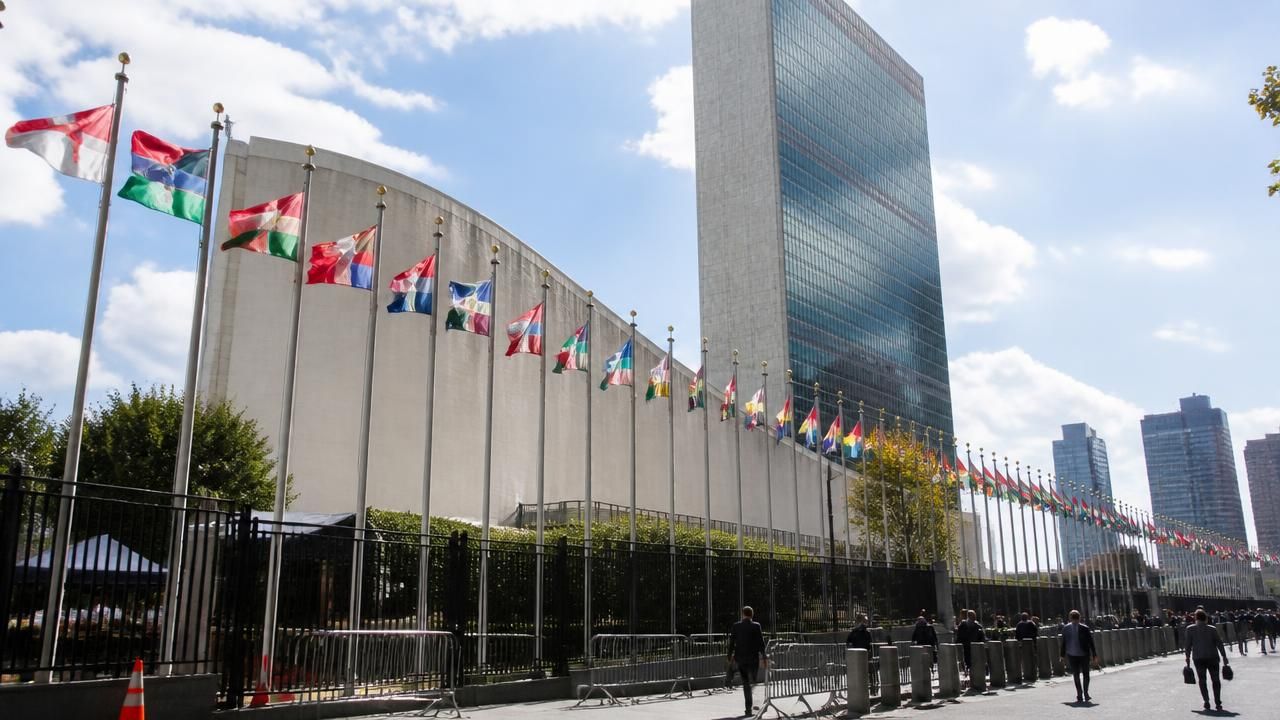
NEW YORK — The world's leaders are converging on the United Nations headquarters in Manhattan this week for the annual high-level General Assembly, a gathering that arrives at a moment of acute strain for global diplomacy and, for host city residents, a familiar season of gridlock.
At the center of the week is António Guterres, who returns to New York for his final General Assembly as U.N. secretary-general. According to the framing carried by NPR News and its member stations, including Jefferson Public Radio, Guterres' swan-song appearance comes “as diplomacy falters over wars in Ukraine and the Middle East, and the global body faces deep divisions.”
“United Nations head António Guterres returns to New York for his final U.N. General Assembly as diplomacy falters over wars in Ukraine and the Middle East, and the global body faces deep divisions.” — NPR News
The big picture: a farewell under fire
The General Assembly's general debate is the one week each year when nearly every head of state and government has a seat in the same room — and this year, the room is unusually divided. Two active wars dominate the agenda: Russia's war in Ukraine and the conflict in the Middle East. Both have repeatedly exposed the limits of the Security Council, where veto power has stalled action, and pushed debates toward the 193-member General Assembly, where resolutions are symbolic but politically consequential.
For Guterres, the week represents a final opportunity to press a case he has made throughout his tenure: that multilateral institutions are being outmatched by a fragmenting world order. His departure also opens an immediate succession question — who inherits a body that member states increasingly treat as a stage for grievance rather than a venue for settlement. That leadership transition is expected to shadow nearly every bilateral meeting on the margins.
Gridlock diplomacy: the New York angle
Domestic coverage of the same event has taken a sharply different tack. The New York Times led with the practical fallout for the host city, reporting that the General Assembly is “set to snarl traffic,” with city officials warning of disruptions. MSN's aggregated package framed the week around three hooks: the 2026 assembly itself, a scheduled meeting between President Trump and New York City Mayor Mamdani, and the attendant gridlock and street closures.
The split in emphasis is instructive. International outlets treat the assembly as a diplomatic story; local and aggregator coverage treats it as a logistics story — because for the roughly 8 million people who live and work around the East Side, that is what it is. The security perimeter around the U.N. campus in Turtle Bay typically converts stretches of First Avenue and nearby approaches into a closed zone, with rolling closures rippling outward to the FDR Drive and Midtown cross streets. Commuters, delivery drivers, and businesses along the corridor absorb days of delays.
- What is happening: The U.N. General Assembly's high-level week, bringing heads of state and government to Manhattan.
- When: The annual September session, running through the week.
- Where: U.N. headquarters, Turtle Bay, with security cordons extending into Midtown.
- Why it matters: Wars in Ukraine and the Middle East are testing the institution's relevance even as Guterres prepares to leave office.
- How it affects the city: Street closures, motorcades, and significant traffic disruption for residents and businesses.
A mayor, a president, and a photo op with stakes
The Trump-Mamdani meeting is the week's most closely watched domestic subplot. Such encounters — a president and a big-city mayor, often from opposing parties — are usually choreographed as brief courtesy calls. But they carry outsized weight when the city in question is both the host of the diplomatic calendar and a frequent target of federal policy fights over funding, immigration enforcement, and public safety.
Aggregators have leaned into the optics. Diplomatic correspondents, by contrast, are more likely to view the meeting as one data point in a broader question: how the United States positions itself at the U.N. during a week when its own leader is simultaneously a central actor and a frequent critic of the institution.
How the story is being framed
The coverage splits along predictable lines. NPR and its member stations emphasize the diplomatic substance — Guterres' final appearance, the paralysis over Ukraine and the Middle East, and the structural divisions inside the world body. The Times foregrounds municipal consequence, treating the assembly as a civic disruption event. MSN blends both, packaging the assembly with the Trump-Mamdani meeting and the traffic warnings into a single, clickable narrative.
All three framings are accurate; none is complete. The assembly is simultaneously a summit, a security operation, and a political backdrop.
What to watch
Three things will determine how this week is remembered. First, whether any meaningful movement emerges on Ukraine or the Middle East — or whether speeches substitute for substance once again. Second, how the secretary-general succession takes shape, given that the field is already being read as a referendum on whether member states want a more assertive or more accommodating U.N. chief. Third, whether the Trump-Mamdani meeting produces anything beyond a handshake, and whether the friction between federal and municipal priorities surfaces in public.
For New Yorkers, the calculus is simpler. The motorcades will roll, the barricades will go up, and by the weekend the diplomatic circus will move on — leaving behind a city that has, once again, hosted the world's argument with itself, and picked up the tab in lost hours and closed streets.