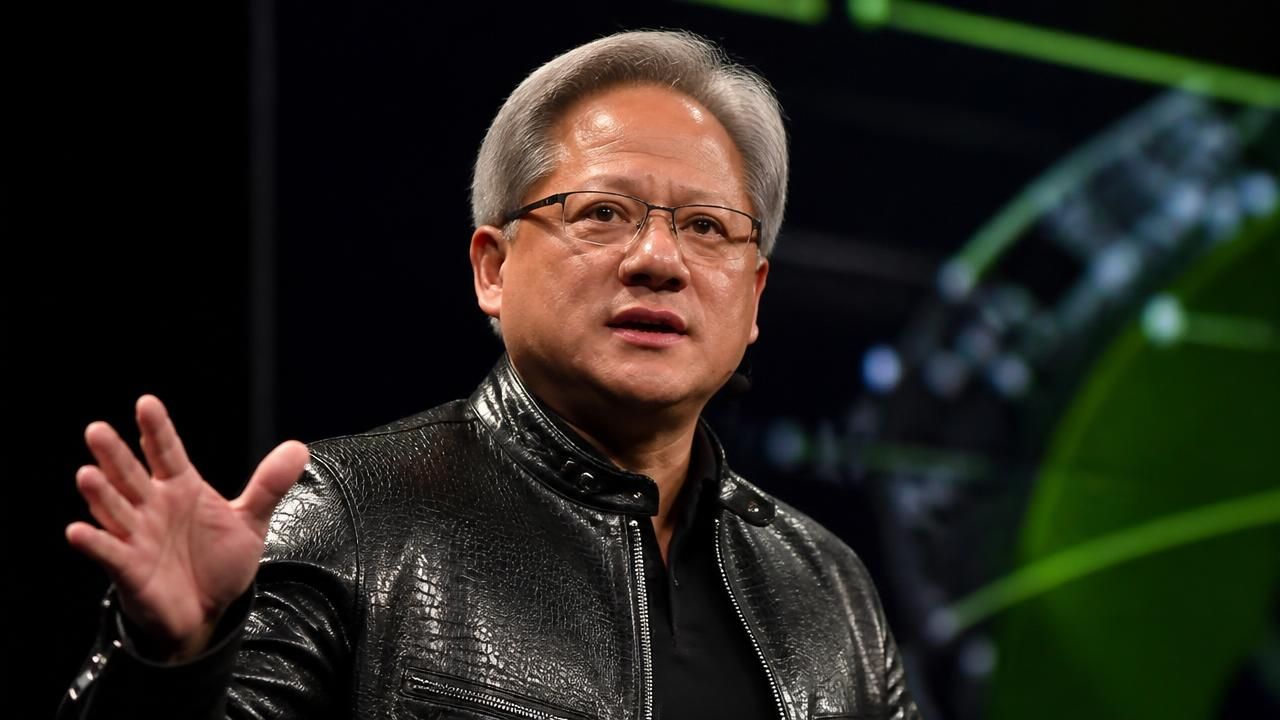
Nvidia chief executive Jensen Huang has spent the past two years as the public face of the artificial intelligence boom. This week he made unmistakably clear that he has no intention of slowing it down. In an interview with CBS Sunday Morning, Huang declared there was a "0% chance" that AI would end the world, dismissed warnings from rival executives and safety researchers as "hysterical," and argued the industry should build the technology "as fast as we can."
The remarks, aggregated across a dozen outlets ranging from CNBC and Yahoo Finance to Mashable and The Verge, have reignited a debate Huang has effectively tried to end: whether the companies racing to build frontier AI should be restrained, and by whom.
"Scaring people is unnecessary," Huang said. "It is irresponsible."
A '0% Chance' and a Rejection of the Doomers
Huang reserved his sharpest criticism for peers who have called for caution. He said that public appeals from Anthropic CEO Dario Amodei and OpenAI CEO Sam Altman to slow or more carefully stage the development of advanced AI are "not grounded in science." He went further still, arguing there is no need for new rules, laws, or guidelines governing frontier model development — a position that puts him at odds with much of the AI safety community and with a growing number of lawmakers in both parties.
The Verge framed the interview bluntly, noting that "no one is surprised" that the executive who stands to profit most from the AI boom believes the risk is overblown. That framing — self-interest dressed as technical confidence — is one Huang has increasingly had to rebut as Nvidia's data-center business has become the single greatest beneficiary of the AI capital boom.
The Five-Layer Cake and a 'Senseless' Milestone
Huang also offered his own mental model for the industry, describing AI as a "five-layer cake" in which Nvidia supplies only one slice. The metaphor is a recurring Huang move: acknowledging the scale of the ecosystem while insisting Nvidia is a component vendor rather than the architect of a societal transformation. Critics note the distinction is difficult to maintain when Nvidia's chips underpin nearly every major frontier model in production.
In the same interview, Huang argued that artificial general intelligence — the long-theorized threshold at which machines match human capability across domains — is effectively already here, and that treating it as a discrete milestone is "senseless." Mashable reported the claim as a deliberate provocation: reframing AGI as an arbitrary marketing line rather than a safety-relevant juncture.
An Unlikely Political Alliance
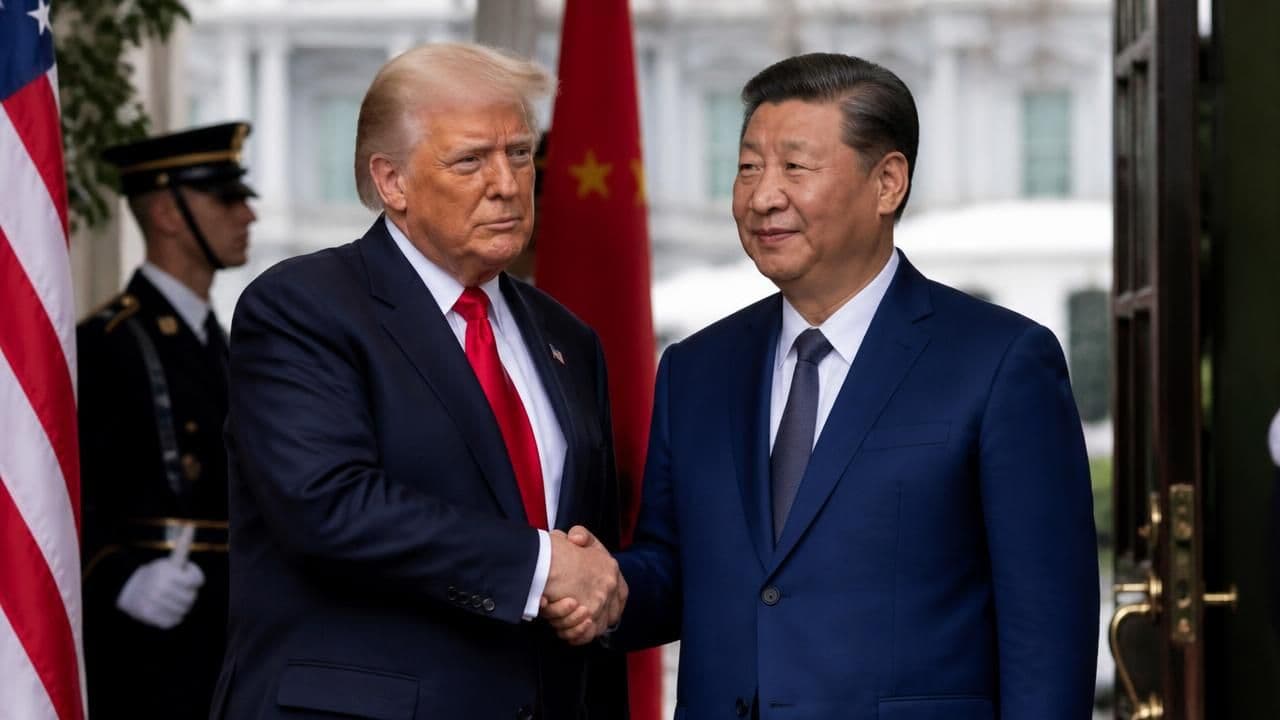
Huang's message has found a receptive audience in the White House. CNBC reported that Huang has emerged as President Trump's most prominent ally in the AI safety debate. During a summit appearance, Trump called Huang onstage in a surprise moment, and the president dismissed AI existential fears as a "hoax" — language that echoed Huang's own characterization of the warnings as "hysterical."
Seeking Alpha described the onstage call as a "surprise" that underscored how far the political center of gravity has shifted. Where the Biden administration pursued a voluntary safety framework and executive order, the current posture is openly deregulatory, with the president treating the strongest AI-risk claims as a political artifact rather than a technical one.
Meta CEO Mark Zuckerberg has aligned himself with Huang on the question, with both executives shrugging off "red-alarm" warnings and resisting calls for government regulation of model development.
The Circular-Financing Question
Huang has also had to defend Nvidia's expanding financial involvement in its own customer base — investments, compute commitments, and partnership structures that effectively seed demand for Nvidia hardware. Speaking to CNBC, Huang characterized the exposure as low-risk, arguing the investments support an ecosystem that must scale for AI to deliver on its promise.
Skeptics see something closer to circular financing: Nvidia invests in startups, startups buy Nvidia chips, Nvidia reports revenue growth, and the cycle reinforces the narrative that fuels further investment. Whether that structure represents strategic ecosystem-building or a self-referential loop is now among the most consequential open questions in public markets, given Nvidia's outsize weight in the major indexes.
Differing Frames, One Story
- The Verge emphasized the messenger: a CEO whose fortune depends on AI optimism telling the public not to worry.
- CNBC treated the story primarily as a political realignment, casting Huang as the administration's most credible industry validator.
- Mashable zeroed in on the technical claims, particularly Huang's insistence that AGI has already arrived.
- Aggregators including MSN stripped the story to its most viral element: a billionaire saying the apocalypse is not coming.
The Stakes
Huang's comments land at a fragile moment. AI capital expenditure is at historic highs, valuations rest on assumptions about sustained demand, and a growing chorus of analysts warns of a bubble. At the same time, safety researchers — including some who have worked on the technology for decades — argue that claims of negligible risk are themselves unscientific, because the systems in question are not fully understood even by their creators.
The practical consequence is a widening vacuum. With the executive branch skeptical of regulation and the industry's most influential figure arguing that no new rules are needed, the burden of oversight is shifting to courts, states, and internal corporate governance — institutions with far less capacity to act quickly than the technology's development cycle.
What is no longer in dispute is Huang's role. He is not merely selling chips. He is now the industry's most effective political argument, and the AI safety debate increasingly runs through him.