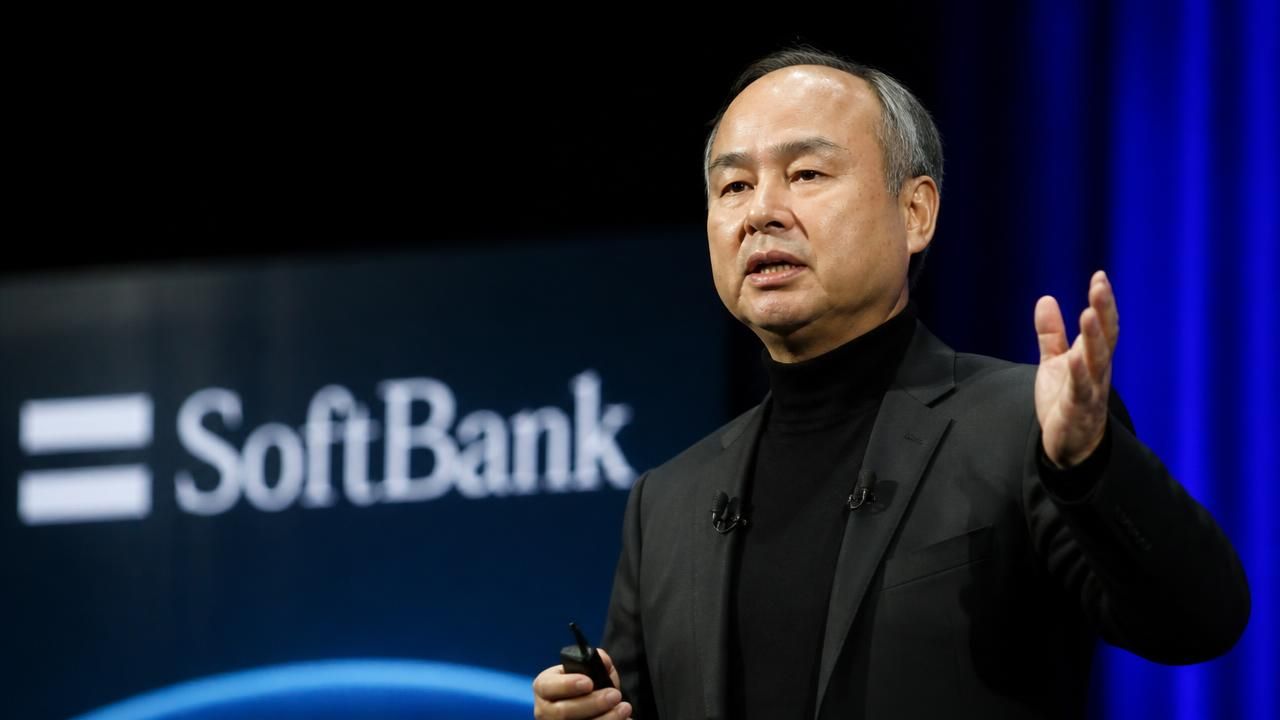
SoftBank Group Corp. has secured an upsized loan of roughly $11.9 billion to help finance its growing stake in OpenAI, while the Japanese conglomerate explores an even larger debt package that could reach $20 billion — a two-pronged fundraising push that is rapidly turning Masayoshi Son's AI ambitions into one of the credit market's biggest single wagers.
The loan, reported Monday, was scaled up from an initial target as lenders leaned in, according to people familiar with the matter. Bloomberg News characterized SoftBank's parallel bond ambitions as potentially "one of the biggest junk bond deals ever," a description that captures both the scale of the financing and the risk profile investors are being asked to underwrite.
The Deal Stack: Loans, Bonds and Yen Retail Debt
The picture that emerges from a dozen outlets covering the story is not one transaction but a layered financing program:
- An upsized $11.87–11.9 billion loan, syndicated to institutional lenders and tied to SoftBank's OpenAI position, according to The Paypers, Yahoo Finance and Seeking Alpha.
- A bond sale of up to $20 billion, reportedly under consideration to fund and subsequently refinance the OpenAI stake, per Bloomberg News reporting carried by MSN.
- A second loan of roughly $10 billion being sought against the OpenAI holding, as reported by The Next Web.
- A billion-yen retail bond marketed to Japanese savers, placing individual investors at the center of the OpenAI trade, according to ad-hoc-news.de.
The combined efforts are aimed at supplying "more firepower" for what Bloomberg described as SoftBank's $64.6 billion OpenAI bet — a figure that reflects the group's total commitment to the ChatGPT creator, including direct investment and follow-on rounds.
Why SoftBank Is Borrowing So Aggressively
SoftBank's balance sheet gives it limited room to fund OpenAI scale commitments from cash flow alone. Borrowing against the stake — in a structure sometimes likened to a margin loan on unlisted equity — lets Son keep the group's core holdings intact while doubling down on the company at the center of the generative AI boom. The strategy is recognizable Son: conviction first, leverage second, and use the capital markets to bridge the gap.
It is also a bet on liquidity. OpenAI is not publicly traded, so its value cannot be marked daily, and lenders accepting the stake as collateral are effectively making a judgment about a private company's worth several years out.
The AI Credit Cycle Starts to Bite
The timing is delicate. As one German-language outlet framed it, SoftBank's yen bond arrives precisely "as the AI credit cycle starts to bite" — a reference to the widening spreads, rising concerns about AI capital expenditure, and cooling investor enthusiasm for anything priced as pure AI exposure. SoftBank shares came under pressure amid those AI concerns, according to Seeking Alpha, underscoring how the equity market is reading the financing.
The deal could rank as one of the biggest junk bond sales ever — a milestone that cuts both ways, signaling enormous investor appetite while locking SoftBank into high-coupon obligations tied to an asset it cannot easily sell.
Retail participation adds another dimension. By tapping Japanese savers, SoftBank is drawing on the deep pool of household capital that has historically funded domestic issuers at favorable rates — but it also exposes individual investors to a far riskier proposition than the corporate bonds they typically hold.
How the Coverage Differs
The framing splits along predictable lines. Financial wires such as Bloomberg and The Paypers focus on mechanics — sizes, structures, underwriting syndicates — and treat the sums as evidence of SoftBank's standing with creditors. Tech-focused outlets, including The Next Web, emphasize the strategic logic: a second loan against an illiquid stake to keep the OpenAI position intact. Seeking Alpha, meanwhile, offers the bull case in headline form, arguing SoftBank is "a discounted bet on the entire AI stack" — model makers, infrastructure, chips and applications — and that the market has undervalued that portfolio relative to its sum-of-the-parts.
Japanese and European coverage is more cautionary, foregrounding the retail investor and credit-cycle angles rather than the growth narrative.
What to Watch
Three questions will determine how this story ages. First, the final pricing and covenants on the loan and any bond sale — particularly whether the OpenAI stake is pledged directly as collateral. Second, whether the retail tranche in Japan is met with the enthusiasm SoftBank hopes for, or whether a wave of AI skepticism dampens demand. Third, whether OpenAI's next valuation marks up or down; a down round would ripple immediately through SoftBank's collateral and credit spreads.
For now, the message from SoftBank is unambiguous. Son is not trimming his AI exposure — he is borrowing against it, at scale, across institutional and retail markets, in one of the most concentrated wagers any major conglomerate has placed on a single private company.