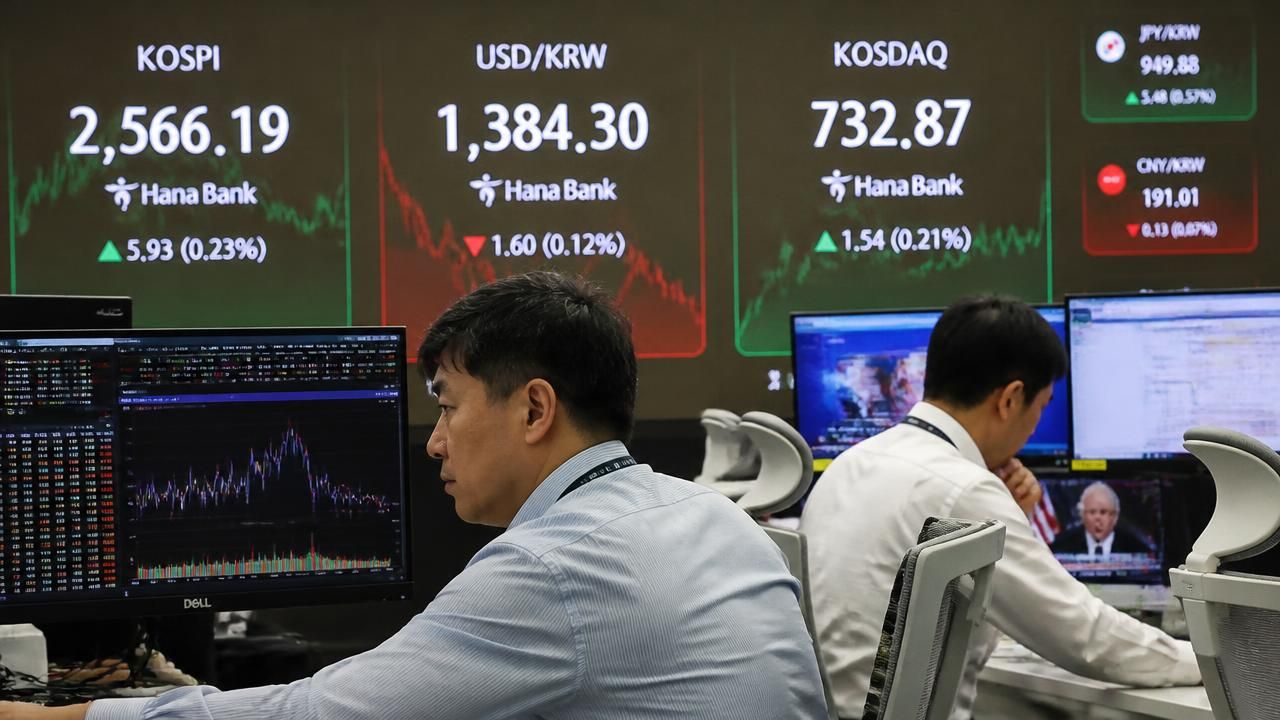
Asian equities and US equity-index futures pushed higher on Tuesday as investors positioned for a closely watched US-China summit later this week, betting that the world's two largest economies can make progress on trade. Crude oil, by contrast, extended its retreat for a fourth consecutive session, underscoring a market that is simultaneously pricing in diplomatic optimism and softening demand expectations.
The split-screen mood — risk-on in equities, risk-off in energy — has become the defining feature of the current trading window. Regional benchmarks in Japan, South Korea and Australia traded in a narrow band, while Chinese mainland gauges lagged, reflecting the caution that persists beneath the headline optimism.
A Week Defined by Diplomacy
The upcoming summit between Washington and Beijing is the single largest catalyst on the calendar. Traders have spent months trading headlines rather than fundamentals, and the prospect of a face-to-face meeting has revived hopes of a tariff truce or, at minimum, a resumption of structured negotiations. Equity-index futures in the US pointed to a firmer open, suggesting the optimism is not confined to Asia.
Yet the framing differs sharply by outlet. Bloomberg's markets wrap emphasized the constructive tone: "Asian stocks and US equity-index futures advanced with traders looking to a US-China summit later this week for signs of progress on trade between the world's two biggest economies." MarketWatch, covering the same session, led instead with geopolitics, headlining that oil was rising and Asian stocks were "mostly lower amid widening Middle East conflict" — a reminder that identical price action can support two very different narratives depending on which variable an outlet privileges.
Oil's Volatile Month: From Six-Week High to Four-Day Slide
Energy has been the most schizophrenic asset class. In early September, crude sat near a six-week high as supply-risk premiums from the Middle East conflict inflated prices. By mid-month, European shares were climbing while oil "extends decline," and by the current session the commodity had logged a fourth straight daily loss. The swing captures a market caught between genuine supply disruption risk and a demand picture clouded by slowing industrial activity.
The reconciliation is straightforward: geopolitical risk premiums are volatile and decay quickly once headlines stabilize, while demand-side concerns are structural and persistent. Each diplomatic signal out of the Middle East, or hint of a US-China thaw, strips a little more premium out of the barrel.
Currencies: Yen, Sterling and the Dollar's Grip
Foreign exchange has been just as event-driven. The yen extended a rally to a fresh seven-month high against the dollar, driven by expectations that Japanese authorities will tolerate — or encourage — a stronger currency as inflation proves sticky. A stronger yen historically pressures Japanese exporters and weighs on the Nikkei, which helped explain the softer tone in Tokyo equities during that stretch.
In Europe, sterling edged higher ahead of the Bank of England's rate decision, with traders reluctant to take aggressive positions before the vote. European shares climbed in tandem, a sign that investors read the pre-meeting drift as a sign of stability rather than stress.
Central Banks Set the Backdrop
The dollar's broader direction remains anchored to the Federal Reserve. Treasury yields pared losses following a Fed hike, with the dollar gaining as rate differentials reasserted themselves. That dynamic creates an awkward backdrop for emerging-market assets: a firmer dollar tightens global financial conditions precisely when risk appetite is trying to recover.
"Why strong earnings don't always make winning stocks" — the question posed by Carnelian Research, which warned investors about the "de-rating trap," in which solid profit growth fails to translate into share-price gains because valuations, not earnings, are the binding constraint.
That warning is unusually relevant in the current environment. With rate expectations shifting weekly, multiple compression can overwhelm even genuinely improving fundamentals — a risk that equity bulls celebrating the summit headlines would do well to remember.
India's Two-Day Slide
Not every market participated in the advance. India's Sensex extended losses into a second session, dropping 188 points, while the Nifty closed at 24,436. The retreat came despite a generally constructive regional tone, suggesting domestic factors — valuation fatigue, quarterly results, and heavy primary-market activity — are doing more to set the agenda in Mumbai than global risk sentiment.
India's underperformance is a useful counterweight to the broader narrative. It demonstrates that the current rally is selective, not universal, and that liquidity is rotating rather than expanding.
What to Watch
- The summit itself: any concrete deliverable on tariffs or technology restrictions would validate the equity bid; a stalemate would likely reverse it.
- Oil inventories and OPEC+ signaling: a fifth down day would confirm demand concerns are overtaking supply risk.
- The Bank of England decision: sterling's pre-meeting strength suggests the market is positioned for hawkish guidance.
- Fed communication: Treasury yields remain the transmission mechanism for everything else.
- Yen intervention risk: a seven-month high invites official commentary from Tokyo.
For now, the market has chosen to trade hope over hazard. Whether that stance survives contact with a summit communiqué — and with the next round of inflation data — is the question that will define the weeks ahead. Traders are pricing a soft landing, a diplomatic breakthrough and contained geopolitical risk simultaneously. History suggests that at least one of those assumptions will need revising.
Note: This report draws on market wraps from Bloomberg, EconoTimes, MarketWatch, Moneycontrol and Business Standard. Several regional feeds were partially inaccessible at the time of compilation, and the roundups span multiple sessions; where accounts diverged, the differing frames have been noted rather than reconciled.