A British woman kidnapped from outside her home in southern Malawi has been rescued by police following a shootout that left four of her alleged abductors dead, authorities said, ending an ordeal that gripped the southern African nation and drew in British diplomatic officials.
Nusrat Osman was taken at about 12.30pm on 11 September as she stood outside her residence in Blantyre, Malawi's second-largest city and its commercial capital. She was freed days later and, according to reports, reunited with her family. The rescue operation unfolded as a running gun battle between Malawian police and the suspected kidnap gang, and the casualty count has been reported differently across outlets, reflecting the confusion that often surrounds fast-moving security operations in the region.
A daytime abduction in Blantyre
Details of the initial seizure remain sparse. Police accounts indicate Osman was snatched in broad daylight from outside her home — a detail that shocked residents of a city unaccustomed to high-profile abductions of foreign nationals. Blantyre, a city of roughly a million people, is the hub of Malawi's small but growing expatriate and business community, and the kidnapping immediately raised questions about the security of foreign residents in one of Africa's most politically stable countries.
Malawi has long been regarded as a comparatively low-risk destination in the region, a reputation built on decades of peaceful transitions of power since independence from Britain in 1964. Kidnappings of British nationals are rare, but armed robbery and organised crime have been a persistent concern in urban centres, particularly along routes linking Blantyre to the commercial and political capitals.
The rescue and a disputed death toll
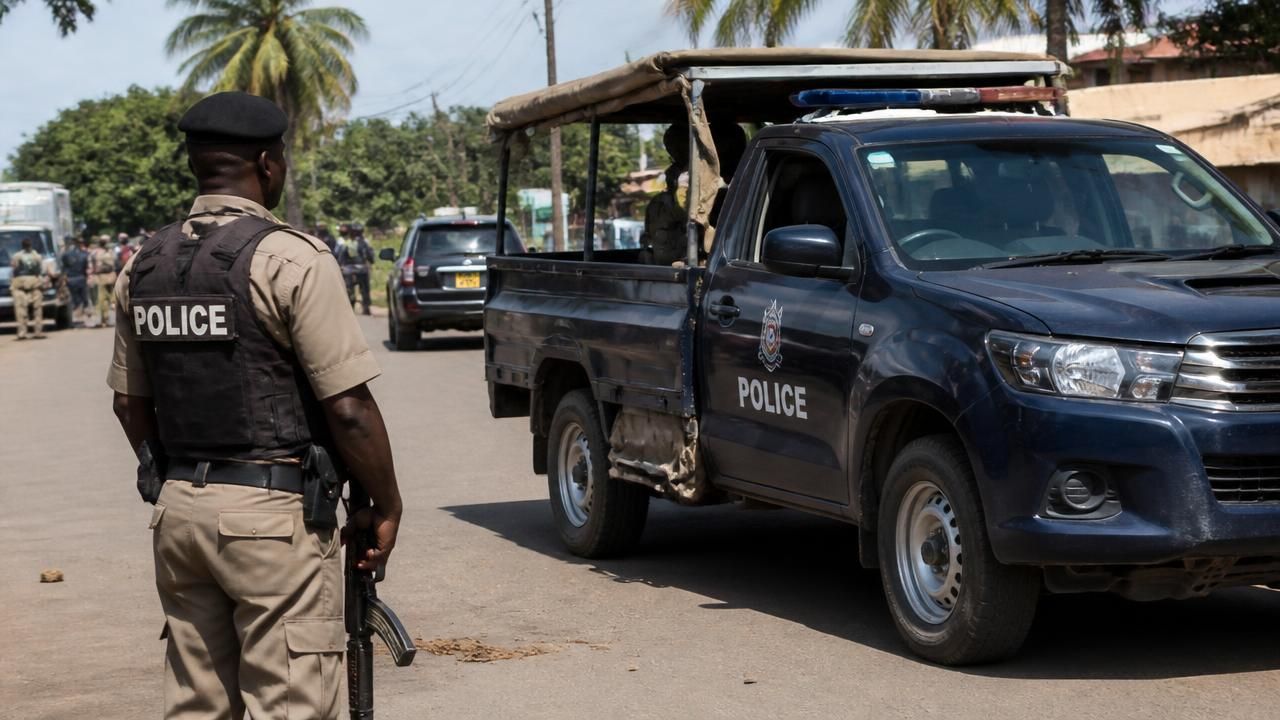
Malawian police confirmed that Osman was recovered after an exchange of gunfire with her captors. The Guardian and several UK-based outlets reported that four of the alleged abductors were killed during the rescue. A Yahoo News headline, by contrast, referred to "2 killed as Malawi police rescue kidnapped British woman," while other aggregators carried the figure of four dead suspected kidnappers. The discrepancy underscores how early reports from the scene often diverge before official statements are consolidated.
One point of agreement across the coverage: the operation ended with Osman alive and out of captivity. Several outlets, including the Isle of Man's 3FM and the UK local outlet This is the Coast, framed the outcome as a successful recovery and a reunion with her family.
A substantial reward and a manhunt
Before the breakthrough, Malawian police had offered a reward of 30 million Malawi kwacha — about £12,950 — for information leading to Osman's rescue and the arrest of those responsible. The size of the sum was significant in a country where average annual earnings are a fraction of that figure, and it signalled both the seriousness with which the case was treated and the pressure on investigators to produce results quickly.
Police offered a reward of 30m Malawi kwacha (£12,950) for information leading to her rescue and the arrest of the perpetrators.
The reward, combined with an intense manhunt, appears to have generated the intelligence that allowed police to locate the hideout and mount the rescue. It is not clear whether the tip that led to the operation came from the public or from police investigative work.
Why the case drew international attention
The kidnapping of a British citizen abroad automatically triggers consular involvement, and UK officials are understood to have been in contact with Malawian authorities throughout the crisis. Cases of this kind place unusual strain on bilateral relations: London expects robust action, while host governments must balance operational secrecy against diplomatic pressure.
The story also travelled widely beyond the UK and Malawi. Diaspora-focused outlets such as DESIblitz and Asian Image followed the case closely, a reflection of interest among British communities with links to East and Southern Africa. Aggregators including MSN and Yahoo amplified it to a mass audience, while specialist and regional titles carried more granular detail on the shootout itself.
Malawian police have not yet released the names of the suspects killed, nor have they detailed how many people are in custody. Investigators are expected to pursue the network behind the abduction to determine whether it was a financially motivated crime or something more organised.
The wider context of kidnap-for-ransom
Kidnap-for-ransom operations targeting foreign nationals have risen in parts of Africa over the past decade, driven by organised criminal groups seeking hard currency. In East Africa, Somalia-based networks have historically targeted aid workers and tourists; in Southern Africa, cases are rarer but not unheard of, and often involve insiders with knowledge of a victim's movements and routines.
That pattern — the victim being seized close to home, at a predictable hour — is characteristic of a planned operation rather than an opportunistic crime. Police have not said whether they believe the suspects had prior knowledge of Osman's schedule.
What remains unanswered
- How many suspects were killed and how many were detained; official figures have been reported inconsistently.
- Whether any ransom demand was made, and to whom.
- The nationalities and identities of the alleged abductors.
- Whether British police or specialist UK units provided operational support.
- What charges will follow for any surviving suspects.
For now, the immediate crisis is over. But the episode has unsettled Malawi's expatriate community and sharpened scrutiny of how quickly a quiet, landlocked nation can be drawn into the international kidnap economy. The coming weeks are likely to bring further arrests, formal charges and, potentially, uncomfortable questions about the security arrangements that allowed a woman to be taken from her own doorstep in the middle of the day.