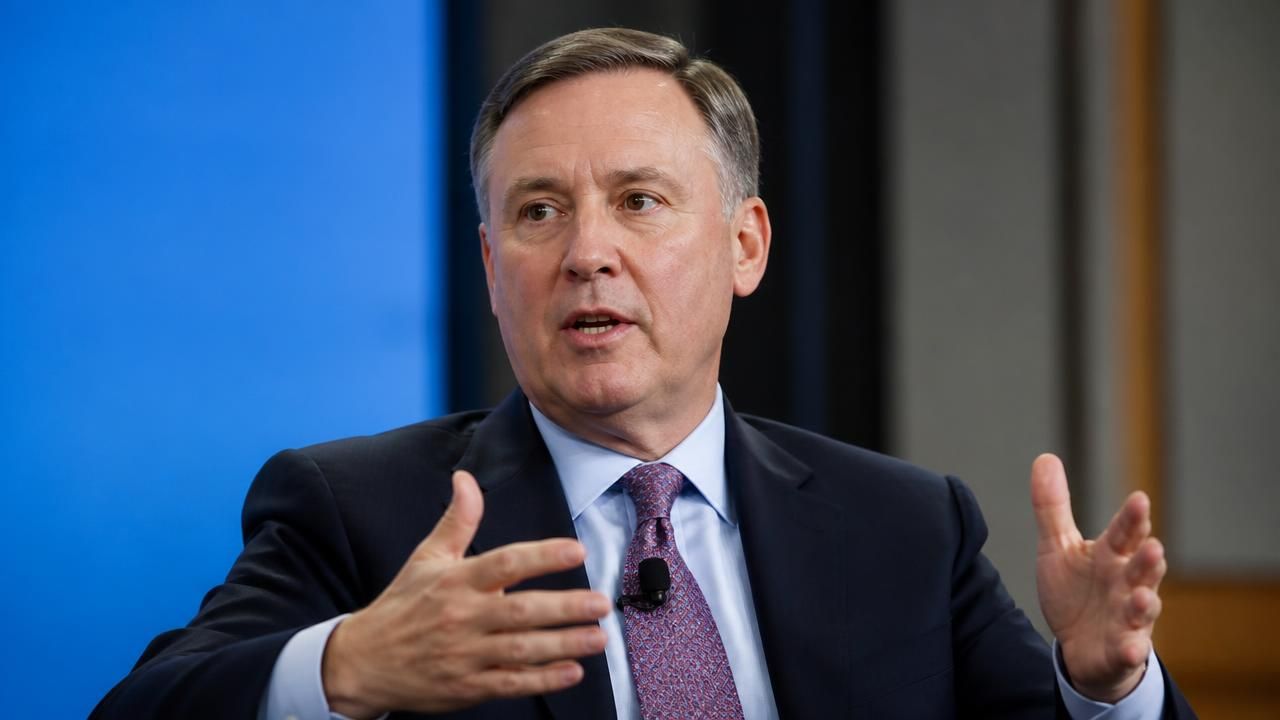
Former Federal Reserve Vice Chairman Richard Clarida said the U.S. central bank is not signaling a single rate increase but leaving the door open to a broader hiking cycle, with every Federal Open Market Committee meeting—including September—now “live.”
In remarks on Bloomberg Surveillance: The Fed Decides, Clarida, now a managing director and global economic adviser at PIMCO, discussed why the Fed shifted from its July stance to a unanimous decision to raise interest rates. He argued that the move was less about a preordained path than about preserving optionality as inflation, growth and financial conditions evolve.
From one-off to a cycle
Bloomberg Markets framed Clarida’s comments around the question of whether the Fed might be “one and done.” His answer was a clear no. The July decision, he suggested, should be read as the possible start of a hiking cycle rather than an isolated move. That distinction matters for markets because a one-off hike can be quickly priced out, while a cycle changes the calculus for bonds, equities, the dollar and credit.
Yahoo Finance highlighted a related theme: every Fed meeting is now “live.” In separate headlines, the outlet reported that Clarida believes every FOMC meeting, including September, is in play. That language is a return to the kind of meeting-by-meeting, data-dependent approach that Fed officials often use when they want to avoid tying their hands. It also puts investors on notice that incoming inflation and labor-market data will determine whether policy tightens further.
Every meeting is live
For Clarida, the shift is not merely semantic. When a central bank says a meeting is “live,” it means officials are prepared to act if the data warrant it. That can reduce the risk of markets becoming complacent, but it can also inject uncertainty into rate expectations. The former vice chair’s view, as reflected in Yahoo Finance’s coverage, is that the Fed wants to keep September and subsequent meetings on the table rather than signal a pause or a preset endpoint.
The approach reflects the Fed’s dual mandate and the uneven progress of disinflation. Inflation has cooled from its peak, but it remains above the Fed’s 2% target, and the labor market has proved more resilient than many forecasters expected. In that environment, officials are reluctant to declare victory. Clarida’s PIMCO vantage point adds weight to the message: as a bond investor, he is focused on how policy uncertainty feeds into term premiums and rate volatility.
Volatility and central bank credibility
MSN’s coverage emphasized a different angle: “You don’t want a central bank that creates or suppresses volatility,” Clarida said. The comment cuts to the heart of modern central banking. Policymakers try to guide markets without becoming a source of instability. If they are too predictable, they may lull investors into complacency; if they are too erratic, they can trigger sharp repricing that damages the economy.
“You don’t want a central bank that creates or suppresses volatility,” Clarida said.
That balancing act is especially delicate now. The Fed’s tightening cycle since 2022 has been one of the fastest in decades, and officials have repeatedly had to adjust their guidance as inflation and growth data surprised. Clarida, who served as vice chair from 2018 to 2022, was a key architect of the Fed’s flexible average inflation targeting framework and its pandemic-era policy shift. His current comments suggest he sees the Fed trying to return to a more traditional, data-driven reaction function.
What it means for markets
If every meeting is live, investors cannot assume the July hike was the last. Futures markets may price in higher odds of another move in September or later, depending on data. That could keep short-term Treasury yields elevated, support the dollar and weigh on rate-sensitive sectors such as technology and real estate. At the same time, a Fed that avoids creating unnecessary volatility may help anchor longer-term inflation expectations.
PIMCO’s perspective is particularly relevant for fixed income. Bond investors must assess not only the level of the policy rate but also the path and the risk of policy error. Clarida’s warning against a central bank that “creates or suppresses volatility” suggests he favors a Fed that responds to data without trying to micromanage financial conditions. That view aligns with the idea that markets should price risk, not rely on a central bank put.
The bigger picture
The debate over “one and done” versus a sustained hiking cycle is ultimately a debate about credibility. If the Fed pauses too soon and inflation rebounds, it risks repeating the stop-go mistakes of the 1970s. If it tightens too much, it could tip the economy into recession. Clarida’s message—that the Fed wants optionality and that every meeting is live—is an attempt to navigate between those risks.
For now, the former vice chair’s comments underscore a simple reality: the Fed is not on autopilot. September is live, and so is every meeting after it. Investors who assumed the July hike was the end of the story may need to revise their forecasts.