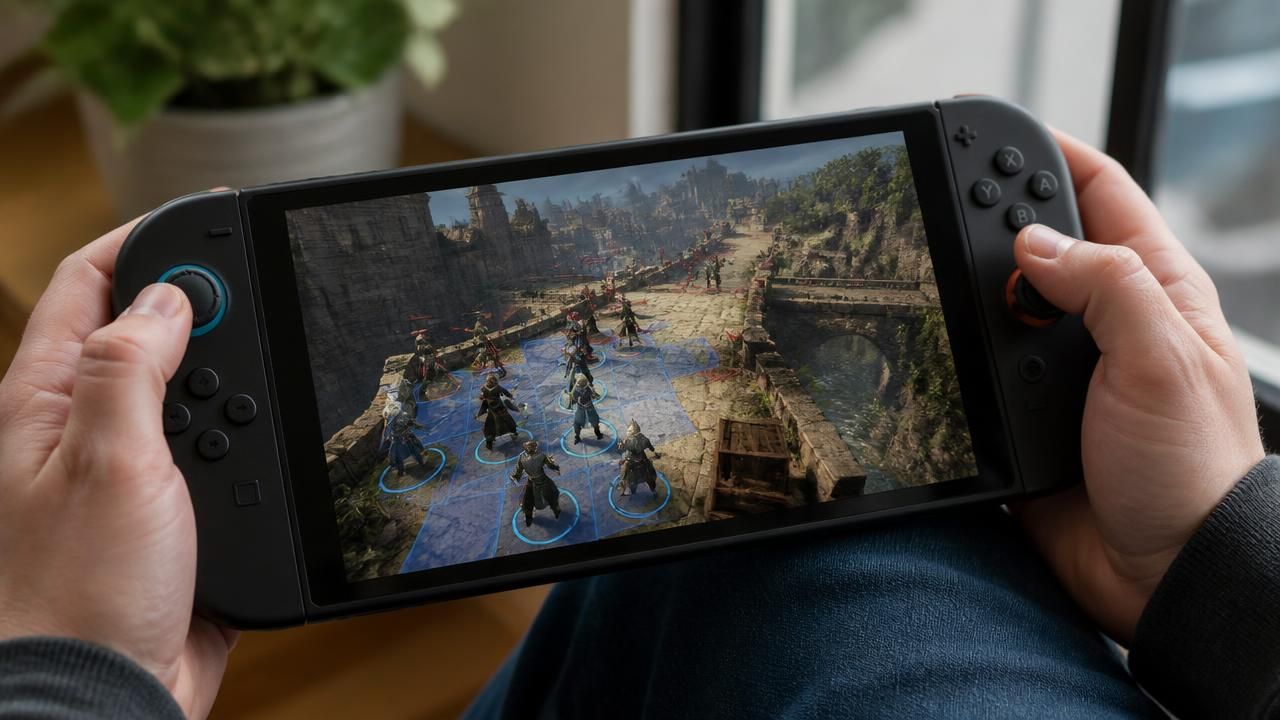
Nintendo's long-running tactical RPG series has a new high-water mark — and, according to a wave of early reviews, the Nintendo Switch 2 has its first must-own game. Fire Emblem: Fortune's Weave, the latest entry in a franchise that dates back to 1990, has drawn near-universal praise from outlets that have gone hands-on, with critics describing it as both a radical structural reinvention and a spiritual successor to 2019's beloved Fire Emblem: Three Houses.
The verdicts landed alongside a flurry of news: a dedicated Nintendo Direct showcase, detailed gameplay and mode reveals, confirmation of a single save file, and a pricing structure that has raised eyebrows. Together, they paint a picture of a publisher betting heavily on one of its most niche properties — and treating it like a flagship.
A New Dawn for Tactical RPGs
The headline reviews were unambiguous. Videogames Chronicle called it "Nintendo's most ambitious RPG yet" and "an incredible triumph," while Pocket Tactics framed the release as nothing less than "a new dawn for tactical RPGs." Mashable's preview struck a similar chord, arguing the game "feels like the true follow-up to Three Houses" — a comparison that carries enormous weight given that Three Houses is widely considered the franchise's commercial and creative breakout.
"Fortune's Weave has become my favorite game on the Switch 2 so far." — The Verge
The Verge was even more direct in its assessment, praising the game's "many ways to progress" and the freedom it gives players to tailor teams to their liking. MSN's aggregation of the review cycle echoed the sentiment with a blunt headline: the best game on Nintendo Switch 2 so far.
The Breath of the Wild Philosophy Comes to Fire Emblem
What unites the praise is structure. Nintendo has spent the better part of a decade dismantling the rigid corridors of its own franchises. The Legend of Zelda: Breath of the Wild let players tackle any part of the map in any order; Tears of the Kingdom iterated on that freedom; and on the Switch 2, the philosophy has expanded to Mario Kart World and Donkey Kong Bananza.
Fortune's Weave applies the same logic to a genre historically defined by linearity. Rather than marching players through a fixed sequence of scripted battles, the game offers multiple routes through its campaign and deep latitude in how squads are assembled and deployed. For a series that has always been described — sometimes dismissively, sometimes affectionately — as "anime chess," the shift is significant.
Eight Protagonists, One Save File
Ambition, it turns out, nearly went further. Nintendo has confirmed that Fortune's Weave almost shipped with eight protagonists in a bold attempt to surpass the multi-house structure that made Three Houses so replayable. The final game scales that back — but the decision to include only a single save file has become one of the more contentious talking points among fans.
Nintendo has publicly explained its reasoning, arguing that the choice is tied to the game's design intent rather than a technical limitation. It is a rare instance of the company addressing a granular community concern head-on, and it underscores how closely the audience for this franchise scrutinizes its systems. For a player base accustomed to juggling multiple concurrent playthroughs, the constraint cuts against the genre's conventions.
The Price of Ambition
Nintendo also confirmed the financial terms. The physical edition of Fire Emblem: Fortune's Weave carries an $80 USD price tag, while a Collector's Edition is priced at $120. Both figures sit at the top end of the current console software market and reflect the premium pricing that has crept into the industry during the Switch 2 generation.
- Standard physical edition: $80 USD
- Collector's Edition: $120 USD
- Distribution: Physical and digital release confirmed
The pricing is notable for a series that has historically been positioned as a mid-tier Nintendo property rather than a marquee blockbuster. Charging flagship prices suggests Nintendo views Fortune's Weave — and the tactical RPG audience — as larger and more valuable than previously assumed.
A Direct Push
That thesis was reinforced by marketing. Nintendo announced a dedicated Direct presentation focused entirely on the game, with UPI reporting that the showcase would detail gameplay and modes, and outlets including Kotaku, Siliconera, GameSpot, and Shacknews confirming the broadcast ahead of time. A single-title Direct is a designation Nintendo reserves for its biggest bets — Animal Crossing, Splatoon, Super Mario — and it signals the company's intent to convert curiosity into a mainstream audience.
The showcase also fed the review cycle, giving outlets fresh material on modes and systems just as embargoes lifted — a coordinated rollout that produced the unusually synchronized praise seen across the coverage.
Why It Matters
For Nintendo, Fortune's Weave is a test of whether a strategy series can anchor a console's early library. The Switch 2 has leaned on familiar franchises so far; a tactical RPG carrying the platform's strongest review scores would broaden the pitch considerably. IGN's NVC podcast framed the release as turning Three Houses "upside down," a nod to how thoroughly the new game reworks its predecessor's assumptions.
For the genre, the implications are just as pointed. If an open-ended, player-directed structure can work for Fire Emblem, it becomes a template others may follow. And for players, the questions are simpler: whether the freedom justifies the price, and whether one save file is a design statement worth living with. On the strength of the reviews, Nintendo appears confident the answer is yes.