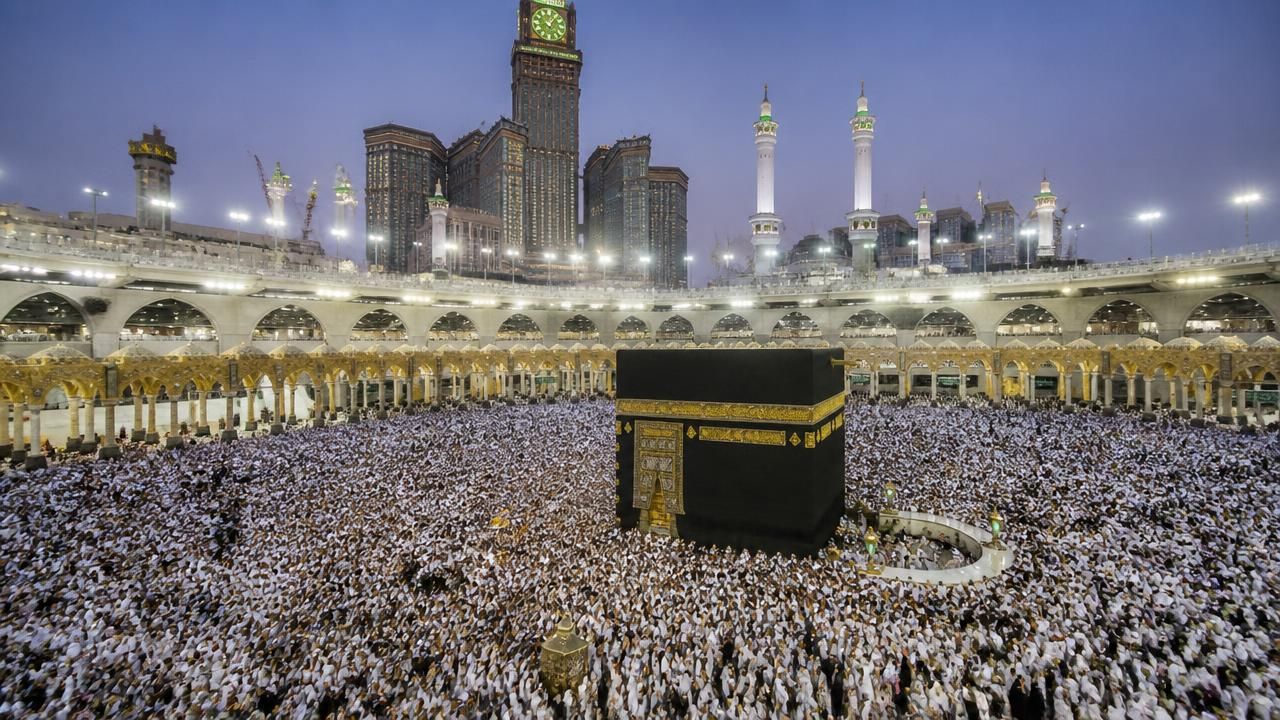
Saudi Arabia declared the security of Mecca a "red line" overnight after the Saudi-led military coalition said it intercepted an explosive-laden drone headed toward Islam's holiest city — an accusation Yemen's Iran-backed Houthi movement rejected as "fabrications" and "lies," setting off a sharp, competing-claims dispute that quickly rippled across the region and beyond.
The reported interception put Mecca under an air-raid alert for the first time, according to regional broadcasters, underscoring how deeply the years-long Saudi-Houthi war in Yemen has now reached toward the spiritual center of the Muslim world. No damage or casualties were reported in the holy city itself.
A 'Red Line' Around Islam's Holiest City
Saudi officials framed the alleged targeting of Mecca as a categorical escalation that would draw an unambiguous response. The kingdom's warning that the city's security constitutes a "red line" was carried widely across state-linked and regional outlets, many of which treated the interception as proof that Houthi capabilities — supplied, Riyadh argues, by Tehran — now threaten sites of enormous religious and symbolic significance.
Mecca draws millions of pilgrims annually for the Hajj and Umrah, and any confirmed strike on the city would carry consequences far beyond the battlefield in Yemen. Analysts noted that the mere claim of an attempted attack was enough to galvanize condemnation from allied governments within hours.
"The security of the holy sites is a red line," Saudi officials said, according to regional media, vowing that any attempt to reach Mecca would be met with a decisive response.
The Houthi Denial — and a Counterclaim
The Houthis moved swiftly to reject Riyadh's account. The group described the Saudi claim as "fabrications, lies," insisting it had not targeted Mecca and does not consider the city a military objective. In the same statements, the rebels asserted a competing battlefield success: that they had downed a Saudi fighter jet.
The result is a familiar impasse in the Saudi-Houthi conflict, in which both sides issue incompatible accounts of the same events, often within hours, and independent verification is nearly impossible. Neither the coalition nor the Houthis have released evidence publicly that would settle the question of where the intercepted drone was headed or what its intended target was.
Competing claims at a glance
- Saudi-led coalition: Intercepted a Houthi drone bound for Mecca; calls the city's security a "red line."
- Houthi movement: Denies targeting Mecca, calls the allegation "fabrications, lies," and says it downed a Saudi fighter jet instead.
- Independent verification: None publicly available from either side.
Pakistan and Regional Allies Rally Behind Riyadh
Among the first and loudest voices of support was Pakistan. Prime Minister Shehbaz Sharif condemned what he called a "dastardly and heinous" attempted drone attack on Mecca, and Islamabad affirmed Saudi Arabia's right to defend itself. Pakistan's stance reflects a decades-old strategic and religious relationship with the kingdom, which employs a large Pakistani expatriate workforce and has long been a close defense partner.
Condemnations also came from across the Gulf and the wider Muslim world, although notably — as several outlets observed — the statements of solidarity were not accompanied by any indication of new military support for Riyadh's campaign in Yemen.
"Pakistan backs Saudi Arabia's right to defend itself," Islamabad said, with the prime minister calling the attempted strike "dastardly and heinous."
Washington Raises Its Travel Advisory
In a sign that the episode is being read in Western capitals as a genuine escalation rather than a rhetorical exchange, the United States raised its travel advisory for Saudi Arabia to Level 3, urging citizens to "reconsider travel" to the kingdom. The advisory cited heightened risk tied to the thwarted drone attack and the broader regional security environment.
Washington's move matters commercially as well as diplomatically: Saudi Arabia has spent heavily to position itself as a tourism and business destination under Vision 2030, and a Level 3 advisory complicates those ambitions at a moment when the kingdom is courting foreign investment and hosting major international events.
How the Story Was Framed
The coverage diverged noticeably depending on the outlet. Saudi and Gulf-aligned broadcasters and Pakistani outlets led with the interception itself, emphasizing the sanctity of Mecca and Riyadh's right to respond. Wire services and Western outlets — including NPR, The New York Times and Yahoo News — foregrounded the dueling narratives, placing the Houthi denial directly alongside the Saudi accusation and cautioning that neither account had been independently confirmed.
The New York Times, for instance, headlined the Houthi counterclaim about downing a Saudi jet and their denial of targeting Mecca, a framing that pushed the rebel perspective to the top of the story. Regional sites, by contrast, headlined the "red line" warning and the air-raid alert over the holy city — a difference in emphasis that reflects how each audience is expected to receive the news.
The episode also produced the kind of rollup coverage typical of fast-moving geopolitical stories, with live blogs tracking the travel advisory, the interception and the diplomatic reactions in tandem.
Why It Matters — and What Comes Next
The stakes extend well beyond a single drone. The Saudi-Houthi conflict has repeatedly threatened to widen into a direct confrontation between Riyadh and Tehran, and any claim of an attack on Mecca carries unique inflammatory potential, given its resonance for 1.9 billion Muslims worldwide.
Riyadh's "red line" language leaves open the possibility of intensified airstrikes in Yemen, while the Houthis' denial may be calibrated to avoid alienating Muslim public opinion. Meanwhile, the U.S. advisory signals that Washington is treating the risk as material, even as it avoids committing to new military backing.
For now, the central facts remain contested: no independent body has confirmed the drone's intended target, and both sides continue to advance incompatible narratives. What is clear is that a conflict once largely contained to Yemen's borders is now being argued over in the language of the holiest sites in Islam — and that the diplomatic, economic and security aftershocks are only beginning to be felt.