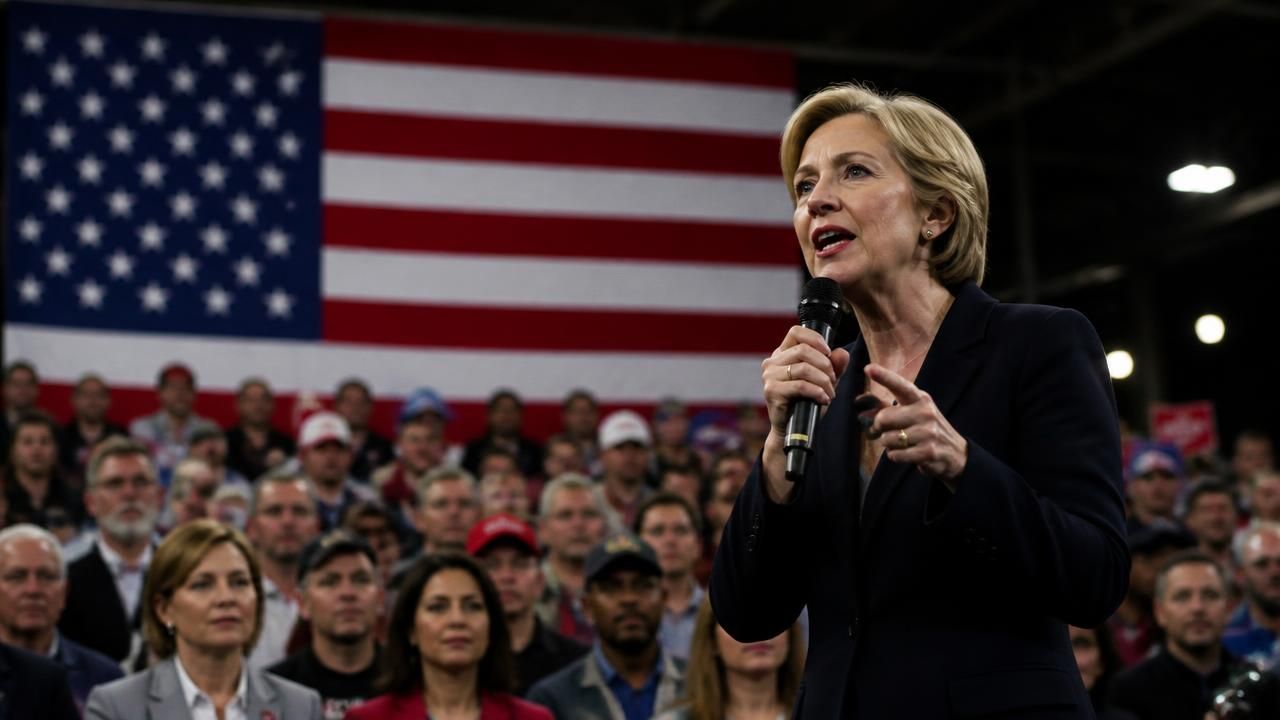
CAMPAIGN TRAIL — Candidates in the country's most competitive states fanned out across the map this weekend for a final burst of rallies, town halls and get-out-the-vote drives, as the midterm elections entered their closing hours amid an unusually charged legal and political atmosphere.
The final-weekend sprint, tracked in live coverage by The New York Times, comes as attention has shifted sharply from stump speeches to the institutions surrounding the vote itself: the Justice Department, the courtroom, and the legal profession that once served as a bulwark against executive overreach.
A Justice Department in the Spotlight
According to The Associated Press, the Justice Department has made a splash in recent weeks with a series of politically sensitive cases and actions timed squarely within the midterm blitz — a posture that has alarmed critics who see prosecutorial and investigative power being deployed in ways that shape the political environment rather than simply respond to it.
The AP's framing places the department at the center of the story: not merely as an agency enforcing the law, but as an actor whose calendar and case selection are being read through an electoral lens. Supporters of the administration counter that the department is applying the law evenly and that any proximity to Election Day is a function of investigative timelines, not political calculation.
Sowing Doubt
Parallel to those developments, USA TODAY reports on how President Trump and his allies are working to sow doubt about the integrity of the vote ahead of the midterms — a familiar playbook that election administrators say can depress confidence even where no evidence of systemic problems exists.
The pattern echoes 2020 and 2022, when preemptive claims of a rigged process became a fixture of the closing argument. Local officials in both parties have spent the intervening years hardening procedures, publishing chain-of-custody documentation and inviting observers in an effort to preempt the doubt that now arrives as a matter of routine.
"What we're seeing is a strategy of pre-emptive delegitimization," said one election administration expert, describing rhetoric that lands before any results exist to dispute. "It's designed to make the outcome contestable no matter what the outcome is."
The Firms That Struck Deals — and Went Quiet
Perhaps the most revealing thread comes from The New York Times, which reviewed the posture of the elite law firms that earlier reached agreements with the administration to avoid crippling executive orders. None of those firms, the review found, is publicly involved in the major legal efforts to check the administration's attempts to meddle in the midterm elections.
The background matters. Over the past year and a half, the White House issued a series of executive orders targeting prominent firms over their pro bono work, diversity practices, and representation of disfavored clients. Several firms — among them some of the most storied names in American law — negotiated resolutions rather than litigate. Those settlements preserved access and avoided sanctions, but they came at a cost that is only now becoming visible.
The practical effect, legal observers say, is a chilling one. Firms that might once have filed amicus briefs, taken on voting-rights cases pro bono, or publicly joined litigation against executive action now calculate reputational and commercial risk before every filing. The result is thinner legal infrastructure at precisely the moment it may be needed most.
"You can't separate the deal from the deterrent," one legal ethics scholar said. "Every firm watching this is learning a lesson about what aggressive representation costs."
The Numbers Behind the Ballot
Meanwhile, NBC News is tracking the 2026 early vote, offering a data-driven counterweight to the rhetoric. Early and mail balloting has become a defining feature of modern American elections since 2020, when pandemic-era expansions pushed pre-Election Day voting past 100 million ballots nationally. The partisan composition of that early electorate — which party's voters are banking votes and which are waiting — has become one of the most closely watched indicators in the closing days.
Analysts caution that early-vote tallies are not predictive: they reflect strategy as much as enthusiasm, and the mix often shifts dramatically on Election Day itself.
Why It Matters
- The Justice Department's posture is being read as a signal about how far federal power will be pushed around elections.
- Preemptive doubt-sowing can shape turnout, litigation and post-election legitimacy.
- The retreat of major law firms from election-related litigation removes a traditional check on executive action.
- Early-vote data offers the clearest real-time measure of engagement — but not of outcome.
Taken together, the strands describe a midterm election in which the mechanics of voting, the lawyers who defend them and the agencies that investigate them have become as consequential as any policy debate on the stump. Candidates will make their closing arguments this weekend. The institutions around them are already making theirs.