NASA's Nancy Grace Roman Space Telescope is barely into its journey, but engineers already know it will have far more time to work than anyone planned for. The space agency confirmed Monday that the $4.3 billion observatory is gliding toward its observation post on a trajectory so precise that its onboard fuel should last at least 22 years — more than double the original design lifetime.
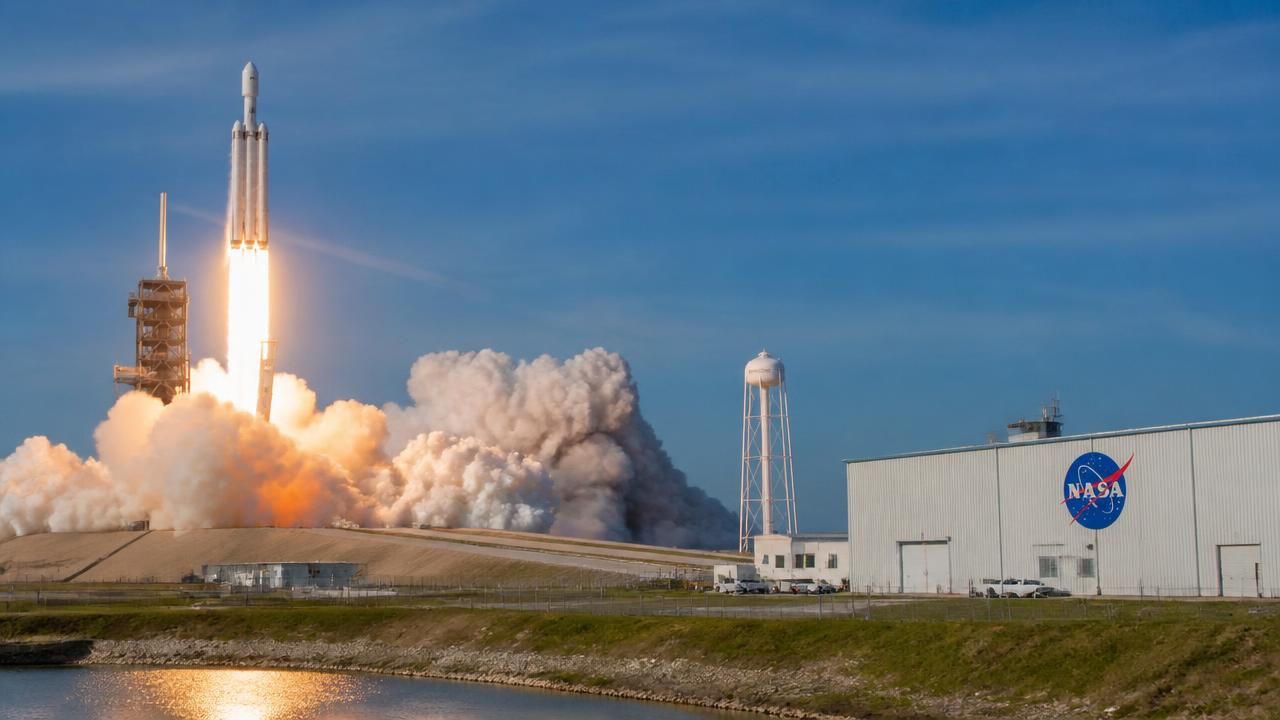
The spacecraft, launched atop a SpaceX Falcon Heavy from Kennedy Space Center in Florida, is headed for the second Sun-Earth Lagrange point, or L2, a gravitational balance point about 1.5 million kilometers from Earth. There it will settle into a wide, looping orbit and begin a survey designed to map billions of galaxies, probe the nature of dark energy and dark matter, and hunt for planets beyond our solar system.
A Fuel Margin Nobody Expected
Roman's designers loaded enough propellant into its four fuel tanks for a five-year prime mission plus a possible five-year extension — a deliberately conservative figure. Mission planners knew that a clean launch and a flawless first course-correction burn would leave the observatory with a healthy reserve. That is exactly what happened.
"As a result of exquisite planning by our orbital dynamics team, brilliant execution by the operations team, and a precise launch from SpaceX, Roman has fuel for at least 22 years of potential science operations."
— Jamie Dunn, center director at NASA's Goddard Space Flight Center
The margin is the product of small numbers compounding in NASA's favor. The Falcon Heavy delivered Roman so close to its intended trajectory that the observatory's first post-launch engine burn had little work to do; one report noted that the maneuver consumed only about 9 percent of the fuel supply. Because the spacecraft's life is limited almost entirely by how much propellant it can expend keeping its orbit stable, every drop saved at the start translates into years of additional observing time at the end.
The framing of the news varied by outlet. Ars Technica led with the engineering triumph — an "exquisite" trajectory that doubled the mission's expected lifetime. MSN and aggregators emphasized the raw arithmetic of the fuel savings. Spaceflight Now placed Roman in the lineage of NASA's "great observatories," alongside Hubble, Chandra, and James Webb.
From Classified Hardware to Cosmic Surveyor
Roman's design carries an unusual pedigree. Its 2.4-meter primary mirror is the same size as Hubble's, and its optical architecture echoes the large-aperture telescopes built for the National Reconnaissance Office's classified imaging satellites. Reuters framed the mission bluntly as "a spy satellite turned to the stars," while The New York Times explored how hardware and design concepts originally developed for canceled intelligence programs found a second life in civilian astrophysics.
The comparison is more than marketing. Roman's most striking feature is its field of view: a single image from its Wide Field Instrument, a 300-megapixel camera array, will capture an area of sky roughly 100 times larger than Hubble's sharpest camera. That wide-angle capability is precisely what survey science demands — instead of staring at one galaxy at a time, Roman will photograph vast swaths of the cosmos repeatedly, building a time-lapse movie of the universe.
What Roman Will Actually Do
NASA's science goals for the observatory center on questions that have resisted answers for decades:
- Dark energy: By measuring the apparent brightness of distant supernovae and the subtle distortions of galaxy shapes caused by gravitational lensing, Roman will trace how the expansion of the universe has accelerated over cosmic time.
- Dark matter: Weak gravitational lensing maps will reveal the invisible scaffolding on which galaxies form.
- Exoplanets: A technique called gravitational microlensing will detect worlds too distant and too dim for other methods, including planets drifting free of any star.
- Infrared surveys: Roman's wide infrared eye will catalog hundreds of millions of galaxies and thousands of supernovae, producing a dataset that astronomers expect to mine for decades.
The spacecraft also carries a Coronagraph Instrument, a technology demonstration designed to block the glare of distant stars so that faint planets — and potentially the chemical signatures of their atmospheres — can be seen directly. Forbes framed this element of the mission as central to NASA's broader search for off-world life, though the coronagraph is a proof-of-concept rather than a fully operational science instrument.
A Long Wait for First Light
For all the excitement, the public should not expect breathtaking images any time soon. USA Today cautioned that Roman's first pictures are not expected until 2027, after the observatory completes its cruise to L2 and a months-long commissioning phase in which instruments are cooled, calibrated, and checked out. Mashable, covering the launch itself as a historic moment, noted the contrast between the instantaneous drama of liftoff and the slow, deliberate pace of orbital preparation.
That patience may be rewarded generously. A 22-year fuel reserve does more than extend the mission on paper — it changes how scientists plan. Longer baselines allow repeated observations of the same patches of sky, making it possible to catch transient events, refine dark-energy measurements, and hand a working observatory to a generation of researchers who have not yet finished graduate school.
If the trajectory holds, a telescope conceived during the George W. Bush administration — named for NASA's first chief of astronomy, who championed the field for women — could still be returning data in the 2040s. For a mission originally budgeted for a decade, that is not just a bonus. It is a second act.