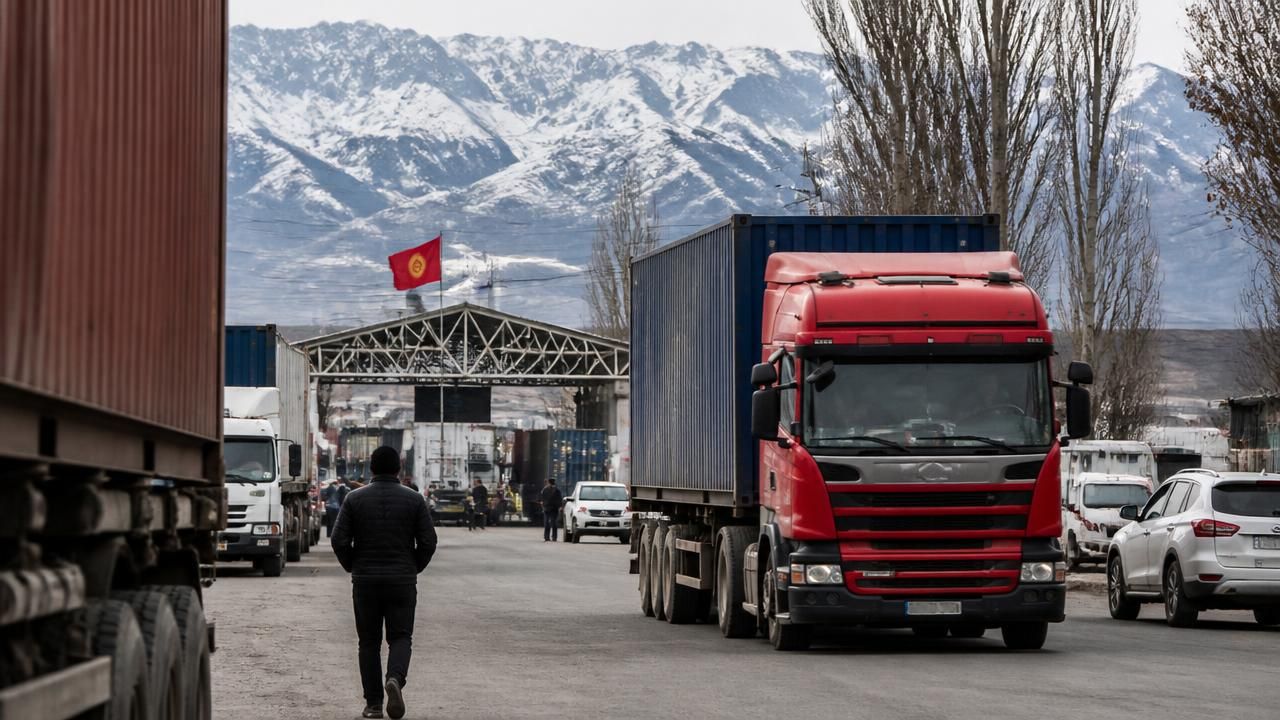
BISHKEK, Kyrgyzstan — Since the start of the Ukraine war, this landlocked Central Asian republic has become one of the most important conduits for goods flowing from China into Russia, according to The New York Times, which sent Moscow bureau chief Paul Sonne to Kyrgyzstan to document the country's skyrocketing economic growth. The trade has turned a mountainous former Soviet state of about 7 million people into a critical pressure point in the West's effort to choke off Russia's access to sanctioned technology and consumer goods.
But the arrangement is now colliding with European sanctions diplomacy. OilPrice.com reports that the European Union's 20th sanctions package is forcing Kyrgyzstan's hand on Russia trade, as Brussels seeks to close loopholes that allow Moscow to circumvent export controls. At the same time, Russia's state news agency TASS emphasizes a different narrative: Kyrgyzstan-Russia trade turnover has exceeded $5 billion, and Moscow remains Bishkek's strategic partner.
A Landlocked Economy Becomes a Wartime Conduit
Kyrgyzstan's position is unusual. It shares a long border with China, belongs to the Russian-led Eurasian Economic Union, and hosts bazaars such as Dordoi and Kara-Suu that have long served as wholesale and re-export hubs. After Western sanctions isolated Russia in 2022, those networks became far more valuable. Chinese electronics, machinery, auto parts, clothing and household goods move overland into Kyrgyzstan, where they are often repackaged, rebranded or simply re-exported to Russia.
The NYT's reporting describes a boom: new logistics firms, overflowing customs points and rising incomes in a country that had long depended on remittances from migrant workers in Russia. For Moscow, Kyrgyzstan offers a friendly jurisdiction inside the Eurasian Economic Union, with relatively open borders and a business culture built on trade. For Bishkek, the re-export trade brings customs revenue, jobs and investment.
Western officials see something else: a loophole. The United States and the European Union have warned that third countries facilitating restricted exports to Russia risk secondary sanctions. The EU's 20th package, as OilPrice.com frames it, is designed to force Kyrgyzstan to choose between its strategic ties with Moscow and its access to European markets, finance and technology.
The EU's 20th Sanctions Package and the Squeeze on Bishkek
The EU has progressively targeted banks, companies and transport routes used to evade sanctions. The 20th package is expected to tighten export controls, expand listings of third-country entities and press governments in Central Asia and the Caucasus to enforce compliance. For Kyrgyzstan, the pressure is acute. Its banks rely on dollar and euro clearing; its exporters need access to European supply chains; its government wants to avoid being labeled a sanctions haven.
Yet Brussels has limited leverage. Kyrgyzstan is not an EU member or candidate, and it is bound to Russia through the Eurasian Economic Union. Any abrupt crackdown could hurt powerful trading networks and provoke Moscow. The OilPrice.com headline — EU's 20th Sanctions Package Forces Kyrgyzstan's Hand on Russia Trade — captures the dilemma: Bishkek may be compelled to make concessions, but it will try to do so without rupturing its relationship with Russia.
Moscow and Bishkek Put a $5 Billion Figure on Their Ties
TASS reports that Kyrgyzstan-Russia trade turnover exceeds $5 billion, according to a deputy prime minister, and that Russia remains Kyrgyzstan's strategic partner. The figure is a reminder of how deeply the two economies are intertwined. Russia is a major supplier of energy, food and manufactured goods to Kyrgyzstan, and a key destination for Kyrgyz labor migrants. For Moscow, the growing trade volume is evidence that Western sanctions have not isolated Russia but merely redirected its commerce.
Russia remains Kyrgyzstan's strategic partner with $5 billion trade volume — TASS
The Russian framing is notably different from the Western one. TASS presents the trade as ordinary, mutually beneficial economic cooperation. The New York Times presents it as a wartime loophole. OilPrice.com presents it as a sanctions enforcement problem. Each perspective reflects the interests of its audience: Moscow wants to show resilience, Brussels wants to show resolve, and Bishkek wants to preserve room to maneuver.
The View From Bishkek: Pragmatism, Not Alignment
Kyrgyz officials have generally avoided public confrontation with either side. They argue that their country is not a party to the conflict and that trade with Russia is legal under international law, since the United Nations has not imposed global sanctions on Moscow. They also point out that Kyrgyzstan has its own economic vulnerabilities: high dependence on remittances, energy imports and transit routes.
But the gray zone is narrowing. Western regulators can penalize Kyrgyz banks that process suspicious payments. Shipping and logistics companies can be blacklisted. Even bazaar traders can find their goods seized. The result is a slow squeeze that may achieve what public diplomacy cannot: making the re-export trade riskier and more expensive.
China, meanwhile, is watching closely. Beijing has its own interest in keeping Central Asian trade routes open, but it does not want its companies hit by secondary sanctions. If Kyrgyzstan tightens enforcement, some trade may shift to Kazakhstan, Georgia or other routes. If it does not, the EU may escalate.
What Happens Next
The coming months will test Kyrgyzstan's balancing act. The government may announce new customs procedures, banking compliance rules or export licensing requirements designed to satisfy Brussels without completely cutting off Moscow. Russia may respond with discounts, investment or political pressure. The EU will monitor whether the 20th package changes behavior on the ground or simply pushes trade further underground.
For now, the $5 billion trade figure and the NYT's on-the-ground reporting tell the same story from opposite ends: Kyrgyzstan has become indispensable to Russia's sanctions-hit economy. Whether it remains so depends on a contest of leverage between Moscow, Brussels and a small republic that would prefer to keep selling to both.