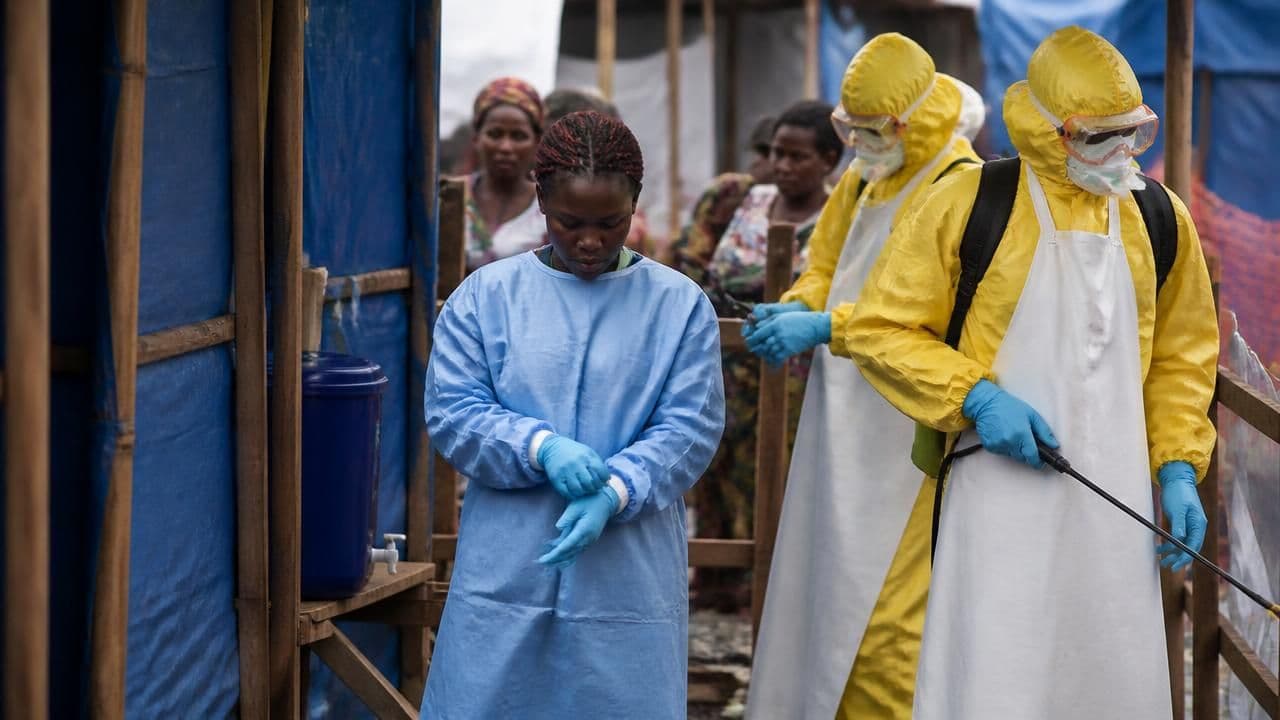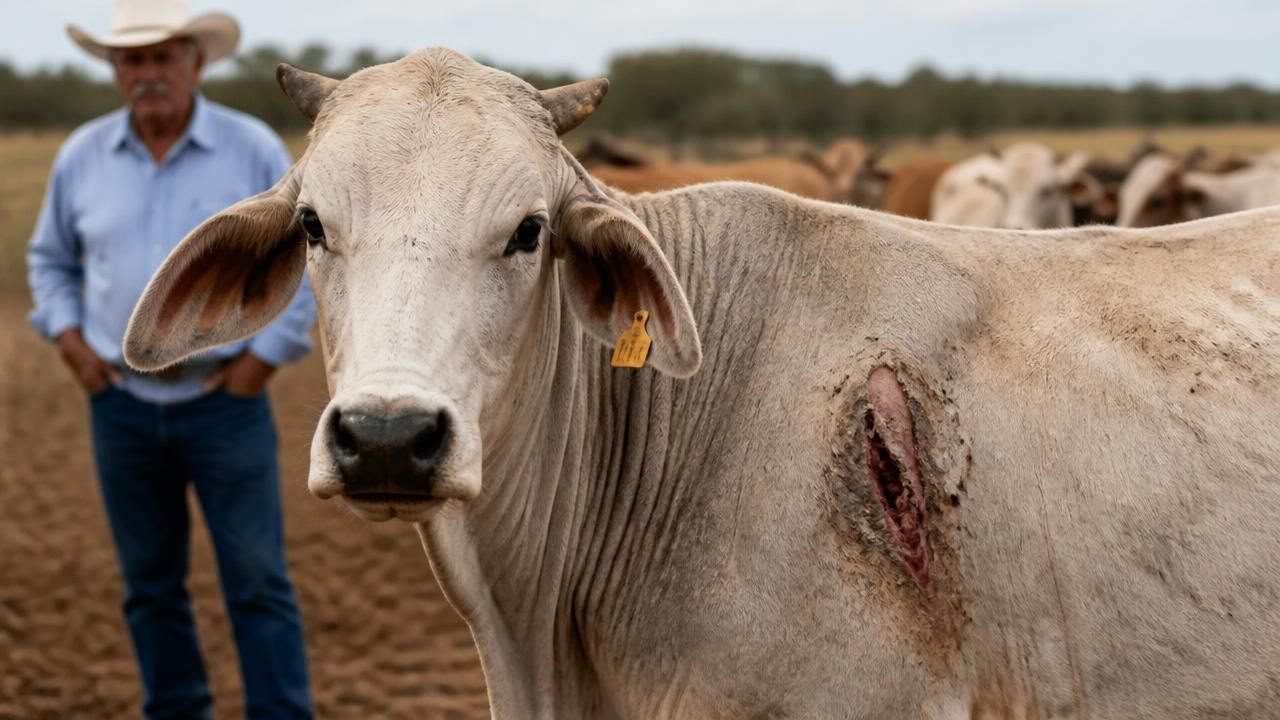
A parasite that American scientists once declared permanently vanquished from the United States is back. The New World screwworm, a metallic-green fly whose larvae burrow into the living flesh of warm-blooded animals, has been confirmed in livestock in South Texas — the first U.S. detection in decades — and is spreading north through Mexico, where officials say human cases have now topped 500. Livestock, pets, wildlife and, in rare cases, people are all at risk.
The return is not simply a veterinary curiosity. It threatens a cattle trade worth hundreds of millions of dollars a year, has forced the U.S. to suspend imports of live Mexican cattle, and has revived an uncomfortable question: how does a country lose a pest it spent half a century and billions of dollars eliminating?
A fly that eats from the inside out
Unlike blowflies that colonize dead tissue, the New World screwworm (Cochliomyia hominivorax) is an obligate parasite: its larvae feed exclusively on living flesh. A female lays hundreds of eggs in a break in the skin — a tick bite, a branding wound, the navel of a newborn calf. The larvae hatch, burrow deeper, and enlarge the wound as they feed. Untreated animals can die within one to two weeks from secondary infection, blood loss or toxicity. In people, infestations of the scalp, ears and nasal passages can cause permanent disfigurement, and Mexico's outbreak has prompted health alerts in rural communities.
That biology is what made the fly such a fearsome pest — and what made its eradication possible.
How the U.S. beat it once
In the 1950s, USDA scientists Edward Knipling and Raymond Bushland developed the sterile insect technique: mass-rear flies, sterilize the males with radiation, and release them by the billions. Because female screwworms mate only once, a mating with a sterile male produces no offspring. The method wiped out the fly from Florida and the Southeast, then from the Southwest; the United States declared eradication in 1966. Mexico followed in 1991, and the campaign pushed the fly's range south through Central America.
To keep it there, the U.S. and Mexico have for decades co-funded a permanent barrier in Panama's Darién Gap, where sterile flies are continuously released to prevent northward migration. It is one of the most successful — and least glamorous — public health programs in the hemisphere.
The comeback
That barrier began to fail. New cases were detected in Panama in 2023, then spread through Costa Rica, Nicaragua, Honduras and Guatemala. Mexico confirmed cases in Chiapas in late 2024, and the outbreak moved steadily north. In 2025 the U.S. suspended imports of live Mexican cattle, and South Texas — a corridor of ranches, wildlife and warm climate ideal for the fly — recorded its first confirmed case in decades.
Outlets have framed the story in sharply different registers. Trade and agriculture publications emphasize economics and border logistics; tabloid-style coverage leans on the visceral phrase in Ars Technica's headline, which reported that the flies are "feasting on humans in Mexico" with human cases topping 500. The New York Times, by contrast, trained its lens on the grinding, unglamorous work of Mexican veterinary and health teams fighting the outbreak in the field.
The funding fight
San Francisco Chronicle coverage of the U.S. detection pointed to a political subtext: the screwworm was found after the Trump administration cut surveillance funding, including foreign-aid-supported programs that underwrite the Panama barrier. Critics argue that trimming a comparatively inexpensive prevention program invites a far costlier response.
"There is no risk to the U.S. food supply," federal agriculture officials have stressed, urging ranchers to inspect wounds and report suspicious infestations promptly.
Others are less sanguine. A single confirmed case in Texas triggered quarantine zones, tracing operations and calls to rebuild sterile-fly production capacity inside the United States, rather than depending on a facility abroad.
A new early-warning system
Researchers at UC San Diego are building a tracking and prediction system designed to forecast where the parasite could strike next, combining climate data, livestock movement records, trade flows, wind patterns and historical outbreak maps. The goal is to give ranchers, veterinarians and border officials advance warning rather than a retrospective tally — turning surveillance from a reactive exercise into a predictive one.
How worried should we be?
For most Americans, the immediate personal risk remains low. Human infestations in the U.S. are rare, and the fly does not spread person-to-person. But the stakes for agriculture are substantial: economists and industry groups warn that a widespread outbreak could cost the cattle industry billions of dollars in lost animals, treatment, quarantines and trade disruptions. Warmer regions such as South Texas and Florida are considered most vulnerable.
What happens next
- U.S. and Mexican authorities are reviving the sterile insect technique, ramping up releases and expanding breeding capacity.
- Mexico is running surveillance and treatment programs in affected states while managing public anxiety over human cases.
- The U.S. is weighing construction of domestic sterile-fly facilities to reduce reliance on the Panama barrier.
- Researchers are pressing for sustained surveillance funding, arguing that the cheapest moment to stop a screwworm is before it establishes itself.
The lesson, scientists say, is an old one in disease control: eradication is not a permanent state but a line that must be held, year after year, at considerable but manageable cost. The question now is whether the United States and Mexico can hold it again.