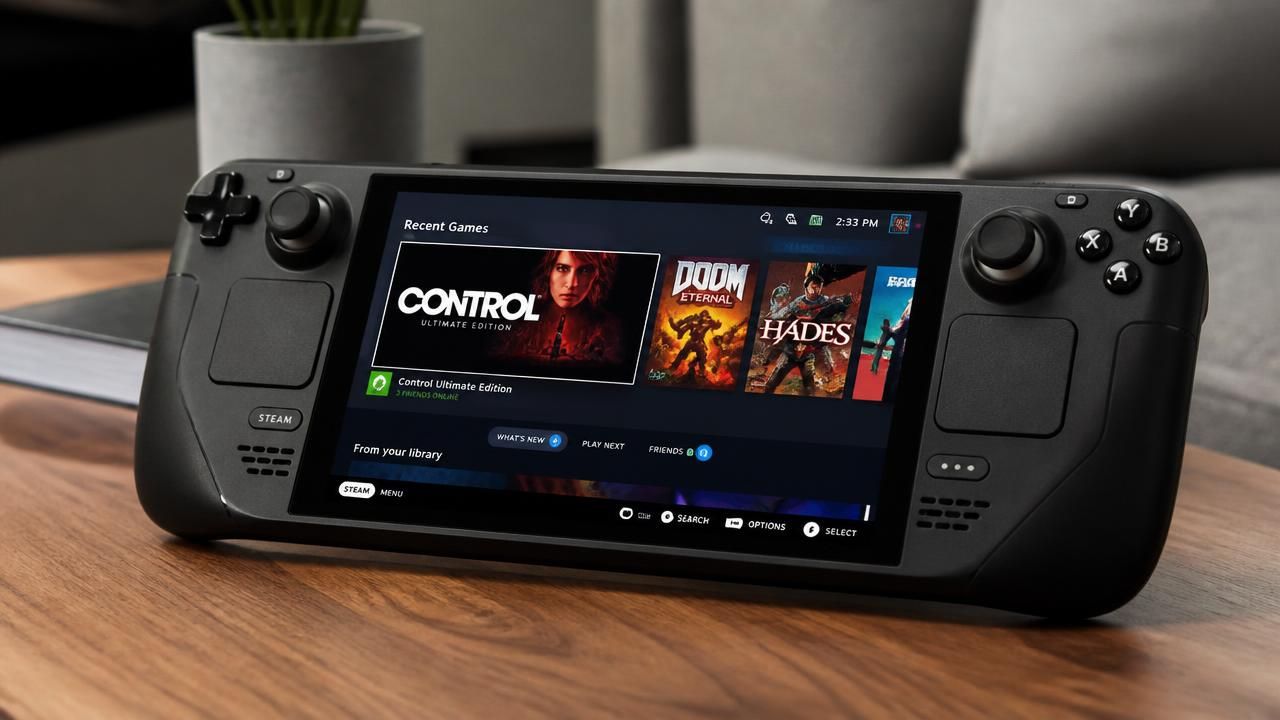
Valve has spent 2026 methodically rebuilding its hardware business. With the launch of the Steam Controller, the Steam Machine, and the newly announced Steam Frame headset, the company has finally assembled a complete living-room and portable ecosystem around SteamOS. Yet one conspicuous gap remains: the successor to the device that started it all. And according to Valve itself, that gap may stay open for a while.
"How and when"
In an interview with IGN accompanying the Steam Frame reveal, Valve designer Pierre-Loup Griffais offered the clearest — if deliberately vague — update yet on the long-rumored Steam Deck 2. The company, he said, is still working out "how and when we can deliver something like that."
The phrasing is classic Valve. The studio has confirmed for years that a second-generation Steam Deck is a question of when, not if, but it has consistently refused to attach a date to that promise. The original Steam Deck succeeded because it hit a precise balance of price, performance, and battery life — a three-way trade-off that Valve has repeatedly said it will not sacrifice just to ship a faster chip.
"We're still figuring out how and when we can deliver something like that." — Pierre-Loup Griffais, Valve
GameSpot framed the same message in starker terms: the Steam Deck 2 isn't coming until Valve is satisfied that it is genuinely better than the original — not merely newer. That bar is higher than it sounds. Any successor must meaningfully outperform a device that is already capable of running much of the modern PC catalog, while fitting into the same thermal and power envelope.
The memory crisis lurking in the background
Complicating that calculus is an ongoing global memory shortage. Multiple outlets — including Notebookcheck, Kotaku, and IGN — reported that Valve has confirmed the RAM crisis has not altered its plans for the Steam Deck 2. Digital Trends noted the caveat embedded in that reassurance: while the shortage may not derail development, it could have a very different effect on the eventual price.
That is a significant distinction. Handhelds are unusually sensitive to component costs, and a device that needs a fixed bill of materials to hit a consumer-friendly price point is far more exposed to a memory price shock than a console sold at scale or a premium graphics card. If DRAM and NAND pricing stays elevated through the late 2020s, the Steam Deck 2's launch price could be decided by suppliers rather than by Valve's product team.
A shrinking runway
The commercial context has also shifted. According to Yahoo Finance, Valve has raised Steam Deck prices by more than 40%. Ars Technica subsequently reported that sales cratered following the hike, and Kotaku cited a new report suggesting unit sales have plummeted roughly 82% since the increase.
Those figures, if accurate, describe a product moving from a growth phase into a niche one. Price elasticity in gaming hardware is brutal: the Steam Deck's original appeal rested heavily on offering PC-grade gaming at a console-like entry price, and a 40% increase pushes it toward competitors like the ROG Ally and Lenovo Legion Go, if not toward entry-level gaming laptops.
Android Authority summarized the mood bluntly: the wait continues, and the Steam Deck 2 is still in the labs. TweakTown struck a more optimistic note, reporting that Valve is "hard at work" and describing the project as close — with one remaining problem to solve, widely understood to be the chip and efficiency target.
Competing timelines, competing frames
The coverage also reveals how differently outlets read the same silence. The Verge treated the news as a timing story, anchoring it to the completion of Valve's 2026 hardware lineup. Geeky Gadgets went furthest, reporting a 2028 release target — a specific claim that other outlets have not corroborated and that Valve has not confirmed. Business-facing coverage from Yahoo Finance focused on pricing and demand, while enthusiast sites like TweakTown and Notebookcheck emphasized the technical constraints.
Meanwhile, Ars Technica flagged a quieter but telling development: Valve's new Steam Machine verification system, which certifies which games run well on the new hardware, is conspicuously silent on the most demanding titles — the so-called "Steam Deck-busters." That silence hints at how Valve is positioning performance tiers across its family of devices, with the Deck occupying a lower rung than a docked, wall-powered machine.
What happens next
Valve's strategy appears to be platform-first, hardware-second. By shipping a controller, a console-style box, and a VR headset, the company is building an install base and a software ecosystem that make a future handheld launch less of a bet and more of an inevitability. SteamOS, Proton compatibility, and the verification program are the real long-term assets; the silicon is interchangeable.
The open questions are economic. Can Valve secure a chip that delivers a generational leap within a power budget a handheld can sustain? Can it do so while memory prices remain volatile? And can it price the result low enough to reverse a sales decline that reportedly exceeds 80%?
Until those answers converge, the Steam Deck 2 will remain what it has been for years: confirmed, in development, and stubbornly undated. Valve, as ever, is in no hurry — and its recent hardware cadence suggests it would rather ship late than ship wrong.