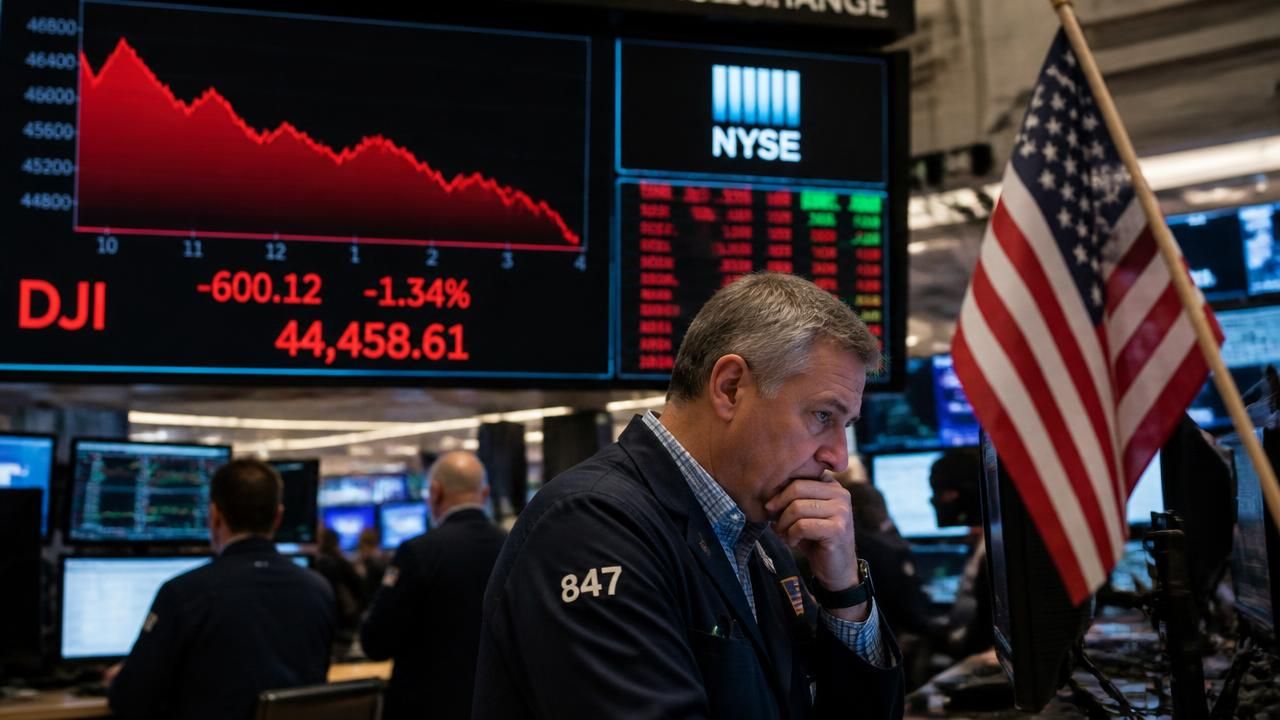
Technology shares fell for a second consecutive session on Thursday, Oct. 22, 2026, as another round of disappointing earnings accelerated a rotation out of the artificial-intelligence trade and drove investors toward haven assets such as U.S. Treasuries, according to market wraps from Bloomberg, The Wall Street Journal and Investopedia. Crude oil, meanwhile, gained.
The Dow Jones Industrial Average closed roughly 600 points lower, while the S&P 500 and the tech-heavy Nasdaq Composite also finished in the red, with the Nasdaq sliding to its lowest level in nearly a month, according to Investopedia's markets live blog and The Economic Times. Chipmakers led the decline, and MSN's market coverage described the session in blunt terms: a chipmaker sell-off that sent investors hunting for safety in other stocks and in bonds.
Two Days, One Direction
The defining feature of the week is not a single catastrophic headline but the cumulative effect of several disappointing earnings reports landing in quick succession. That drumbeat has given investors a pretext to question the valuations underpinning the AI boom — the same trade that has powered broad index gains for much of the year. Bloomberg characterized the move as a rotation out of artificial intelligence and into Treasuries, rather than a wholesale rush for the exits.
The Wall Street Journal framed the session through the bond market:
"Tech Selloff Deepens as Flight Into Treasurys Drives Yields Lower" — The Wall Street Journal, Oct. 22, 2026
That framing matters. Falling yields — the mirror image of rising bond prices — are the clearest signal that money is moving rather than simply vanishing. Investors seeking safety bought government debt, pushing the 10-year Treasury yield sharply lower, Investopedia reported.
The Bond Market's Two Faces
Where outlets diverge is on what those sinking yields mean next. For the safety-first crowd, the message is simple: MSN's coverage argued that the current environment may be the most powerful reason in some time to own bonds, with equities looking fragile and duration offering both income and a hedge.
Forbes took the opposite lens, arguing that falling Treasury yields could ultimately send AI and technology stocks higher — a reference to the well-worn mechanic by which lower risk-free rates reduce the discount applied to long-duration growth earnings, making future cash flows from chipmakers and hyperscalers more valuable today. In that reading, the same bond rally that is dragging on sentiment could become the fuel for the next leg up in tech.
Both interpretations share a premise: the bond market, not the equity tape, is where the real information is being priced.
AI Doubts Meet the Fed
The Economic Times anchored the sell-off in two forces — persistent doubts about the durability of AI spending, and caution ahead of an approaching Federal Reserve policy meeting. That combination is unusually potent. When investors are unsure whether capex on data centers and accelerators will convert into profits, they become far more sensitive to any hint about the path of interest rates.
The Economic Times headline captured the mood:
"Dow Jones ends 600 pts lower as AI doubts persist ahead of Fed rate meet" — The Economic Times
The rotation has been building for weeks. After a stretch in which a handful of mega-cap technology names accounted for the bulk of index returns, any earnings miss from a bellwether invites investors to reconsider concentration risk. The two-day slide is the market's way of repricing that concentration — not necessarily abandoning the AI thesis, but demanding better evidence for it.
Spillover: Asia and Currencies
The story did not stay in New York. Coverage from news8000.com described a global tech selloff as enthusiasm for AI stocks wobbled, and ActionForex reported that the global technology rout lifted the Japanese yen — a classic safe-haven flow — while the euro came under pressure from French bond-market stress.
Asia was mixed rather than uniformly weak. According to Yahoo Finance UK, South Korea's KOSPI rebounded even as a selloff in Indonesia deepened on concerns tied to MSCI index risks — a reminder that the global picture is one of divergence, with local index mechanics and reclassification worries compounding the tech-driven moves.
The currency leg of the story is instructive: a yen bid alongside falling Treasury yields suggests genuine risk aversion, not merely sector rotation. A widening French spread pulling on the euro adds a European credit dimension that equity investors often ignore until it becomes impossible to.
How Different Outlets Frame It
- Bloomberg and The Wall Street Journal emphasize the mechanics: earnings misses, an AI rotation, and a Treasury rally that pushed yields down, with oil gaining.
- Investopedia focuses on the closing tape — Nasdaq and S&P 500 lower, the 10-year yield sinking on safe-haven demand.
- The Economic Times foregrounds narrative risk: AI skepticism plus Fed jitters, quantified through the Dow's 600-point drop.
- Forbes and MSN split on the implications for positioning, one bullish for tech via lower discount rates, the other bullish for bonds as a hedge.
- ActionForex and Yahoo Finance UK extend the frame to FX and Asian equities, where KOSPI strength and Indonesian weakness coexist.
What to Watch
Three variables will determine whether this is a two-day shakeout or the start of something larger. First, the remaining earnings calendar: another cluster of cautious AI-linked guidance would validate the skeptics. Second, the Fed meeting, where any signal on the rate path will hit long-duration tech hardest. Third, the bond market itself — if yields continue falling because growth is slowing rather than because inflation is cooling, the equity market's interpretation may shift quickly and unpleasantly.
For now, the tape tells a coherent story: capital is moving, not disappearing. It is leaving the most crowded corner of the equity market and settling in government debt, with the yen and, selectively, Asian equities absorbing the overflow. Whether that rotation reverses depends on whether the next set of earnings figures justifies the AI premium — a question the market has, for two sessions running, answered in the negative.