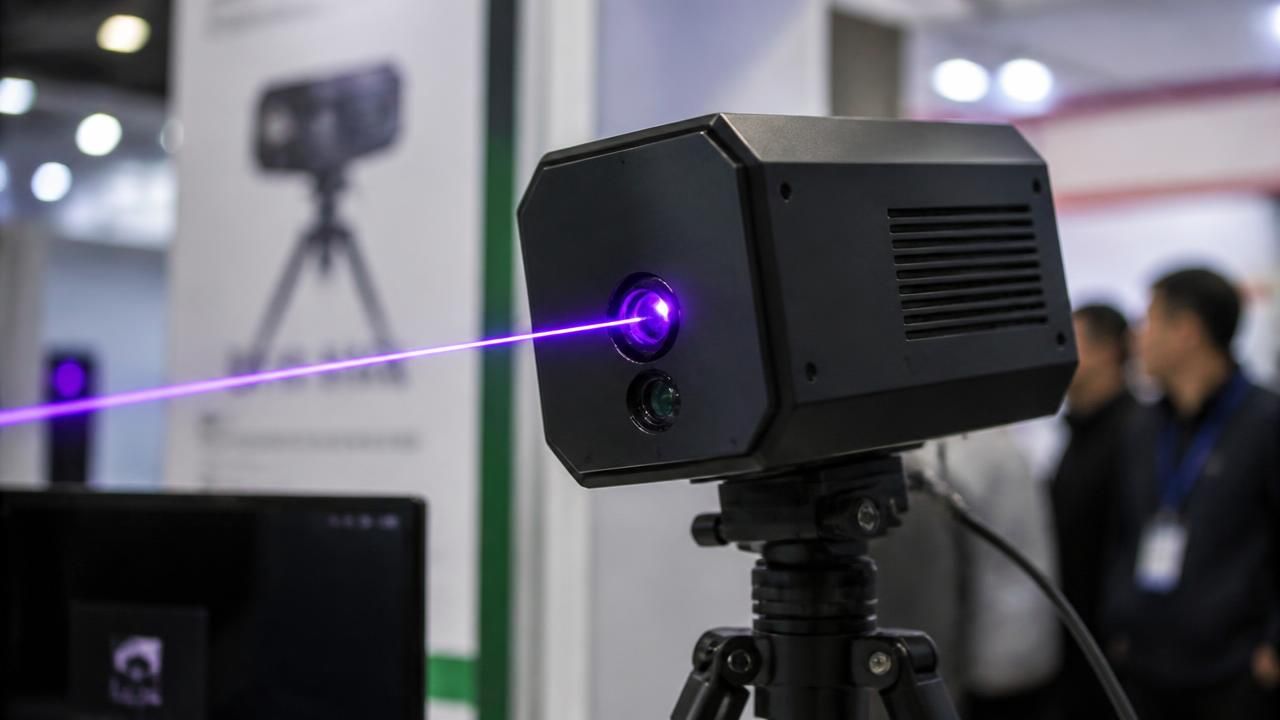
In China, a start-up has built a device that uses artificial intelligence and lasers to shoot down mosquitoes, turning a long-running public-health nuisance into an engineering demo. The system has drawn attention for its striking performance claim — 30 mosquitoes killed per second — and for the unease that follows any autonomous device that fires beams of light outdoors or indoors.
The New York Times framed the development as a novel use of AI with unresolved safety questions, noting that the device could pose risks to people and other creatures nearby when active. Headlines circulated on MSN took a brassier tone, describing a “controversial laser weapon against bugs” and highlighting the speed of the kills. A separate MSN item celebrated a homemade laser setup that its creator said “successfully eliminated” every mosquito in his home, underscoring how quickly the concept has moved from lab curiosity to DIY project.
What the device does
According to reports, the Chinese start-up’s system uses computer vision — the AI component — to identify mosquitoes and then directs a laser at the target. In principle, the process happens fast enough to intercept insects in flight. The headline figure, 30 mosquitoes per second, is the kind of metric that makes for a compelling demo: it suggests continuous, automated pest control without sprays, nets or human swatting.
But those same attributes create the central problem. A laser that can kill a mosquito must be aimed with precision, and it must decide — in milliseconds — what is a mosquito and what is not. The New York Times report flagged safety concerns for people and other creatures nearby, a reminder that the device’s appeal depends as much on its targeting safeguards as on its kill rate.
Why China is a proving ground
China has become a major testbed for AI-enabled hardware, from drones to delivery robots to agricultural sensors. Mosquito control is an attractive target because the public-health burden is enormous. Mosquito-borne diseases such as malaria, dengue, Zika and chikungunya kill hundreds of thousands of people each year and sicken millions more. Traditional tools — insecticide-treated nets, indoor spraying, larvicides and community cleanup — remain essential, but resistance to insecticides and the difficulty of reaching every breeding site have fueled interest in new approaches.
A laser-based system promises something insecticides cannot: targeted elimination with no chemical residue. It also promises something regulators rarely love: an autonomous device that emits energy into the environment and makes its own decisions about what to shoot.
The safety questions
The most obvious risk is eye injury. Even low-power lasers can damage retinas if aimed or reflected into a person’s eyes, and higher-power systems can burn skin or ignite materials. A mosquito-killing laser would need robust interlocks, beam shaping and failsafes. It would also need to distinguish a mosquito from a harmless bee, a butterfly, a pet, a child’s toy or a person’s face. False positives are not merely technical errors; they are potential liability events.
Then there is the ecological question. Mosquitoes are pests to humans, but they are also food for birds, bats and aquatic organisms. A device that kills indiscriminately could affect local food webs. Public-health agencies generally accept mosquito control as a legitimate goal, but they tend to prefer methods that are species-specific and carefully monitored.
- Target discrimination: Can the AI reliably identify mosquitoes across lighting, weather and clutter?
- Bystander safety: How does the device prevent exposure to eyes and skin?
- Regulatory classification: Is it a consumer appliance, a pest-control device or a laser product — or all three?
- Independent testing: Are the kill-rate claims backed by peer-reviewed data or field trials?
How the story is being framed
The coverage reveals three distinct lenses. The New York Times treats the device as a technology story with a safety caveat, emphasizing the start-up’s innovation while asking who might be harmed when it operates. MSN’s headline about “30 mosquitoes killed per second” leans into spectacle and controversy, using the speed claim as a hook. The second MSN item — about a homemade laser system that “successfully eliminated” every mosquito in its creator’s home — shifts the frame again, from corporate product to DIY tinkering.
“30 mosquitoes killed per second: China is testing a controversial laser weapon against bugs” — MSN
That headline captures the tension. “Testing” implies an experiment, “controversial” signals opposition, and “weapon” frames a pest-control tool in martial terms. By contrast, the New York Times headline — “This Device Uses A.I. and Lasers to Kill Mosquitoes” — is almost neutral, letting the safety concern emerge in the body of the story.
It is not clear whether the homemade system described by MSN is connected to the Chinese start-up’s device. The two stories may reflect the same broader idea rather than the same product. But together they show how quickly a high-tech concept can become a DIY challenge, and how easily the safety debate can be lost in the excitement of a dramatic demo.
What to watch
The next phase will depend on evidence. A kill-rate claim is easy to market and hard to verify. The public should look for independent field tests, clear laser-safety specifications, data on non-target insects and a regulatory pathway. If the device is marketed as a consumer product, it will need to meet laser-safety standards and pest-control rules; if it is sold as a public-health tool, it will face epidemiological and environmental review.
The larger lesson is familiar from other AI-enabled devices: autonomy raises the stakes. A mosquito-killing laser is not just a gadget; it is a machine that decides when to fire. Whether in a Chinese pilot project or a hobbyist’s living room, the technology’s success will hinge less on how many mosquitoes it can kill per second than on how reliably it can avoid everything else.