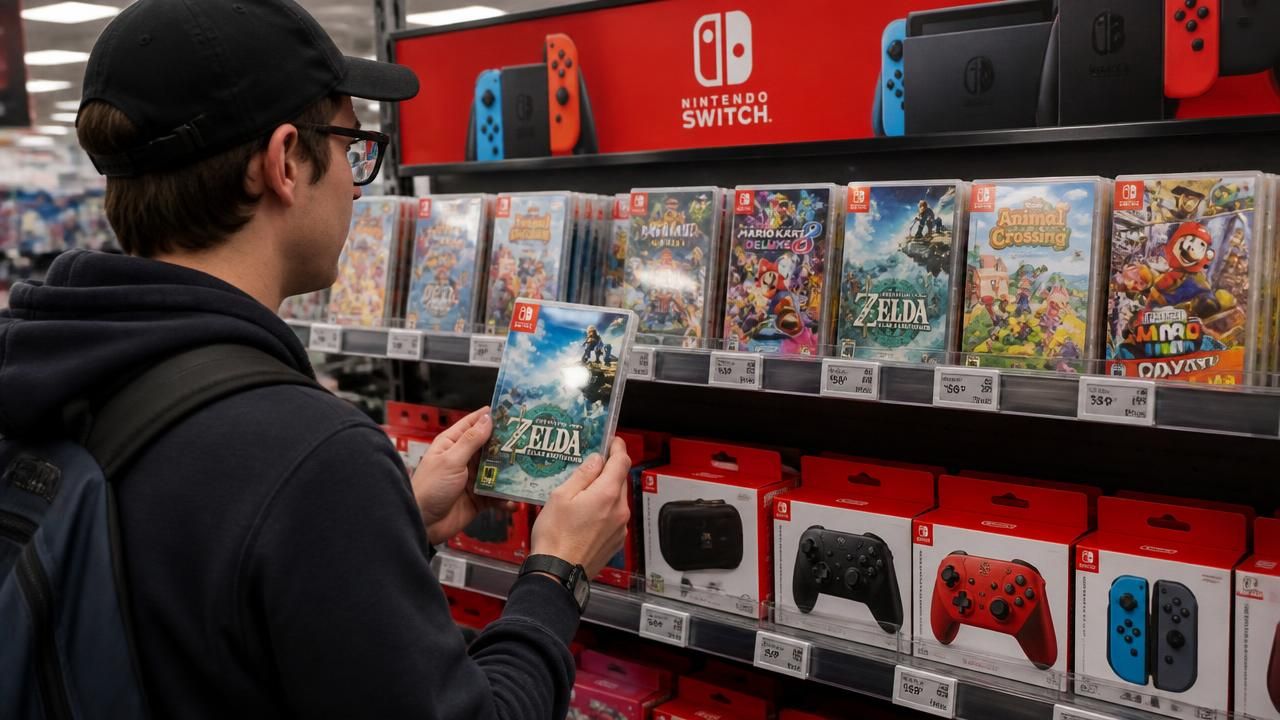
Nintendo has launched what the company is calling its "Customer Appreciation" sale, a sweeping markdown event spanning first-party Switch titles, digital bundles and accessories at Amazon, Best Buy, Walmart and the Nintendo eShop. The promotion, which runs through September 26 at 8:59 PM PT, is unusual not only for its breadth but for its stated origin: Nintendo says the discounts were made possible in part by tariff-related refunds it received from the US government.
The sale represents one of the company's largest promotional pushes ever, according to Nintendo-focused outlet Nintendo Everything, and arrives well ahead of the holiday shopping season — a notable departure for a publisher whose software notoriously clings to its list price for years after release.
What's Actually on Sale
At the center of the promotion are some of the Switch's best-selling first-party titles. Among the headline discounts highlighted by The Verge:
- Mario Kart 8 Deluxe digital bundle with the Booster Course Pass for just under $60 (Amazon, Nintendo eShop)
- The Legend of Zelda: Tears of the Kingdom for $49 (Amazon, Nintendo, Best Buy)
- Animal Crossing: New Horizons with its Happy Home Paradise DLC for $60 (Nintendo eShop)
- Super Mario Odyssey and a broad slate of other first-party games marked down roughly 30 percent, per IGN
Switch 2 Editions of the affected titles are not themselves discounted, though Nintendo has kept the upgrade paths cheap: the Tears of the Kingdom upgrade pack runs $9.99, while the Animal Crossing: New Horizons upgrade costs $4.99. Nintendo is hosting a dedicated landing page listing every discount, and the retailer spread means the same deals appear at three major US brick-and-mortar chains plus the company's own digital storefront.
The Tariff Backstory
What makes the sale genuinely strange is the explanation attached to it. In messaging accompanying the promotion, Nintendo referenced refunds tied to US tariffs and reminded customers that the company had "absorbed most tariff-related costs" rather than passing them fully onto buyers. Tweaktown flagged that framing as the sale's most newsworthy element — a rare instance of a game platform holder publicly acknowledging the trade-policy plumbing behind its pricing.
"Nintendo absorbed most tariff-related costs" rather than passing them on to consumers, the company said in announcing the promotion.
The context is a turbulent stretch for hardware economics. Successive rounds of US tariffs on imported goods — including components and finished electronics originating in Asia — have complicated launch pricing for consoles across the industry, and Nintendo's Switch 2 rollout landed squarely in that uncertainty. When a company recovers money it had already spent absorbing duties, it faces a choice: bank the windfall, lower prices permanently, or convert it into a promotional event. Nintendo chose the third option, and it chose to say so out loud.
A Sale That Made People Angry
That transparency did not land universally well. Aggregated coverage on MSN carried a blunt framing: the "Nintendo customer appreciation sale draws heavy criticism from everyone." The backlash appears less about the discounts themselves — which are among the steepest Nintendo has offered on marquee titles — than about the messaging surrounding them.
Critics argued that a sale positioned as gratitude, funded by a government refund, is an odd way to frame what is fundamentally a limited-time promotion. Some pointed out that consumers had already paid elevated prices during the tariff period, and that a temporary markdown is not the same as a permanent price correction. Others questioned whether "appreciation" was the right word for a discount window that closes on a specific late-September evening rather than a lasting shift in Nintendo's famously rigid pricing strategy.
The split in coverage is instructive. Deal-focused outlets such as The Verge treated the event primarily as a service to readers — a curated list of which games to buy and where. Trade and opinion outlets focused on the politics and the public-relations gamble. Retail aggregators split the difference, running both the deal roundups and the criticism as separate stories.
Why It Matters
For consumers, the immediate takeaway is straightforward: first-party Nintendo software at 30 percent off is rare, and the Mario Kart 8 Deluxe bundle in particular represents a substantial saving over buying the base game and Booster Course Pass separately. For the industry, the episode is a small but telling data point about how tariff policy is now visibly shaping consumer pricing decisions — and about how quickly a company can find itself defending a goodwill gesture.
Nintendo, for its part, has framed the sale as a thank-you to players who supported the Switch through a difficult hardware transition and an extended lifespan. Whether that message survives contact with a skeptical audience remains to be seen. What is certain is the deadline: the discounts vanish on September 26, and Nintendo's games will almost certainly return to full price the moment they do.