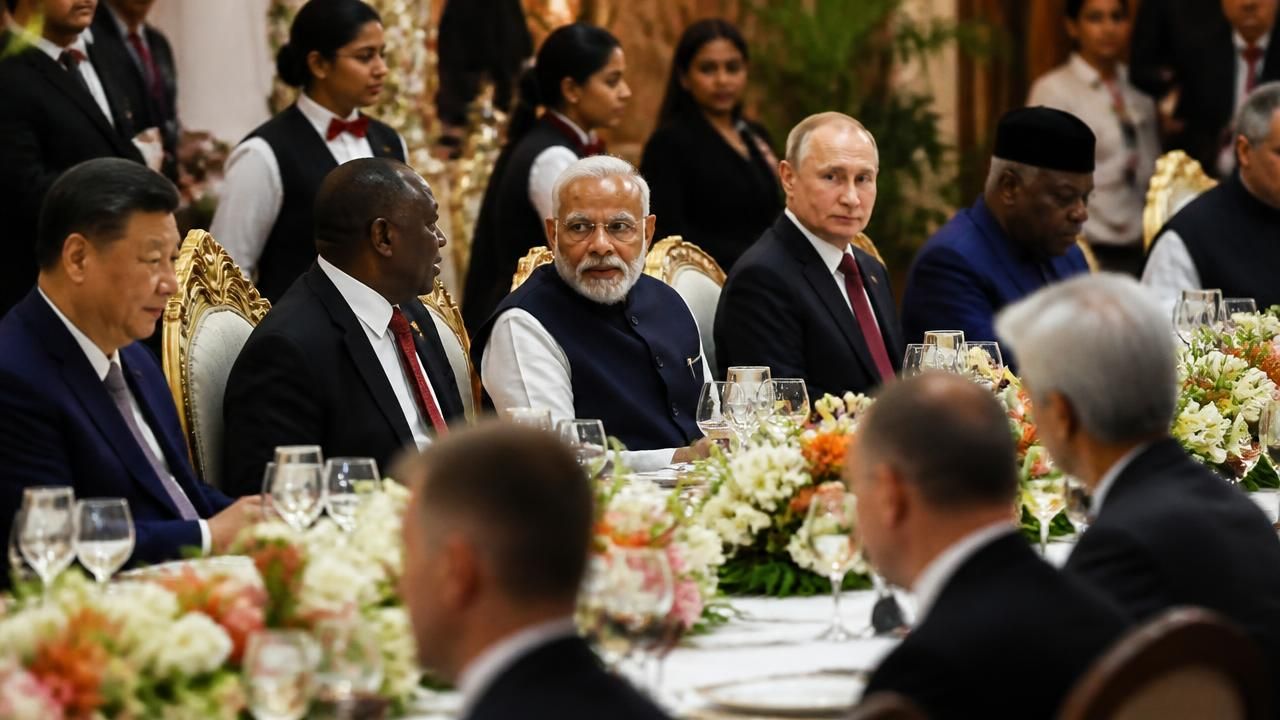
An all-vegetarian gala dinner served to world leaders at the BRICS summit in India has turned into an unlikely political flashpoint, with opposition parties accusing Prime Minister Narendra Modi's government of airbrushing India's culinary diversity out of a marquee diplomatic moment — and the ruling Bharatiya Janata Party answering that the backlash is little more than sour grapes.
The controversy centers on the official banquet hosted for visiting heads of state and delegations during the summit. According to accounts in Indian and international media, the menu was entirely meatless, a choice that reflects the dietary preferences of Modi and much of the BJP's core support. The New York Times framed the episode with a pointed headline — "Modi Served World Leaders a Meatless Meal, and His Critics Pounced" — while Indian outlets covered it primarily as a partisan shouting match, with headlines such as "BJP Slams Congress Over BRICS Dinner Menu Criticism" and "Why hide India's culinary diversity? Opposition roasts Modi govt's vegetarian menu at BRICS gala."
A Menu That Became a Message
Diplomatic dinners are choreographed down to the last garnish, and menus are routinely used to project national identity. In India's case, that identity is famously plural: regional cuisines built on rice, wheat, lentils and vegetables sit alongside centuries-old traditions of fish, mutton, chicken and beef, shaped by geography, religion, caste and trade.
Critics argued that showcasing only one strand of that heritage — the vegetarian strand most closely associated with upper-caste and Hindu nationalist norms — told foreign guests an incomplete story about the country. Opposition figures said the decision misrepresented India's culinary heritage at precisely the moment the world's cameras were trained on it.
The Opposition's Case
Congress leader Rahul Gandhi seized on the numbers, noting that the overwhelming majority of Indians are not vegetarian. "80 pc Indians are non-vegetarians, Indian food is delicious," he said, in a remark that quickly circulated online and became the opposition's most quotable line of the row.
"80 pc Indians are non-vegetarians, Indian food is delicious." — Rahul Gandhi
The thrust of the opposition attack was twofold: first, that a government keen to promote India globally had chosen to hide its own diversity at the table; second, that the menu reflected a broader pattern of majoritarian cultural messaging, in which the state's preferred version of Indianness is projected and other traditions are quietly sidelined.
The Government's Rebuttal
A minister in Modi's government rejected the criticism outright, dismissing it as manufactured outrage. The BJP's official response was sharper still: the party told reporters that the opposition's fixation on the dinner menu was itself evidence of how well the summit had gone — "Tells you of BRICS summit's success," the party said, according to news reports, arguing that when opponents have nothing substantive to say about the diplomacy, they resort to complaining about the food.
That inversion — treating criticism as a compliment — is a familiar tactic in Indian political communication. By refusing to debate the menu on its merits, the BJP shifted the argument to motive, casting its opponents as petty and unpatriotic at a moment of national prestige.
The Guest List Complication
Complicating the picture further, reports noted that two prominent invitees — Chinese President Xi Jinping and the Crown Prince of Abu Dhabi — did not attend the gala dinner. Their absence gave commentators another line of attack, suggesting that the event's symbolism was undermined not by what was served but by who failed to show up. Neither absence was officially explained in the coverage reviewed.
In diplomacy, a no-show at a leader-level dinner can be read in several ways: a scheduling conflict, a message of displeasure, or simply the opaque protocol of bilateral relationships. But in the hothouse of Indian political discourse, it became an additional stick with which to beat the government.
Why Food Is Politics in India
The intensity of the row is not surprising. Food in India is never merely food. It is entangled with religion, caste hierarchy, regional pride and — increasingly — electoral identity. Vegetarianism has long been a marker of ritual purity in Hindu tradition, and the BJP's political base includes communities for which a meatless state banquet would seem unremarkable, even admirable.
At the same time, India is one of the world's largest producers and consumers of meat, dairy and seafood. Beef and buffalo meat exports are a multi-billion-dollar industry, and the country's biryani, fish curries, kebabs and coastal cuisines are as central to its soft power as yoga or Bollywood.
What It Signals
For international audiences, the spat is a window into how culture wars play out in the world's most populous nation. For domestic audiences, it is another skirmish in a long-running argument about whose India gets to be represented on the world stage.
Both sides appear to be playing to their bases. The government can point to a smoothly run summit and tell its supporters that hostile elites cannot stand a vegetarian meal. The opposition can tell its supporters that a government obsessed with uniformity is embarrassed by the country's actual diversity.
What is certain is that the dinner plates have been cleared, the delegations have gone home, and the menu is still being argued about — proof that in Indian politics, symbols travel further than communiqués.