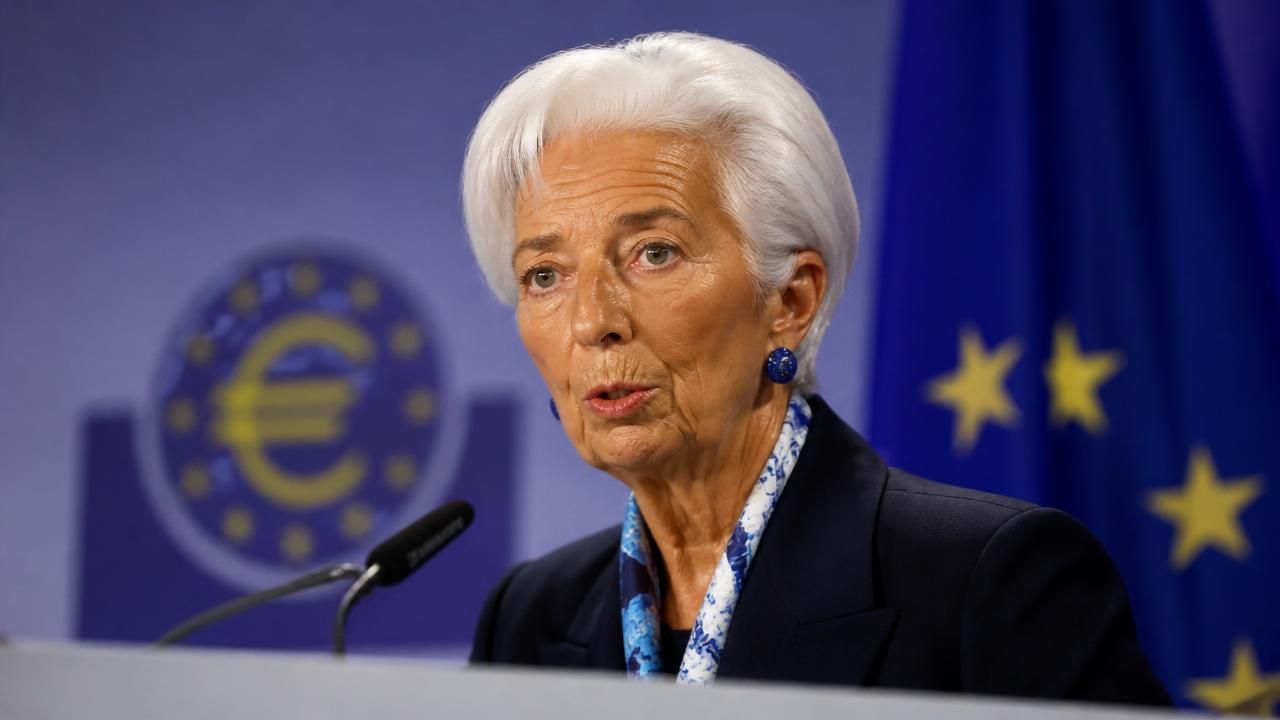
Christine Lagarde will step down as president of the European Central Bank on Feb. 7, months before her term was due to end next October, according to multiple reports, a decision that immediately ignited a succession race in Frankfurt and refocused investors on the euro area’s most fragile bond market.
The announcement came as the ECB held its key policy rate at 2.5%, with inflation still running near double the central bank’s 2% target, according to coverage of the decision. The timing—pairing a rate hold with a leadership exit—underscored how monetary policy, political pressure and market confidence are colliding in the euro zone’s second-largest economy and beyond.
A departure months in the making
Reports described the move as the culmination of months of speculation. RTE said Lagarde announced her resignation after sustained conjecture about her future. Yahoo Finance framed the decision as “igniting a race to replace her.” Bloomberg’s “Real Yield” segment discussed the resignation alongside the French bond market, highlighting how investors are weighing the leadership transition against fiscal and political risk in Paris.
Lagarde’s term was scheduled to run until October. Her early exit on Feb. 7 creates a compressed timetable for euro-area governments to choose a successor and for the ECB to manage a delicate communications period.
Why now: “I cannot remain neutral”
One headline captured the explanation that has emerged in the aftermath: “I cannot remain neutral.” According to reports, Lagarde said she was resigning early so she could speak freely on topics beyond monetary policy. That rationale is significant for an institution that has long guarded its independence and carefully scripted its public communication.
“I cannot remain neutral,” Lagarde said, according to coverage of her explanation for the early exit, adding that she wanted to speak freely on subjects beyond monetary policy.
The comment opens a debate about the boundaries of central-bank leadership. The ECB president is not a purely technocratic role: the job involves explaining policy to governments, investors and the public, and managing the euro’s standing in global markets. But moving toward more open political commentary could unsettle officials who prize the bank’s independence, especially at a moment when inflation remains elevated and fiscal policy is contested.
The French bond backdrop
Bloomberg’s discussion placed the resignation in the context of French debt. France has been under market scrutiny over its budget deficit and political fragmentation, and the ECB’s policy stance matters enormously for the spread between French government bonds and German Bunds. Investors are trying to determine whether Lagarde’s departure will complicate the ECB’s response to any renewed stress in French debt.
To be sure, the ECB does not set fiscal policy, and its tools are not designed to solve national budget problems. But the central bank’s crisis-fighting instruments and its communication have outsize effects on sovereign spreads. A leadership vacuum—or even the appearance of one—could make markets more sensitive to headlines from Paris and Frankfurt. The French bond market is likely to remain a key gauge of how investors judge the transition.
A rate hold amid sticky inflation
The rate decision adds another layer. The ECB held rates at 2.5%, according to reports, with inflation near double the 2% target. That combination—elevated inflation and a slowing or uncertain growth outlook—leaves the ECB in a difficult spot. Policymakers must decide whether to keep pressure on the economy or begin easing, all while explaining their strategy to governments that are under fiscal strain.
Some coverage framed the rate hold as secondary to the leadership question. Investors were said to be focused on French bonds and Lagarde’s future even as the governing council met. That suggests markets see the succession as a first-order issue for euro-area assets, not merely a personnel matter.
How outlets framed it
Different outlets emphasized different angles. Bloomberg concentrated on market mechanics: French debt, the global return to bonds and the implications of an ECB president leaving before term. Yahoo Finance led with the political horse race, saying the decision “ignited” the contest to replace her. MSN’s headlines focused on Lagarde’s explanation—her statement that she cannot remain neutral—and on the ECB’s rate hold. RTE noted the months of speculation that preceded the announcement. Taken together, the coverage portrays a decision that is simultaneously personal, institutional and market-moving.
What comes next
The immediate task is succession. Euro-area finance ministers and heads of state will need to navigate the usual geographic and political balancing act, with smaller countries and larger economies all claiming a stake. The next president will inherit an inflation fight that is not over, a fragile French fiscal picture and a broader debate about how openly the ECB should engage in politics.
For investors, the key questions are straightforward: Who will lead the ECB, how quickly will the appointment be made, and will the transition alter the pace of rate decisions or the bank’s willingness to use its crisis tools? For the ECB itself, the challenge is to demonstrate that a change at the top does not mean a change in its commitment to price stability or its independence.
Lagarde’s early departure ensures that the next phase of euro-area monetary policy will begin under a new leader—and under intense scrutiny. The race to replace her starts now.