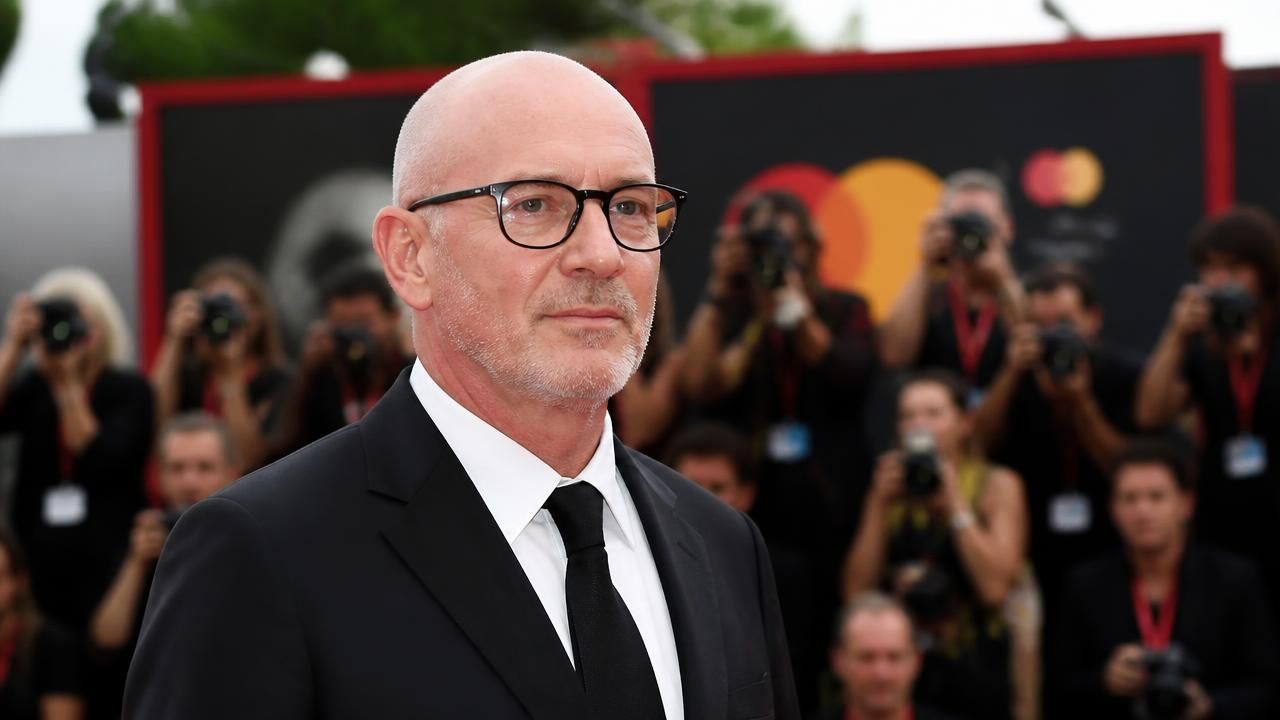
VENICE — Alex Gibney has made a career out of pulling apart the mythologies of Silicon Valley's most celebrated figures. Now he has turned his gaze to the biggest one of all, and he has taken his time doing it. "Musk," Gibney's new documentary, premiered at the Venice Film Festival to a four-minute standing ovation, capping a rollout that has been as sprawling as its subject. The film runs just shy of four hours.
The runtime is not incidental. It is, in many ways, the point. To understand how Elon Musk accumulated his extraordinary influence — over markets, over media, over the machinery of the United States government — Gibney argues that you need the whole story, from a young dot-com millionaire cashing out of Zip2 and PayPal to a figure who, in the film's telling, has "taken a wood chipper" to vital federal departments.
A Trailer That Refuses to Pick a Side
The first teaser trailer, released ahead of the Venice premiere, frames Musk in deliberately contradictory terms. It calls him a "real-life Iron Man" and, in the same breath, a "fascist" — a juxtaposition that captures the polarized reception its subject generates. That duality is the film's central tension: is Musk a visionary whose ambition outpaced the systems built to contain him, or a cautionary tale about what happens when private wealth meets public power without any meaningful check?
Gibney does not appear interested in resolving the question so much as documenting its consequences.
Gibney's Pedigree
The director arrives at this project with a formidable track record. Gibney previously directed "The Inventor," his searing examination of Elizabeth Holmes and Theranos, and "Steve Jobs: The Man in the Machine," a notably unsentimental portrait of Apple's co-founder. Both films established a template that "Musk" follows: exhaustive reporting, a willingness to sit with uncomfortable contradictions, and a refusal to let charisma stand in for substance.
The new film was announced as part of a Venice lineup that also includes work from Martin McDonagh and Werner Herzog — a reminder that Gibney is now operating in the same rarefied critical company as the directors who once defined the festival circuit's nonfiction ambitions.
The Runtime Problem
Reaction to the film has split along a predictable fault line, and much of it hinges on whether four hours is a feature or a bug.
The Verge's review praised the documentary as "impressively thorough" and "compelling and convincing," crediting Gibney with assembling a narrative that lands hard for viewers who encounter Musk primarily through headlines. But the same review noted that the film "doesn't offer much in the way of revelations if you're aware of Musk's catastrophic influence on the world" — suggesting that Gibney may be preaching to the choir. For everyone else, the review warned, "a demanding runtime just shy of four hours might prove too much of a barrier."
It makes sense that Musk is a long film. In order to understand Musk's rise to power, you need to know the whole story.
Other outlets were less ambivalent. One review described the film as "engrossing and terrifying" — a pairing that has become something of a default verdict on Musk himself. The New York Times framed its coverage around a blunter question: "How Much Elon Musk Is Too Much?" It is a question the film's own length seems designed to provoke.
From Dot-Com to Department Disruptor
The documentary's arc spans roughly three decades. It opens with Musk's early entrepreneurial years — the South African-born programmer who sold his first company in his twenties and rode PayPal's sale to eBay toward the founding of SpaceX and Tesla. From there, Gibney traces the accumulation of cultural and financial capital that made Musk the world's wealthiest person and, eventually, a fixture of American political life.
The film's most contentious material concerns its final act: Musk's role in reshaping federal agencies, portrayed in the trailer as an act of institutional vandalism. That framing places "Musk" squarely in a broader journalistic reckoning with tech's intrusion into governance — a theme that resonates with Gibney's earlier work on Holmes, whose fraud was enabled by a similar failure of oversight.
Why It Matters
Documentaries rarely change minds, and "Musk" almost certainly will not. But the film's release is itself a data point: a major director, a major festival, a four-hour runtime, and an audience willing to sit through it. That investment of attention says something about the scale of the Musk question — and about how little consensus exists on the answer.
- Director: Alex Gibney ("The Inventor," "Steve Jobs: The Man in the Machine")
- Runtime: Just under four hours
- Premiere: Venice Film Festival, earning a four-minute standing ovation
- Framing: The teaser calls Musk both a "real-life Iron Man" and a "fascist"
- Scope: From dot-com millionaire to government disruption
For viewers already versed in the Musk saga, the film may function less as a revelation than as an archive — a definitive record of an era that is still unfolding. For everyone else, the barrier is not persuasion but patience.