A Long-Rumored Entry Into Gaming Hardware
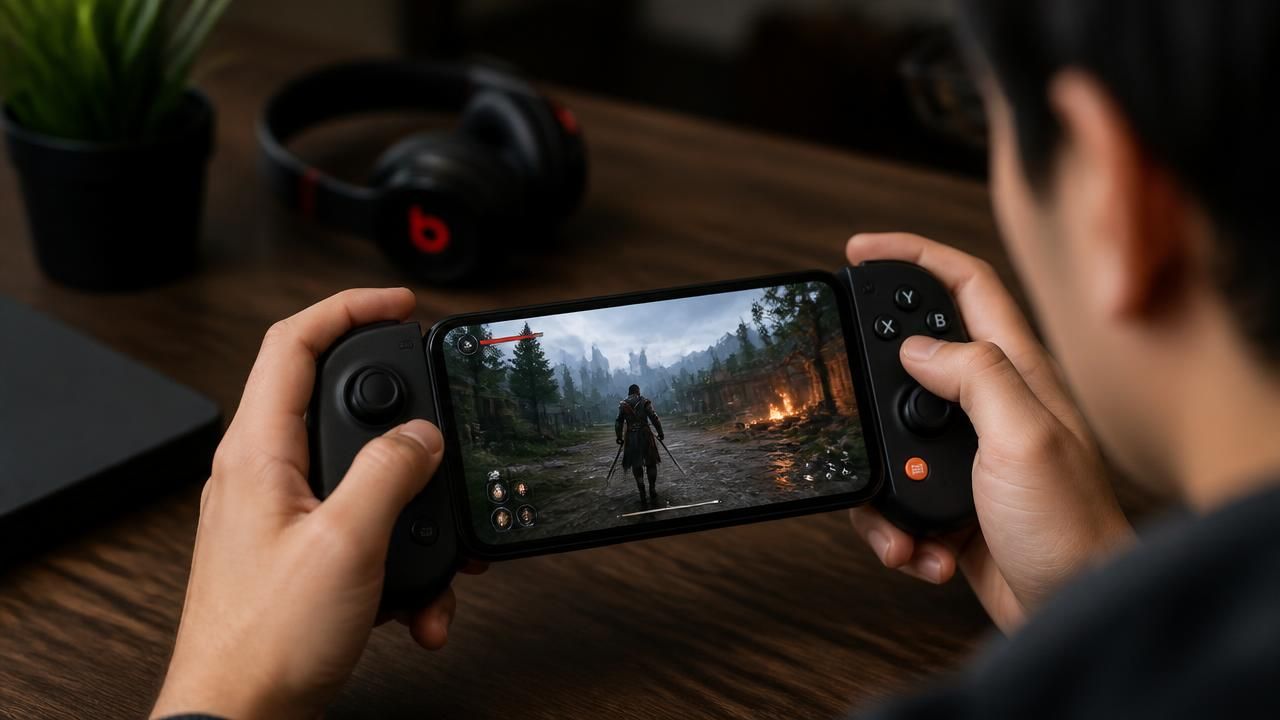
Apple is reportedly developing not one but two dedicated game controllers for the iPhone, according to Bloomberg's Mark Gurman — a move that would mark the company's most direct entry yet into the console-style gaming accessory market. The report, first surfaced by The Verge and echoed across a wave of aggregators from MSN and iClarified to Macworld and Cult of Mac, says the controllers will likely be sold under the Beats brand rather than carrying the Apple logo.
The claim arrives on the back of a discovery made last week by MacRumors, which found two references inside the code of macOS 26.7 to game controllers identified as first-party devices. That code-level evidence, combined with Gurman's sourcing, has given the rumor a degree of technical grounding that earlier speculation lacked.
"Despite the code being found in macOS, not iOS, Gurman says the controllers are designed for iPhones," The Verge reported. It added that Beats executives are "leading the charge on this product."
Apple has not commented publicly, and none of the outlets reporting the story claim to have seen the hardware itself. The narrative remains unconfirmed — but the sources converging on the same details suggest a coordinated leak rather than isolated speculation.
The Beats Angle: A Familiar Corporate Playbook
The branding detail is arguably the most strategically interesting part of the report. Apple acquired Beats Electronics in 2014 for roughly $3 billion, and has since used the subsidiary as a proving ground for products that sit awkwardly under the flagship Apple label — from the Beats Studio Buds to the Pill+ speaker line.
Positioning a game controller under Beats would let Apple enter a crowded, price-sensitive accessory category without diluting the premium, design-forward iPhone brand. It also gives the company room to fail: a Beats-branded controller that underperforms can quietly be discontinued, while a controller badged with the Apple logo becomes a reputational statement about the company's ambitions — and its commitment — in gaming.
That framing was picked up by several outlets covering the leak, with one MSN aggregation arguing that Apple "should have launched its own game controllers years ago" — a commentary-driven take that frames the move as overdue catch-up rather than a bold new frontier.
Two Very Different Designs
Cult of Mac's coverage zeroed in on a detail the other outlets largely glossed over: the leak points to two distinctly different controller designs, not two colorways or two sizes of the same product. That suggests Apple is hedging on form factor rather than simply pursuing a single vision.
The most likely split mirrors the current market. One design would almost certainly be a split, snap-on "backbone-style" controller that clamps around the phone and turns it into something resembling a Nintendo Switch. The other could be a more traditional standalone pad with a cradle, closer to a console controller. Both approaches are well represented in the third-party market, where Backbone, Razer's Kishi line,GameSir and 8BitDo have spent years iterating on the same problem: how to make touchscreen gaming feel like console gaming.
- Snap-on/split design: maximum portability, direct connection rather than Bluetooth, tight integration with iOS.
- Standalone pad: better ergonomics for long sessions, potentially compatible with iPad, Mac and Apple TV.
The fact that references appeared in macOS firmware at all hints that the hardware may not be iPhone-exclusive in the long run — a possibility that would extend Apple's gaming hardware ambitions across its whole ecosystem.
Why Now: Apple's Gaming Groundwork
The rumor did not materialize in a vacuum. Apple has spent five years laying infrastructure for serious gaming on its devices. Apple Arcade launched in 2019, and the company has since pushed console-grade titles onto the iPhone 15 Pro and iPhone 16 Pro hardware, including ports of Resident Evil Village, Resident Evil 4, Death Stranding and Assassin's Creed Mirage.
Those ports were a technical showcase, but they exposed an obvious gap: the hardware could run console games, yet the input method remained a slab of glass. Apple's own software already supports third-party controllers, including PlayStation DualSense and Xbox pads, which means the company has been effectively outsourcing the most tactile part of the experience to its competitors.
Mobile gaming remains the largest single segment of the global games market by revenue, and controller attachments have become one of the fastest-growing accessory categories as cloud gaming services like Xbox Cloud Gaming and GeForce Now push AAA titles onto phones. A first-party Apple controller would let the company capture accessory margin it currently forfeits — and, more importantly, control the end-to-end experience.
Skepticism and the Road Ahead
Not all coverage treated the report as settled. Macworld's take posed the question directly — "Is Apple working on its own game controller?" — a framing that reflects how unconfirmed the story remains. MacRumors' code references are suggestive but not conclusive: strings in firmware have, in the past, pointed to products that shipped years later or never shipped at all.
Historically, Apple's gaming ambitions have been marked by false starts. The Pippin console in the mid-1990s was a commercial failure, and the company spent much of the following two decades treating games as a category it enabled for others rather than competed in. Rumors of an Apple controller have circulated for years without a product.
What has changed is the convergence of three things: silicon capable of running console titles, a subscription service that needs compelling hardware to grow, and a parent brand — Beats — that offers plausible deniability if the experiment stalls.
If the reports hold, an announcement could come within the next product cycle. For now, the story remains what it has been for a decade: a persistent, well-sourced rumor that Apple is finally ready to stop watching the controller market from the sidelines.